


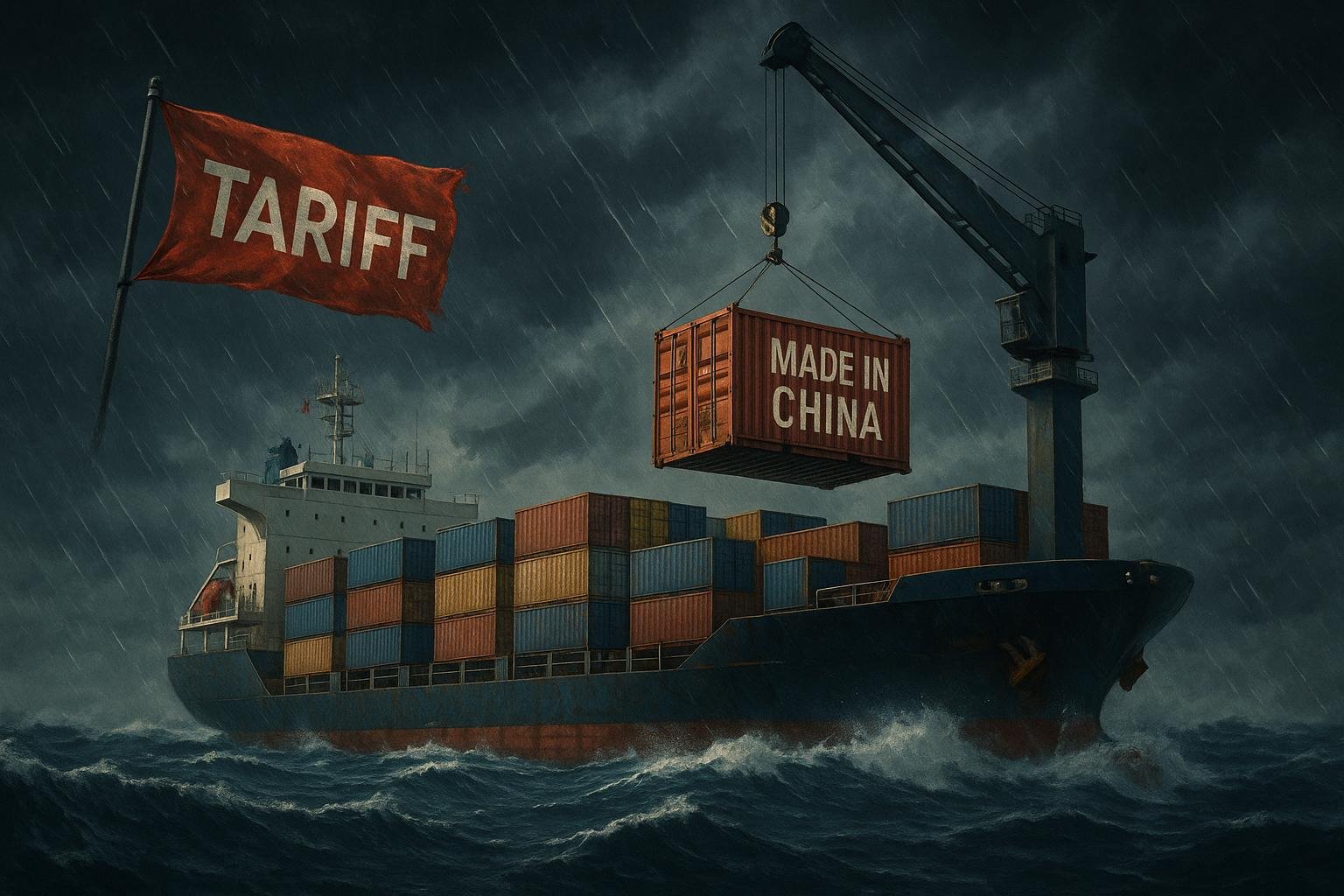
Former U.S. president Donald Trump has hinted at levies up to 500 percent on Chinese imports, risking severe economic and diplomatic repercussions amid a backdrop of escalating trade tensions and market volatility.

Former U.S. president Donald Trump has signalled support for levies on Chinese imports of up to 500 percent, a proposal that, if pursued, would represent an unprecedented escalation in trade measures between the world’s two largest economies. The comment, a...
Continue Reading This Article
Enjoy this article as well as all of our content, including reports, news, tips and more.
By registering or signing into your SRM Today account, you agree to SRM Today's Terms of Use and consent to the processing of your personal information as described in our Privacy Policy.
Such a level of duty would dwarf the tariffs imposed under Trump’s first administration, when most Chinese goods faced charges in the 10–25 percent range. Trade specialists warn that charges of this magnitude would effectively block many categories of Chinese-made goods from the U.S. market and trigger severe disruption to established supply chains.
Economists and institutions contacted by international media have sketched a bleak picture of the potential macroeconomic effects. According to an analysis reported by Al Jazeera, UBS has warned that aggressive tariff increases could cut China’s growth to around 4 percent in 2025, even assuming substantial fiscal stimulus in Beijing. The Washington Post noted that Chinese exports to the United States exceeded $400 billion in 2024, roughly 3 percent of China’s GDP, and quoted Joerg Wuttke, former president of the EU Chamber of Commerce in China, saying the measures would land at a difficult moment for the Chinese economy.
Observers also point to the immediate market risks. Coverage by The Washington Post of earlier tariff rounds described sharp retaliatory duties and rapid market losses when tit-for-tat measures were enacted, with major U.S. indexes tumbling and Asian markets also falling as mutual tariffs were raised. The memory of those moves underlines how quickly tariff announcements can translate into volatile market behaviour and investor flight from risk assets.
At home, the costs would not be confined to headline growth figures. Past analyses cited by CNBC and earlier economic studies indicate that tariffs act like a tax on consumers and businesses: Oxford Economics estimated in an earlier episode of U.S.–China trade friction that Americans could face hundreds of dollars of additional annual costs per household, with broader GDP losses measured in the tens of billions. Producers reliant on intermediate goods from China would confront higher input prices and logistical upheaval, while some sectors could benefit from protection in the short term.
Beijing’s likely response is a central variable. China has previously resorted to reciprocal duties, export curbs and targeted measures against foreign firms in response to trade pressure. Analysts warn that a move to extreme tariffs risks escalation beyond trade to technology, investment and diplomatic cooperation, and could impair cooperation on global challenges where U.S.–China coordination remains important.
Political calculations are also in play. Tough stances on China have resonated with segments of the U.S. electorate and attracted bipartisan interest in defending certain strategic industries, but lawmakers and business groups have long debated the trade-off between protection and the inflationary burden tariffs impose domestically. Implementing such a policy would raise legal and procedural questions about congressional authority and compliance with international trade rules.
It remains uncertain whether the 500 percent figure represents a concrete policy blueprint or a maximal negotiating posture. Historically, forceful rhetoric has been used as leverage in trade talks; nevertheless, even rhetorical escalation alters expectations, complicates corporate planning and can prompt pre-emptive market and supply-chain adjustments.
For now, firms, investors and governments are watching for any formal proposals or regulatory filings that would translate words into action. According to the HOKANEWS coverage and the broader reporting cited above, the statements have already intensified debate over the direction of U.S.–China economic relations and the potential cost of a steep turn toward protectionism.
Source: Noah Wire Services
Subscribe to Industry Updates

