


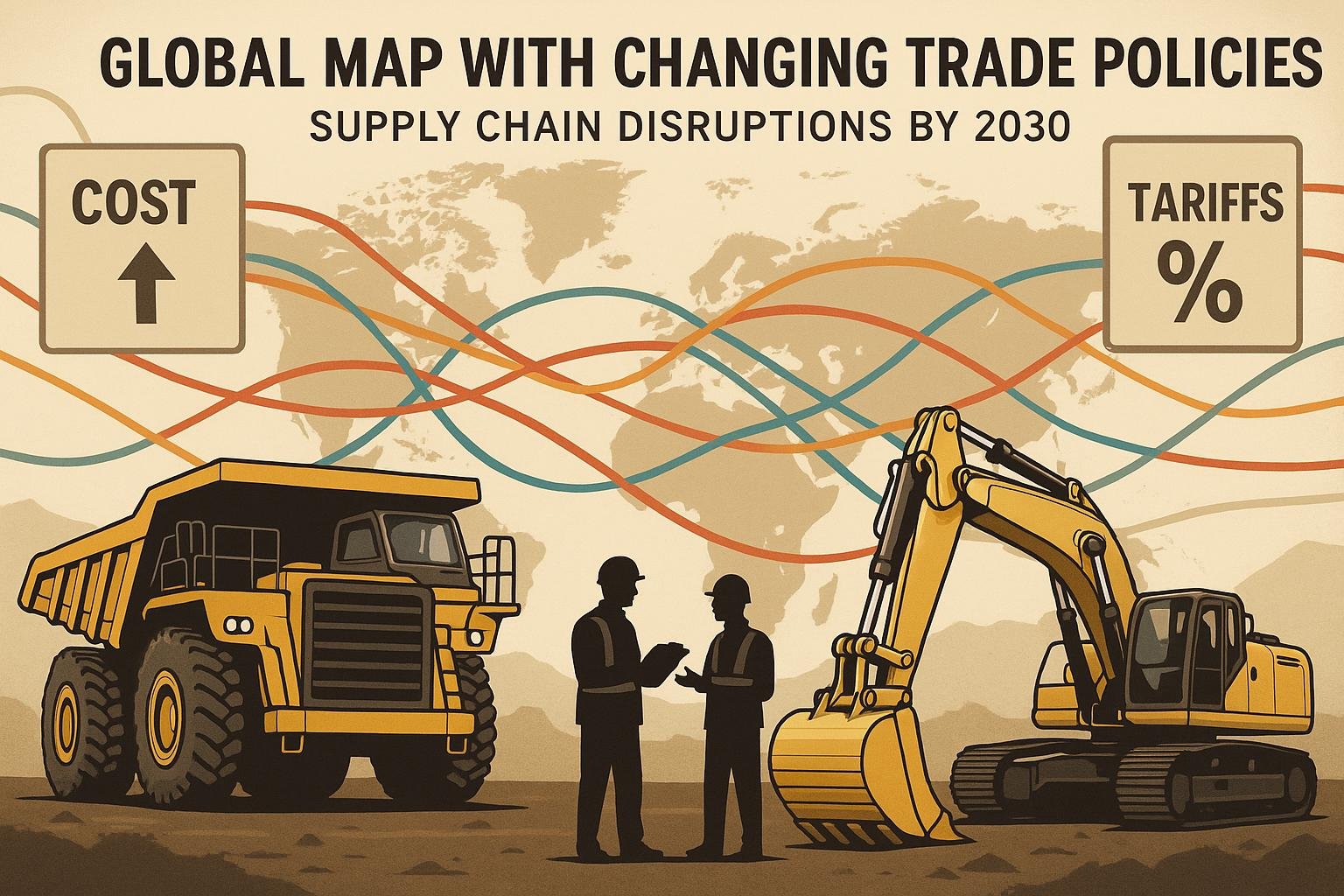
As governments adopt more interventionist trade strategies, mining companies face rising costs and supply chain disruptions, with policies from Australia to Europe influencing project economics and market dynamics through 2030.

Tariffs are no longer merely a political bargaining chip; for mining companies they have become a material business variable that reshapes costs, investment choices and the architecture of supply chains. As governments shift from broad liberalisa...
Continue Reading This Article
Enjoy this article as well as all of our content, including reports, news, tips and more.
By registering or signing into your SRM Today account, you agree to SRM Today's Terms of Use and consent to the processing of your personal information as described in our Privacy Policy.
At the border, tariffs raise the landed cost of goods and can protect domestic industry. In practice for the resources sector, their effects are usually indirect: duties on steel, aluminium and other manufactured inputs feed into higher prices for equipment, processing plants and transportation; rules that favour local content alter where refineries and smelters are sited; and export controls and licensing regimes can restrict access to critical processing services. According to Australasian Institute of Mining and Metallurgy commentary included in the lead reporting, non-tariff measures such as quotas, standards and carbon-related levies now affect roughly seven in ten trade flows, often proving more complex to manage than headline tariff rates.
Australia’s exporters remain relatively well placed because of longstanding free trade agreements with major markets including China, Japan and Korea, and preferential access to the United States and ASEAN partners. Nevertheless, diplomatic frictions and strategic policy moves in consuming countries still inject uncertainty. In particular, policies directed at strategic materials , lithium, rare earths, graphite and similar inputs for clean energy and defence , have grown more assertive. Governments are using a mix of subsidies, export restrictions, targeted procurement and preferential trade arrangements to secure supply chains rather than relying solely on tariff schedules.
North America exemplifies that shift. According to reporting by The Associated Press, Washington has floated the creation of a critical minerals alliance among allies to counter China’s dominant position, combining coordinated trade measures with financial instruments such as a strategic stockpile dubbed Project Vault and direct investment in domestic mining. The AP also reported a separate U.S. initiative to consider tariffs on copper imports and other measures intended to bolster domestic processing. These moves are designed as industrial policy as much as trade policy: raising domestic prices for protected inputs can help onshore capacity but also increases costs for downstream users and can attract capital toward projects that fit allied supply-chain priorities.
Markets have reacted. AP coverage and market data note that copper surged to record levels amid talk of tariffs and stimulus-led demand from China, with buyers stockpiling material to hedge supply risk. Industry observers point to a near-term boost to producers’ revenues but warn of inflationary spillovers into construction, appliances and infrastructure as higher metal costs pass through the economy.
The financial impact of these policies is measurable. Analysis published in industry outlets shows regional metal premiums of 12–18% where tariff barriers are high, and estimates indicate billions of dollars in additional supply-chain reconfiguration costs and longer delivery times. S&P Global reporting highlights mining companies reassessing capital plans because of tariff-driven cost increases for construction materials; Teck Resources and others have signalled higher capital requirements on expansions when input duties or trade frictions affect project inputs. DiscoveryAlert’s industry analysis estimates supply-chain changes have added roughly $3.2 billion in industry costs, extended shipment lead times by three to four weeks and raised inventory carrying costs substantially, with downstream manufacturers absorbing large portions of the added expense.
Europe is pursuing a different tack by linking trade policy to decarbonisation. The EU’s Carbon Border Adjustment Mechanism, moving from transition to a definitive regime in 2026, effectively imposes a carbon-related cost on imported steel, aluminium and other intensive goods. While CBAM is framed as an emissions correction rather than a tariff, its practical effect is to advantage lower‑emissions suppliers and penalise higher-carbon production. Complementary measures such as battery traceability rules and “Battery Passport”-style disclosure regimes increase compliance obligations but reward operators that can demonstrate low emissions and transparent supply chains. The lead reporting and associated analysis underline that these requirements will alter buyers’ sourcing calculus and could accelerate onshoring of processing that meets emissions criteria.
In Asia, export controls remain the principal lever. China’s dominance in processing for rare earths and other critical inputs has been reinforced by licensing and quota mechanisms rather than by import duties, creating supply leverage that can ripple through global markets. This dynamic has elevated the strategic value of new processing capacity outside China and driven allied governments to prioritise investment in alternative supply chains.
Mining companies and traders are adapting. New commercial models include tariff‑aware inventory positioning across jurisdictions, specialised logistics to minimise duty exposure, and trade-finance structures designed to smooth cost volatility. Producers that align projects with government priorities , secure offtake, lower emissions intensity or local processing commitments , are more likely to access concessional financing and strategic procurement, but those benefits often come with strings attached that can constrain pricing flexibility and ownership arrangements.
The policy environment to 2030 looks set to be characterised by targeted tools rather than blanket liberalisation. Subsidies, local content rules, carbon border measures and strategic procurement are becoming the instruments of choice for governments seeking industrial resilience and decarbonisation simultaneously. For miners, that means trade policy is now a central commercial variable: capital allocation, offtake negotiations and project design increasingly incorporate political alignment, emissions profiles and supply‑chain security alongside ore grade and cost curves.
Companies able to map and mitigate these risks , through diversified markets, low‑carbon production pathways, and flexible commercial structures , will be better placed to protect margins and attract capital. Those that ignore the interplay between tariffs, non‑tariff measures and industrial policy risk cost overruns, delays and loss of market access as national strategies reshape global metals markets between 2026 and 2030.
Write to Adam Orlando at Mining.com.au
Images: ASEAN, iStock & Unsplash
Source: Noah Wire Services
Subscribe to Industry Updates

