


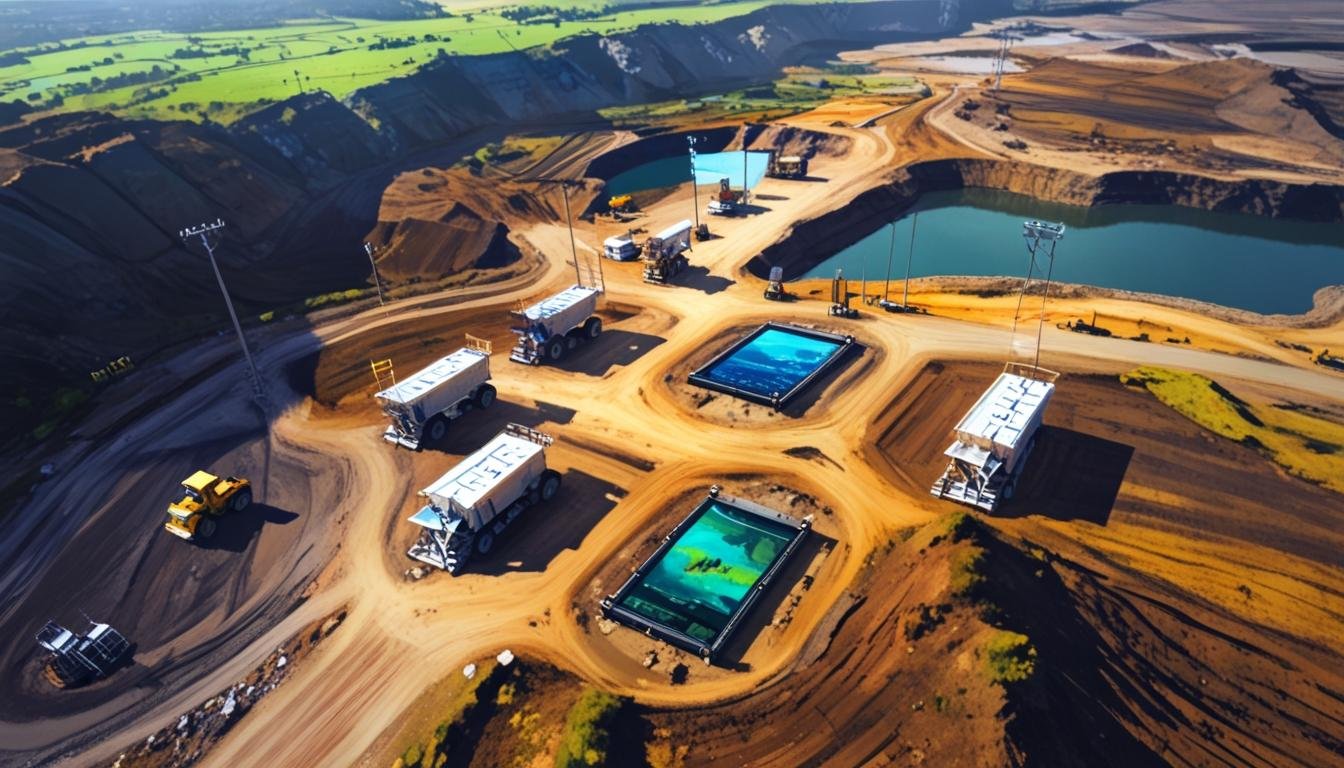
**London**: The mining industry faces pressing challenges including rising costs and environmental scrutiny. CEO Jody Conrad of Krux Analytics underscores the necessity of leveraging data for efficiency and sustainability, advocating for a data-driven approach to overcome operational inefficiencies and prepare for a technological future.
The global mining industry is currently navigating through a complex set of challenges that include rising operational costs, growing environmental scrutiny, and evolving workforce dynamics. According to Jody Conrad, CEO of Krux Analytics, the pivotal question for industry leaders should focus not solely on survival strategies but on how to thrive amidst these turbulent conditions. At the core of this evolution lies a crucial asset: data. The ability to harness and leverage data efficiently and swiftly is anticipated to distinguish successful operations from those that lag behind.
In his discussion with Mining Review Africa, Dr Conrad highlighted that drilling inefficiencies represent a significant yet often overlooked financial drain for mining companies. He pointed out that these inefficiencies disrupt planned drilling programmes, leading to varying financial losses. Depending on the operation, companies might incur losses ranging from $20,000 to $250,000 monthly per rig. On a global scale, these inefficiencies result in billions in wasted revenue each year, underscoring a fundamental issue: many mining companies are underutilising the data they already possess.

Today’s mining operations produce vast amounts of data through Internet of Things (IoT) devices, sensors, and digital systems. However, much of this data remains untapped due to outdated processes and teams that are not equipped for data-driven decision-making. Dr Conrad noted that the opportunity cost of this unexploited potential is tremendously high, both from a financial and strategic perspective. Krux Analytics aims to bring this issue to light and provide actionable solutions.
Sharing a compelling example, Dr Conrad describes a case where an enterprise mining company improved its operational efficiency by 40% after integrating real-time analytics into their workflows. They managed to identify standby issues and made operational adjustments that significantly enhanced efficiency. Such stories of transformation are becoming increasingly common for companies open to adapting their processes.
However, despite these evident advantages, Dr Conrad observed that many mining companies are reticent to adopt new technologies, often dismissing the challenges they face as not significant enough to warrant immediate action. This hesitation could prove detrimental, as competitors may gain advantages in the meantime.
Focusing specifically on Africa, he articulates that while the continent is rich in mineral resources, it has not yet fully capitalised on the promise of data-driven mining. He posits that even minor adjustments in data collection and analysis could radically improve both output and profitability within African mining operations. The potential exists to eliminate inefficiencies, enhance resource allocation, and lessen environmental impacts through sophisticated planning and execution.
Dr Conrad further asserts that data utilisation not only optimises operations but also bolsters sustainable practices. By analysing engine outputs and emissions, mining companies can effectively reduce the energy consumption required for drilling. Additionally, real-time monitoring of water usage has become essential for identifying waste and ensuring adherence to sustainability regulations, thus positioning companies as responsible leaders in the field.
As the industry prepares for a significant generational shift in its workforce—where seasoned miners and geologists are reaching retirement—Dr Conrad foresees a future workforce that will depend heavily on technological integration. This generation will spend less time in the field and more on data analysis, making the adoption of data-driven tools vital.
Krux Analytics plays a critical role in this shift, offering software that enables drillers to capture and analyse field data in real time, thereby optimising performance and enhancing communication with clients. The potential outcomes include faster invoicing, more precise budgeting, and sustainable practices that maximise returns.
In closing, Dr Conrad highlights a broader paradigm shift, advocating for a commitment to innovation and efficiency in the mining sector. The vision is clear: the mining industry can transition into a more data-driven, sustainable future, with the aim of making significant progress by 2025.
Source: Noah Wire Services

