


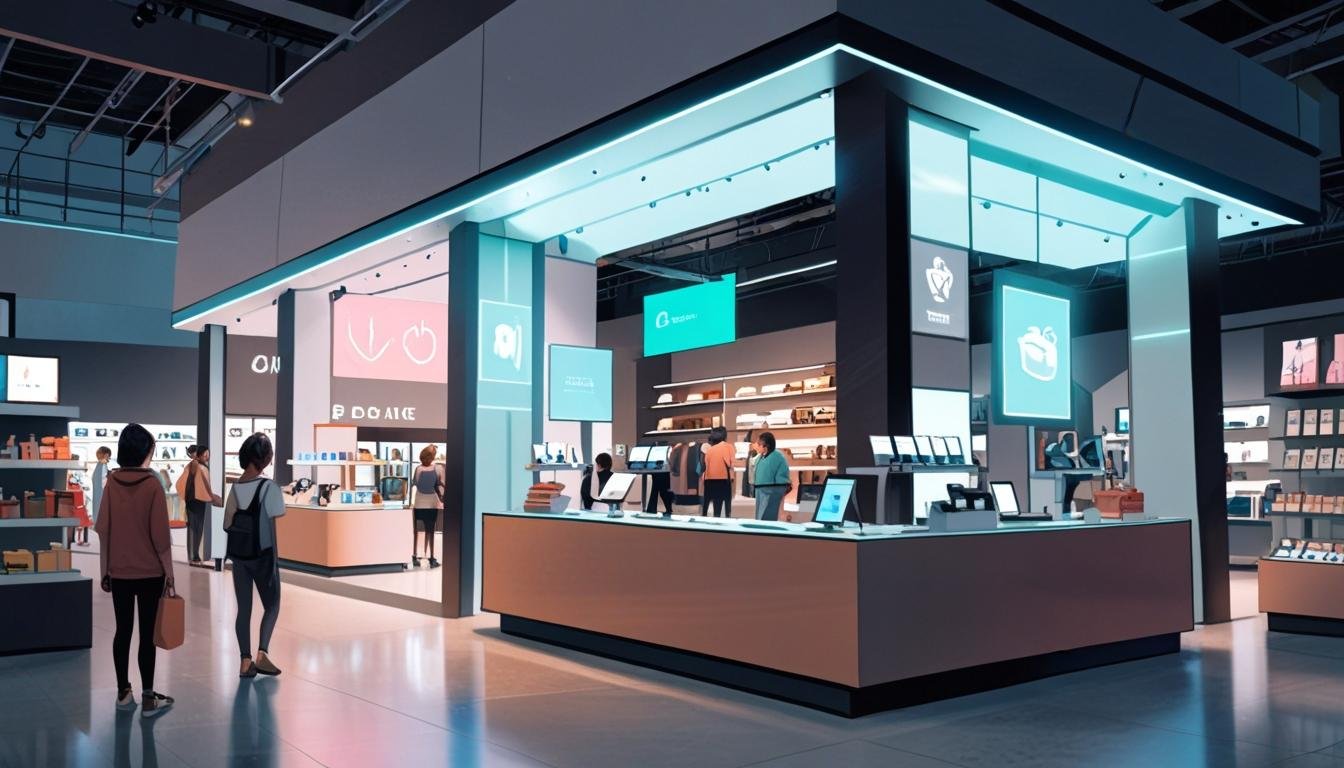
**London**: AI is revolutionising the retail sector by improving order management and enhancing customer experiences. Despite challenges like demand fluctuations and excess stock, businesses are increasingly investing in AI solutions, enabling them to adapt quickly and optimise operations for greater efficiency and customer satisfaction.
Artificial intelligence (AI) is rapidly transforming the retail landscape, attracting significant attention and investment from businesses worldwide. According to Total Retail, 92 percent of businesses indicated plans to invest in AI-powered software in the previous year. The proliferation of AI products has also been notable, with the number launched in 2023 doubling compared to previous years, as reported by Gartner.
Retailers, however, are facing a range of challenges that are disrupting their operational efficiency and customer satisfaction. Key issues include demand fluctuations, financial pressures stemming from excess stock, and difficulties in tracking inventory accurately. These challenges often lead to stockouts, erroneous product information, and customer frustration, which in turn impact brand loyalty and revenue generation.

The retail sector has traditionally grappled with disconnected systems related to order management and product information. To address these issues, a new strategy has emerged: AI-powered order orchestration. This innovative approach integrates capabilities necessary for effective order management and fulfillment, significantly enhancing operational efficiencies. Central to this system is an intelligent AI assistant designed to collaborate with retail IT teams and improve various operational aspects, including real-time inventory optimisation, product information distribution, and channel management.
With the implementation of AI-powered solutions, retailers can swiftly deploy new social commerce features, substantially reducing setup time from months to just days. This efficient deployment is facilitated by intelligent workflows, which enable small teams to manage complex operations related to product content, inventory allocation, and fulfilment. By dynamically adjusting fulfilment capacity based on real-time data, retailers can better meet varying consumer demands, ensuring they do not overextend their operational capabilities.
Evidently, the advantages of AI in retail extend beyond mere operational efficiency. By providing consistent and accurate product information across various consumer touchpoints, retailers are creating seamless shopping experiences. This not only fosters customer loyalty but also promotes a positive cycle of operational excellence and enhanced demand generation.
AI-powered order orchestration facilitates improved product discovery by connecting enriched product information with real-time inventory, thus enhancing search engine optimisation and site search efficiencies. In addition to boosting conversion rates, these systems automatically categorise new products, optimising their visibility for consumers. Moreover, intelligent fulfilment processes allow retailers to assess inventory, carrier capacity, and delivery commitments, effectively minimising manual trade-offs between speed and cost.
By analysing data-driven insights, AI can recommend new fulfilment protocols, streamlining decisions to meet service levels while also lowering shipping expenses. Retailers can further enhance customer experiences by ensuring orders are dispatched from the most suitable locations.
The development of seamless channel management capabilities allows retailers to accelerate revenue capture, enabling the swift launch of new channels and ensuring that product content remains consistent and rich. Retailers can also decrease the occurrence of poor customer experiences, such as stockouts or cancellation due to overselling, by keeping inventory up-to-date in real-time.
The shift towards direct-to-consumer (DTC) models has become more pronounced, as retail businesses aim to reduce reliance on third-party platforms, thereby increasing profit margins. AI-powered order management systems provide retailers the agility to explore new markets while enhancing customer lifetime value through improved shopping experiences and intelligently managed inventories.
Mustafa Masud, the director of product management for fabric, emphasises that the adoption of AI in retail is gaining momentum as new applications continuously emerge. Retailers are poised to harness the substantial advantages offered by AI, integrating sophisticated order management solutions enriched with product information to navigate the evolving market landscape effectively.
Source: Noah Wire Services

