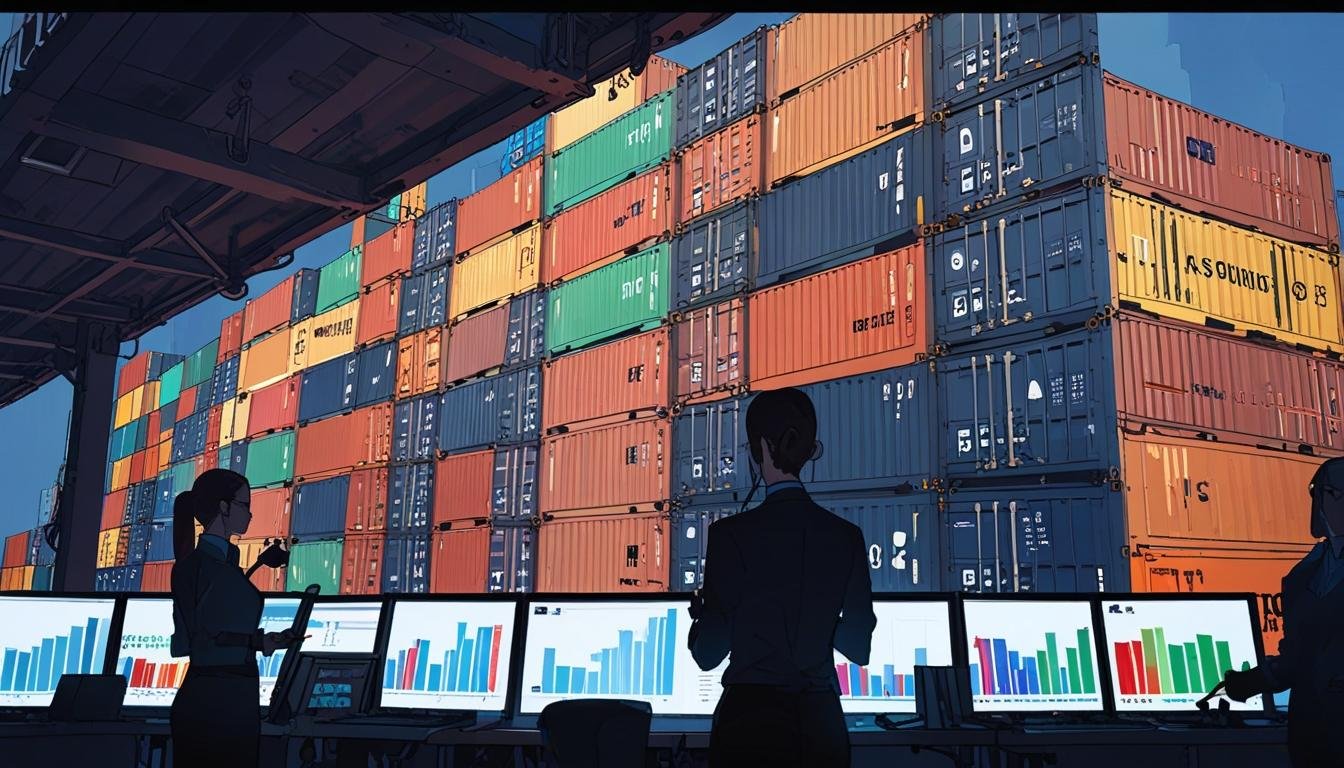
**Washington D.C.**: A technical issue at U.S. Customs delays tariff collection as shippers are instructed to pause financial filings. This disruption adds uncertainty for global businesses, prompting many to adopt AI solutions to adapt to changing tariff conditions and economic challenges.
A technical glitch impacting U.S. Customs has resulted in a delay in the collection of tariffs, as reported by CNBC on April 11. The issue arises from a malfunctioning entry code that is crucial for exempting specific freight from tariffs. Shippers have been instructed to hold off on filing their financial documents until the problem is rectified.
Under normal circumstances, all necessary paperwork for cargo release is submitted at once, with tariffs being paid by shippers when their goods are cleared by Customs. However, the current technical issue is halting this process. The non-functional code is intended for freight exempt from new tariffs—either due to the goods being from countries where tariffs have been paused or for shipments from China that were already en route to the U.S. prior to the imposition of tariffs.

While this glitch persists, U.S. Customs is not collecting tariffs. This situation has contributed to increasing uncertainty surrounding tariffs, which John Denton, secretary-general of the International Chamber of Commerce, noted is causing more challenges for global businesses than the existing baseline tariff rate of 10%. Speaking to the Wall Street Journal, Denton mentioned that the ongoing ambiguity is likely to prompt businesses to delay critical decisions, particularly regarding orders and employee hiring. “That means that a lot of critical decisions about investment will be put off until the second half,” he indicated.
In response to these tariff-related pressures, many companies are leveraging artificial intelligence (AI) to lessen the impact on their operations. As reported by PYMNTS on April 8, businesses are employing AI to stay abreast of evolving tariff policies, identify alternative sources for raw materials, bolster supplier resilience, and enhance overall efficiency while reducing costs. A survey from Zilliant highlights that 83% of U.S. C-suite executives are adapting their pricing strategies to address economic fluctuations through AI. According to the company’s chief value officer, Stephan Liozu, while AI plays a significant role, organisations are also adopting a variety of strategies to navigate the complexities of tariff challenges.
Source: Noah Wire Services