


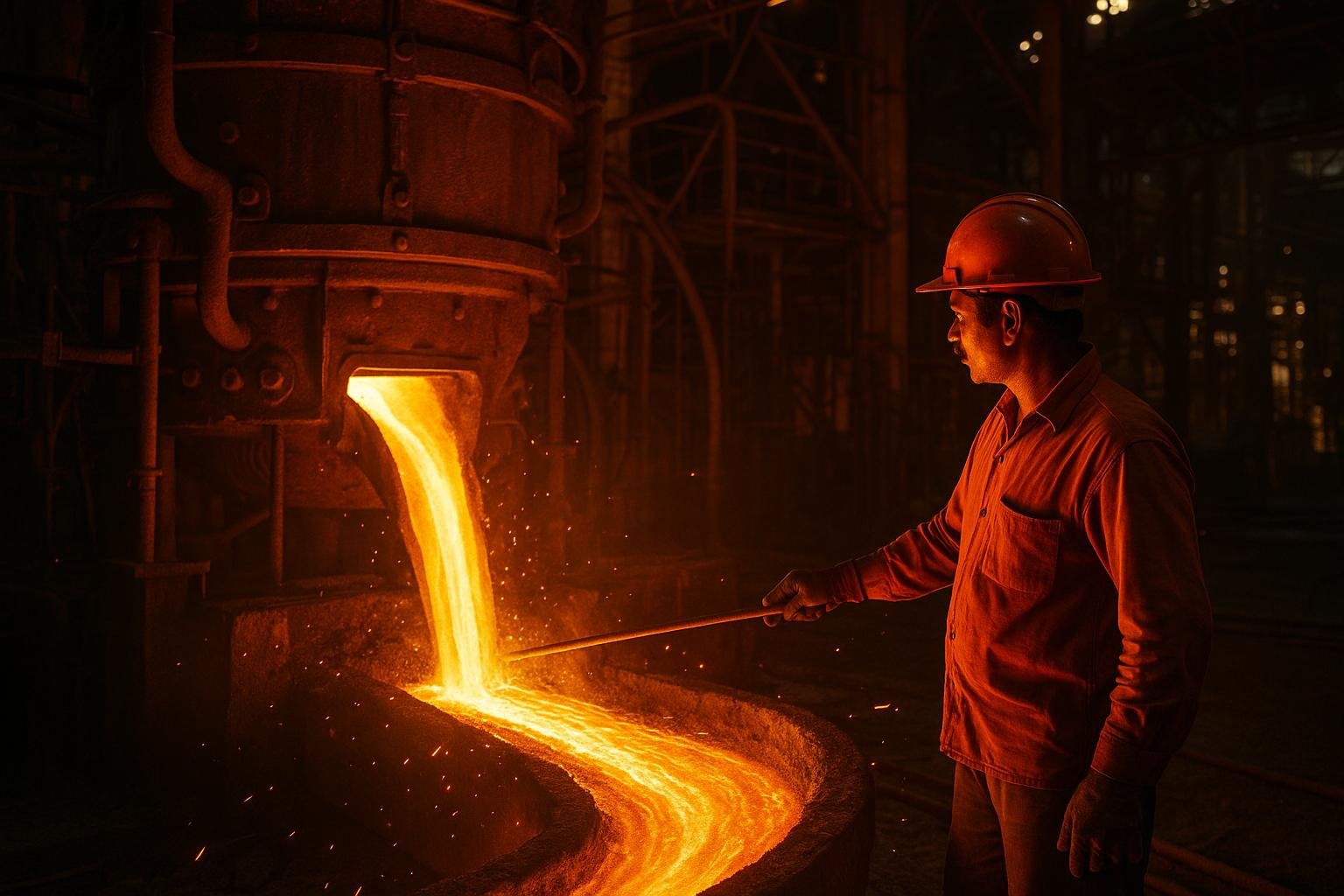
At Davos, Tata Steel’s chief executive TV Narendran emphasised the importance of localisation and domestic markets in a changing global trade landscape, as industries adapt to protectionist measures and geopolitical tensions, with India emerging as a key player.

At the World Economic Forum in Davos on 22 January, Tata Steel’s chief executive TV Narendran painted a picture of an industry forced to adapt as geopolitics and protectionist trade measures redraw the map o...
Continue Reading This Article
Enjoy this article as well as all of our content, including reports, news, tips and more.
By registering or signing into your SRM Today account, you agree to SRM Today's Terms of Use and consent to the processing of your personal information as described in our Privacy Policy.
Speaking to Business Today TV, Narendran said the era of prioritising lowest cost across long supply chains has given way to a focus on durability and security. “permanently changed the way you look at supply chains,” he told the outlet, arguing that capital‑heavy industries such as steel must plan with multi‑decade horizons because plants are built to last decades. That, he said, favours countries with large home markets and local access to raw materials, and India fits that profile.
Narendran described a clear shift toward localisation, whether within national borders or regional blocs, as governments seek to reduce exposure to volatile cross‑border flows. He pointed to recent measures in the United States and Europe intended to shield domestic manufacturing and suggested that trade corridors are being reoriented, with deeper engagement developing between the European Union and India. According to reporting from the Economic Times, several CEOs at Davos concurred that India’s expanding links with Europe, West Asia and other parts of Asia are creating confidence beyond relationships driven solely by tariff considerations.
The Tata Steel chief also reflected on how crises can accelerate policy change. “You should never waste a crisis,” he said, noting that India has continued to press forward with structural reforms and that execution at state and district levels will be crucial to translate national intent into benefits for smaller manufacturers and micro, small and medium enterprises.
At the same time, Narendran acknowledged substantial headwinds for the sector. He told Business Today TV that duties on exports from Tata Steel’s European operations have forced operational adjustments. Industry reporting has also highlighted a wider market problem: steel prices in India fell to their lowest level in five years during 2025, a slump analysts and executives link to an oversupplied international market and rising protectionism. According to multiple media accounts, China’s export volumes , reported at roughly 110 million tonnes a year , and its competitive pricing have intensified pressure on global prices and complicated export opportunities for Indian producers.
Despite depressed prices, domestic consumption in India remains resilient, Narendran said. He pointed to ongoing demand from infrastructure, construction, rail, automotive and industrial projects, and said commercial activity and rural markets have improved compared with two years ago, while warning that delayed payments among some MSME buyers continue to strain parts of the supply chain. Company statements reported around a 10% export share from Tata Steel’s Indian operations, reflecting a strategic shift to reduce export dependence in favour of serving local demand; the company is also pursuing growth in the Middle East and Africa, leveraging diaspora links and trade ties.
Narendran described Europe’s demand trajectory as beginning to firm, helped by increased public spending on infrastructure and defence, but said tariff barriers have nonetheless disrupted flows and required Tata Steel to recalibrate market focus. Industry commentators have observed that global oversupply, and slower construction activity in China, contributed to a second consecutive year of elevated Chinese exports, a dynamic that has weighed on international margins and pushed some steelmakers to prioritise domestic outlets.
Looking ahead, Narendran urged continued investment in India’s physical infrastructure and policies that reduce costs beyond factory gates. He emphasised that while national policymaking displays strong intent, the effectiveness of reforms will depend on implementation at local levels, especially measures that support MSMEs and smaller manufacturers in accessing finance and logistics.
Narendran’s remarks at Davos underline a broader theme emerging from global business leaders at the forum: companies are recalibrating strategies for a world where supply‑chain resilience and geopolitical risk weigh as heavily as unit costs, and where large, growing domestic markets such as India’s provide a competitive advantage amid global uncertainty.
Source: Noah Wire Services
Subscribe to Industry Updates

