


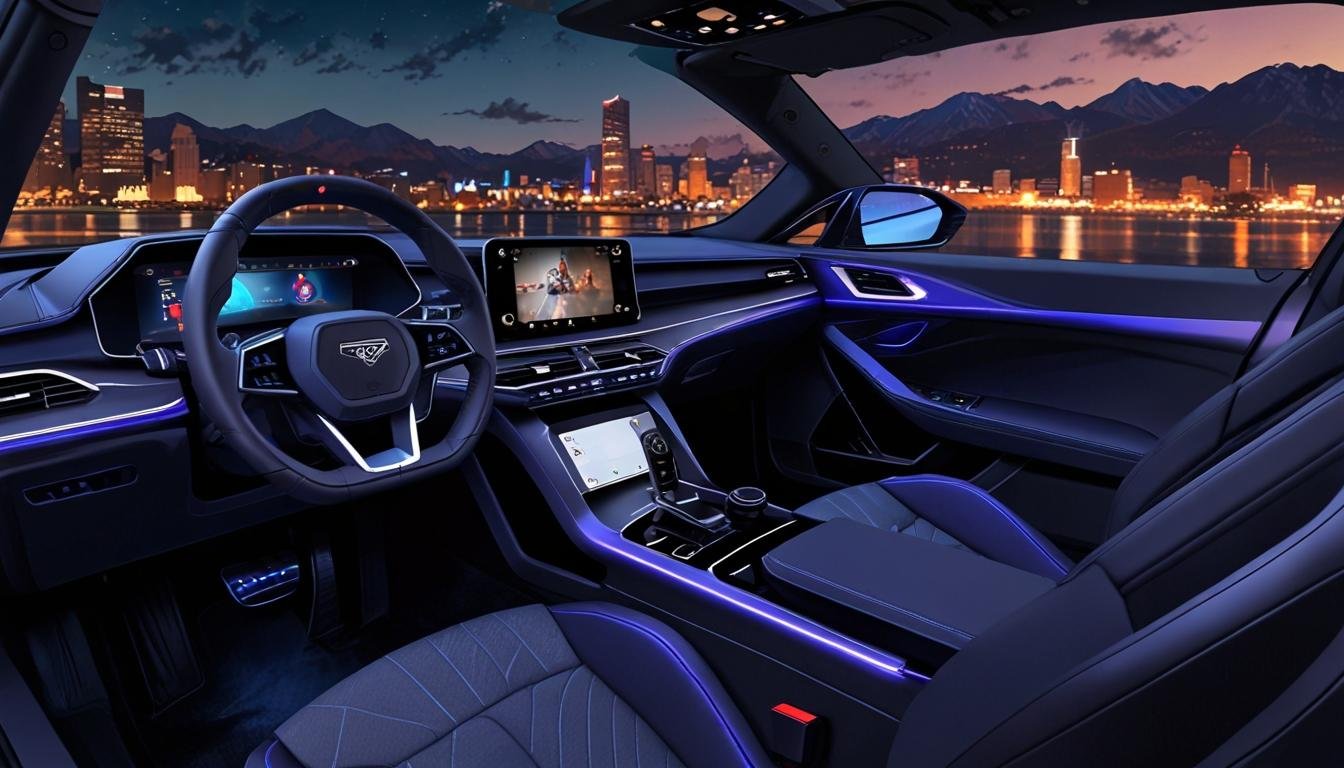
**India**: Sven Patuschka, CTO of Tata Motors, discusses the company’s strategic vision for in-car experiences, highlighting advancements in AI, connectivity, and personalization under the CESS strategy, aimed at transforming mobility in India and enhancing user engagement through technology integration.
In a recent interview, Sven Patuschka, the Chief Technology Officer of Tata Motors Passenger Vehicles and TPEM, elaborated on the company’s strategic vision for the future of in-car experiences, spotlighting how technology advancements are set to redefine mobility in India. The conversation, reported by India.com, highlighted Tata Motors’ commitment to shaping a customer-centric environment through innovation and technological integration.
Tata Motors has embraced the CESS strategy, which stands for Connected, Electric, Shared, and Safe mobility. This framework is guiding the company in creating a transformative experience for users, focusing on personalization and seamless connectivity. Patuschka mentioned that strategic collaborations, particularly through initiatives like TACNet, are crucial in accelerating advancements in electrification, connectivity, and digital services, ensuring that Tata Motors remains competitive as customer expectations evolve.

The integration of advanced technology has led to the development of AI-driven adaptive settings within vehicles. These settings are designed to tailor infotainment, climate controls, and driving preferences according to individual user profiles. Real-time navigation and IoT-enabled connectivity further enhance the convenience for drivers. As Patuschka explained, “These partnerships ensure Tata Motors’ vehicles remain at the forefront of technology, keeping pace with evolving mobility trends and customer aspirations.”
A significant development in Tata Motors’ suite of connected features is the introduction of Arcade.ev, which marks India’s first infotainment app designed specifically for vehicles. Patuschka noted that this application responds to the demand for enhanced connected car features and localised content, providing users with a lounge-like experience through entertainment and ease of smartphone integration. The aim is to make every journey more engaging for drivers and passengers alike.
Additionally, Tata Motors is pioneering Gen AI-powered mood-sensitive interfaces. These sophisticated systems assess voice tones, facial expressions, and driving patterns to tailor music, lighting, and climate settings to create a uniquely Indian driving experience. By incorporating regional languages and cultural themes into their technologies, Tata Motors is enhancing user personalization significantly.
The company also utilises AI and data analytics for the ongoing enhancement of in-car technologies. According to Patuschka, AI-driven predictive maintenance, adaptive infotainment, and personalised climate controls create a more intuitive driving experience. Over-the-air updates allow new features and security optimisations to be implemented without the need for dealership visits, showcasing Tata Motors’ commitment to providing future-ready mobility solutions.
Patuschka further explained that customer feedback plays a vital role in refining these technologies and partnerships. Tata Motors gathers insights through real-time data collection and direct engagement, allowing the company to fine-tune personalization, safety features, and overall vehicle performance continuously. The collaboration with technology partners and startups is pivotal to integrating user-driven enhancements into not only software updates but also future vehicle models, ensuring a customer-centric approach in their innovations.
As Tata Motors forges ahead with its vision for in-car experiences, the company’s focus on AI, connectivity, and personalization appears to set a new standard in the automotive industry in India.
Source: Noah Wire Services

