


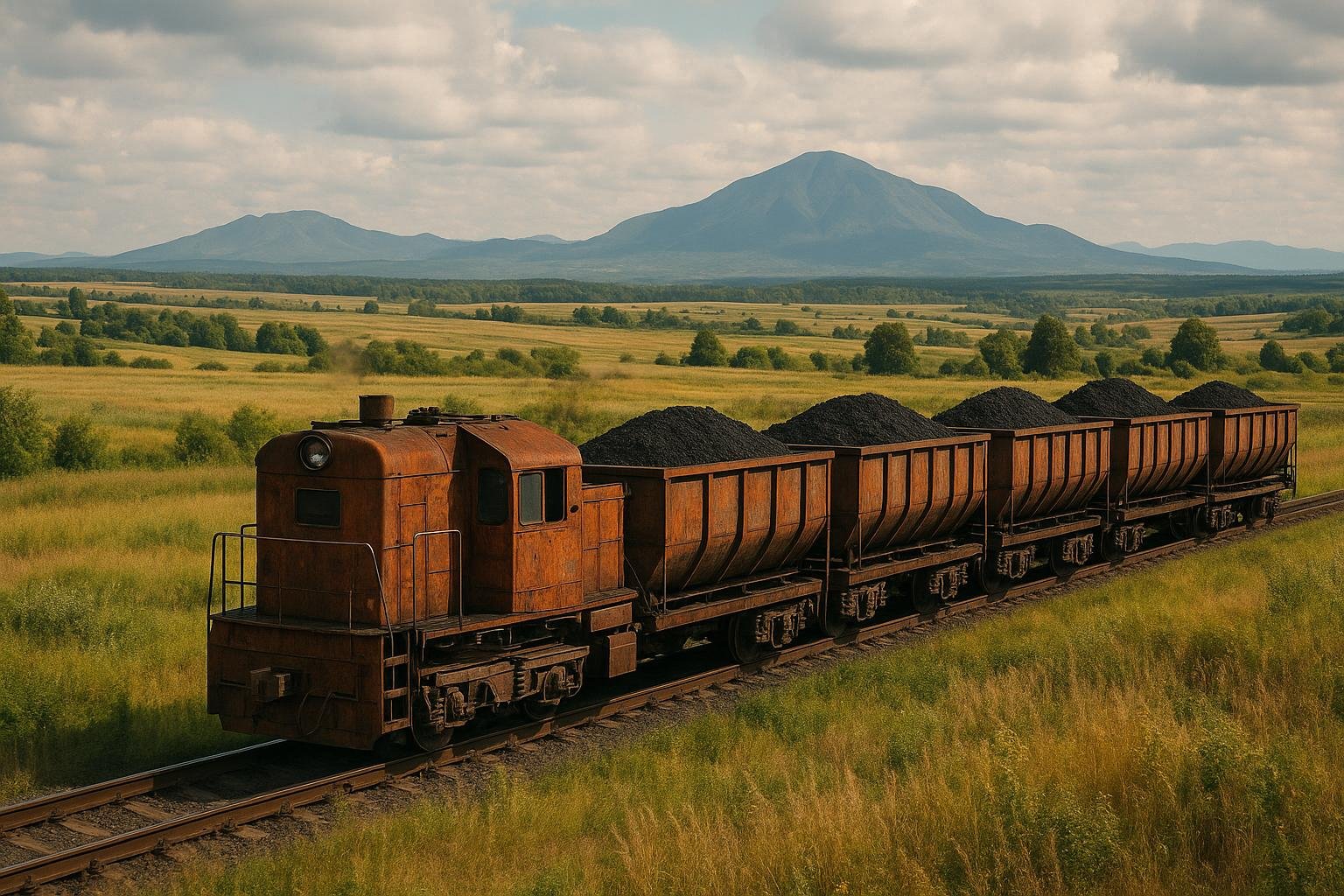
Amid efforts to curb Russian energy revenues, experts suggest blocking coal exports , a crucial, underutilised revenue stream , could impose new economic pressures on Vladimir Putin and expedite peace negotiations in Ukraine.

President Donald Trump’s administration has intensified its focus on crippling Russian energy exports in an effort to pressure Vladimir Putin into negotiations to end the war in Ukraine. While significant attention has been placed on Russian oil ...
Continue Reading This Article
Enjoy this article as well as all of our content, including reports, news, tips and more.
By registering or signing into your SRM Today account, you agree to SRM Today's Terms of Use and consent to the processing of your personal information as described in our Privacy Policy.
According to Syd S. Peng, an emeritus professor of Mining Engineering at West Virginia University, current sanctions on Russian oil and gas have failed to sufficiently halt Putin’s war machine. Although European markets have ceased importing Russian coal, Russia continues to export significant quantities primarily to Asia, including China, India, South Korea, Taiwan, and Turkey. These exports generate approximately $31 billion annually for Russia’s war budget, a revenue stream that now exceeds that derived from its pipeline oil and gas exports.
Peng highlights that four of these coal-importing countries, India, South Korea, Taiwan, and Turkey, maintain strong trade ties or alliances with the United States. This presents an opportunity for the U.S. administration to leverage trade policy by negotiating lower tariffs with these countries in exchange for replacing Russian coal imports with American coal. The U.S. coal industry, which already exports extensively to these markets, has the capacity to meet this demand and undercut Russia’s economic capacity to sustain its war efforts.
The logic behind focusing on coal is not merely economic but geopolitical. Russia’s coal sector employs over 140,000 workers and supports local economies in key regions, making it politically sensitive for the Kremlin. A targeted campaign to slash this revenue stream could impose severe political strain on Putin’s government and escalate the pressure to negotiate peace.
However, the war and sanctions regime are complex and multifaceted. The U.S. has already enacted sweeping sanctions targeting Russian energy firms, including Gazprom Neft and Surgutneftegas, as well as associated vessels and service providers. These measures have severely disrupted Russian oil exports. For instance, Serbia’s NIS oil refinery, largely owned by Russia’s Gazprom Neft, shut down operations due to sanctions affecting crude deliveries, underscoring the disruptive impact on Russian energy infrastructure. Serbia is actively seeking a waiver from these sanctions, reflecting the broader ripple effects in global energy markets.
Despite these efforts, there are criticisms regarding enforcement efficacy. Four Democratic U.S. senators recently condemned the Trump administration for insufficiently policing sanctions on Russia’s Arctic LNG 2 terminal, which continues to supply discounted liquefied natural gas to China, indirectly funding the Russian war effort. This situation illustrates the difficulties in sealing all possible revenue channels.
More broadly, Western sanctions imposed since August 2024 have targeted major Russian energy companies such as Rosneft and Lukoil. These sanctions complicate Russian asset sales and financial transactions, creating significant operational hurdles for these firms. Nonetheless, Russian firms persist in finding ways to maintain critical revenue streams, suggesting that additional targeted actions, such as against coal, could be necessary.
The proposal to use trade policy and tariffs strategically against Russian coal aligns with Trump’s broader political messaging of supporting American industry and working-class jobs, particularly in coal mining regions. Peng argues that such a coalition of interests, pro-peace, pro-competitiveness, and pro-working class, could create a bipartisan consensus for a tough stance on Russian coal exports.
In sum, while the U.S. has made significant strides in limiting Russian oil and gas exports, attention now turns to coal as an overlooked but vital revenue source that sustains Russia’s war economy. If the U.S. can successfully leverage its trade relationships to extinguish Russia’s coal export markets, it could deepen the economic pressure on the Kremlin and potentially shorten the conflict in Ukraine. This strategy, combining diplomatic leverage with industrial policy, offers a novel pathway to peace and economic renewal for American coal producers.
Source: Noah Wire Services
Subscribe to Industry Updates

