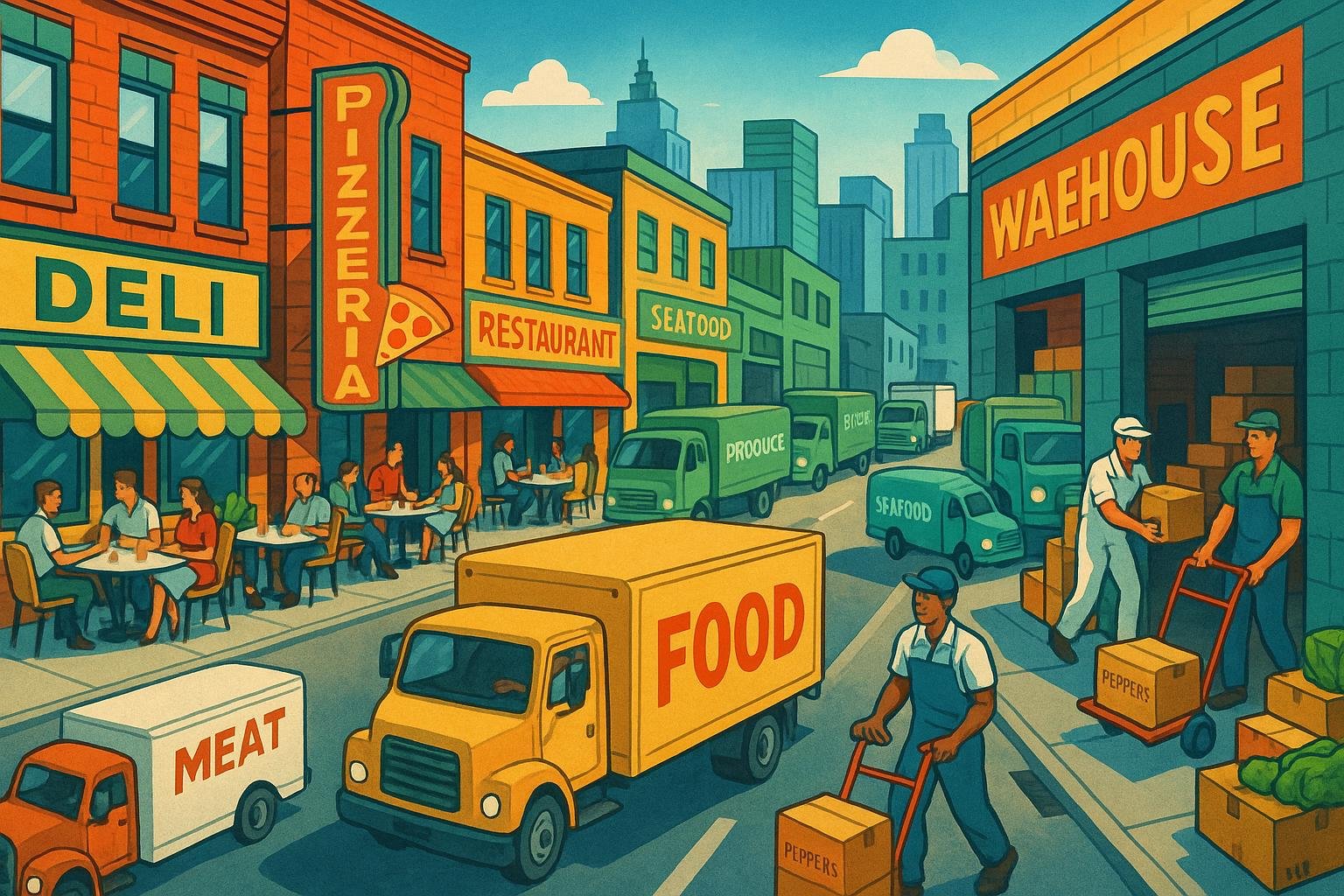
Sysco’s position in the US foodservice supply chain remains anchored in scale, logistics and an ability to serve a wide range of customers from restaurants to hospitals and hotels. The company sits at the centre of a market that industry research puts at more than $350 billion, with broadline distributors such as Sysco, US Foods and Performance Food Group accounting for a significant share of the sector. Morningstar says Sysco is the largest player in the field, with about 17% of th...
Continue Reading This Article
Enjoy this article as well as all of our content, including reports, news, tips and more.
By registering or signing into your SRM Today account, you agree to SRM Today's Terms of Use and consent to the processing of your personal information as described in our Privacy Policy.
e market, helped by its capacity to deliver a broad basket of goods on schedule and from a single source.
That model has become more valuable as foodservice demand continues to shift. Away-from-home consumption has remained resilient, even as performance varies across segments. Quick-service dining has generally held up better than casual dining, while restaurants, healthcare facilities and schools all continue to rely on distributors that can balance inventory, freshness and cost. Sysco’s core appeal lies in that operational mix: it combines central procurement with regional distribution, giving it the reach to manage different customer needs while keeping delivery reliable.
The company’s product mix has also evolved alongside those demand patterns. Market.us data shows fresh and frozen meats rising from 18% of Sysco’s mix in 2023 to 19% in 2025, reflecting steady protein demand. Canned and dry goods have eased slightly, suggesting demand has normalised after earlier spikes in shelf-stable buying. Other categories have remained relatively stable, including dairy, poultry and fresh produce, while beverage sales have edged higher. Seafood has slipped modestly, which the data links to sourcing pressures and shifting cost dynamics. That pattern points to a distributor adapting its portfolio rather than relying on any one category.
Sysco has also been highlighting the way it reads customer trends. Its Foodie platform has been used to showcase menu ideas, seasonal products and the role of authenticity in branded offerings, while its Market Corner reports commodity outlooks intended to help operators manage purchasing decisions. The message is that food distribution is no longer just about transport and warehousing; it is also about helping customers respond to changing tastes, prices and supply conditions.
The latest strategic development is Sysco’s proposed $29.1 billion acquisition of Restaurant Depot, reported by the Associated Press. If approved by regulators, the deal would push Sysco deeper into the cash-and-carry wholesale segment, an area that serves restaurants looking for immediate or supplemental supplies. Restaurant Depot, founded in Brooklyn in 1976, has long been a key resource for smaller food businesses through its membership-based warehouse model. Analysts say combining that business with Sysco’s broadline reach could give the company a stronger grip on independent restaurant purchasing, particularly for operators that use multiple suppliers.
For Sysco, the attraction is clear: greater proximity to restaurants, more touchpoints across the supply chain and a broader base from which to defend its market lead. For the sector, the deal would underline a wider trend towards consolidation in foodservice distribution, where scale, service and sourcing capability are becoming even more important.
Source: Noah Wire Services