


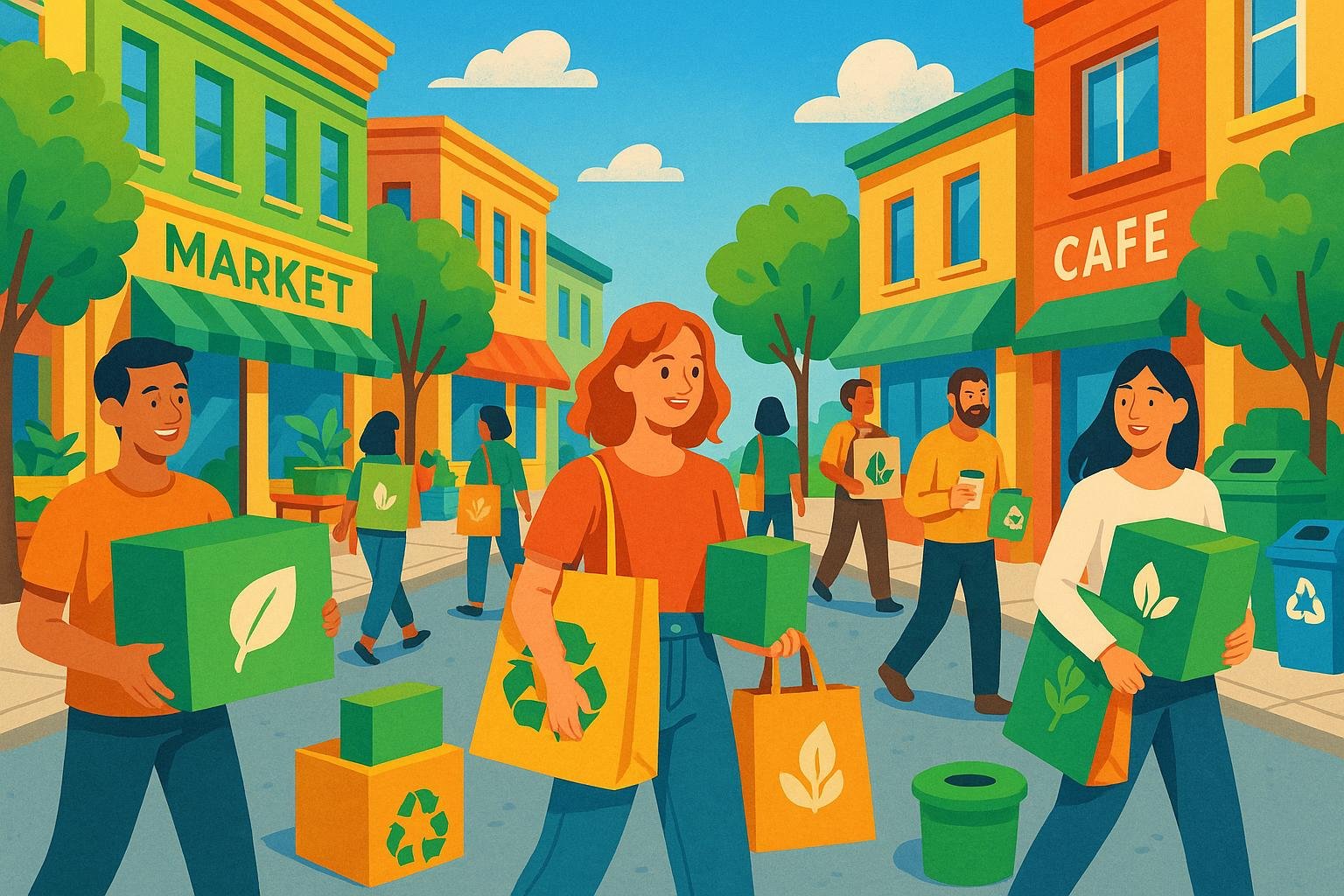
Packaging has become the decisive moment in the customer journey: the first item a buyer touches after a wholly digital relationship. Yet many online retailers relegate packaging to the end of the budget, producing parcels that fail both to represent their brand and to match rising consumer and regulatory expectations.
Recent market research shows that sustainable packaging is now mainstream, not niche. According to Macfarlane Packaging’s 2024 Unboxing Survey, 76% of UK consu...
Continue Reading This Article
Enjoy this article as well as all of our content, including reports, news, tips and more.

By registering or signing into your SRM Today account, you agree to SRM Today's Terms of Use and consent to the processing of your personal information as described in our Privacy Policy.
Those shifting preferences intersect with tightening regulation. The UK’s Plastic Packaging Tax, amended in April 2025, now targets plastic packaging containing less than 30% recycled content, raising direct cost exposure for brands that continue to rely on virgin plastic mailers, tapes or void fill. Meanwhile, Extended Producer Responsibility rules are increasing brand liability for the end-of-life costs of packaging placed on the market. Taken together, these policy changes mean packaging is increasingly a financial as well as a reputational consideration.
For eCommerce operators, sustainable packaging is therefore both a brand decision and a commercial imperative. The good news is that green printing and materials have advanced: choices that once forced a trade-off between presentation and principle now allow retailers to keep both.
Materials and print choices that work at scale
Outer packaging: FSC-certified corrugated board and kraft mailers remain the most practical starting points. FSC certification signals responsible sourcing and is widely recognised by customers, while kraft mailers offer a lighter, recyclable alternative for lower-weight items. Right-sizing boxes to SKU dimensions reduces material use, lowers shipping costs driven by dimensional weight pricing, and avoids the wasteful impression oversized parcels convey.
Inks, labels and tape: the print on a package matters. Plant-based or water-based inks reduce VOC emissions and make de-inking easier during recycling, improving the recyclability of printed board. Uncoated boards and minimal ink coverage not only ease recycling but increasingly read as a considered, premium aesthetic. Paper-based tapes and water-activated kraft labels replace polypropylene and other polymer adhesives, enabling the entire parcel to be kerbside recyclable.
Inner packaging and inserts: brands can eliminate plastic inner wraps and polystyrene void fill in favour of honeycomb kraft, recycled tissue and paper-based void solutions. Single-card instruction guides with QR codes reduce paper use while maintaining the customer experience. Recycled uncoated stock for branded inserts can deliver tactile quality without the environmental cost of plastic coatings.
Operational delivery: the fulfilment partner matters
A supplier of sustainable materials is only part of the solution. Fulfilment operations determine whether good packaging choices survive at scale. A third-party logistics provider that defaults to oversized boxes, uses non-recyclable void fill, or layers in unnecessary printed documentation can negate a brand’s investment in greener materials. Brands should check that fulfilment partners can consistently source and handle specified materials, implement right-sizing across SKUs, accommodate branded inserts, and support paperless or low-paper dispatch processes.
According to the Green Fulfilment programme described in the lead report, an eco-focused 3PL should demonstrate recyclable material handling, energy-efficient warehousing, waste reduction and a paperless dispatch pipeline across its facilities.
Economic as well as ethical returns
Concerns that sustainable packaging undermines perceived quality are increasingly misplaced. Data show branded packaging has become the norm and that visible sustainability can enhance brand equity. High-profile examples in beauty and personal care demonstrate that minimal, plastic-free parcels can be both distinctive and aspirational. Industry research also suggests packaging that photographs well and signals sustainability has organic marketing value, with many shoppers more likely to share unboxing experiences online.
Cost considerations are nuanced. While certified materials sometimes carry a premium, savings from right-sizing, lower dimensional weight charges and simpler inner packaging often offset those costs. Moreover, avoiding exposure to the Plastic Packaging Tax and future EPR liabilities can deliver clear financial benefits.
Practical roadmap for brands
Effective transitions tend to be staged and pragmatic. A recommended sequence is:
- Audit every packaging component and record materials and recyclability.
- Make low-cost swaps first: paper tape for plastic, paper void fill for polystyrene, recycled uncoated inserts.
- Confirm fulfilment partner capabilities for custom eco packaging, right-sizing and paperless operations.
- Move outer packaging to FSC-certified or kraft alternatives and brief a green printing supplier on ink type and carbon offsetting.
- Communicate end-of-life instructions on the parcel or via QR code to help customers recycle correctly.
- Verify third-party certifications such as FSC, recognised compostability marks where used, Plastic Packaging Tax compliance and EPR registration.
Third-party credentials matter because consumers are increasingly sceptical of greenwashing. Clear, verifiable claims backed by recognised certifications strengthen credibility.
Closing the values gap
Packaging is one of the few physical touchpoints where a brand’s stated values can be directly tested by customers. When parcels contradict marketing claims, trust erodes. Conversely, aligning materials, print and fulfilment practices with sustainability commitments turns each delivery into an affirmation of the brand’s promise.
For retailers, the question is no longer whether to act but how quickly to adapt. The convergence of consumer preference, regulatory pressure and operational capability means that sustainable branded packaging is now a strategic decision with reputational, regulatory and financial stakes. Brands that treat packaging as an integral part of their proposition rather than an afterthought will gain both loyalty and resilience as the market and the rules continue to evolve.
Source: Noah Wire Services
Subscribe to Industry Updates

