


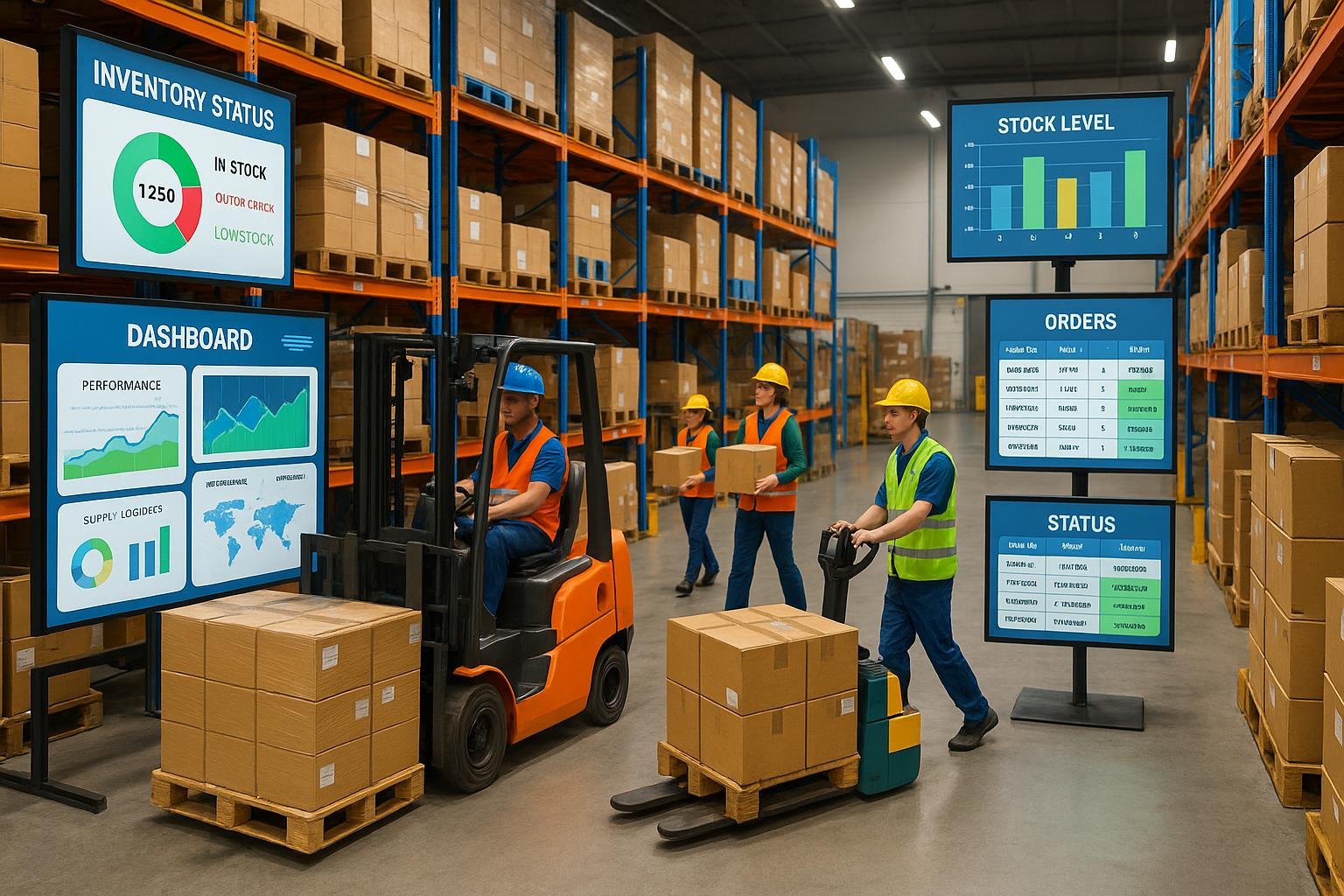
As supply chains face new legal, operational, and technological hurdles, industry leaders are racing to integrate decision-making and execution, transforming resilience and agility in a disrupted landscape.

This week’s developments underline a single, urgent theme for supply chains: abundant data no longer guarantees better outcomes. Firms and platforms are racing to convert visibility into immediate, coordinated action , and the winners will be those that rebuild arc...
Continue Reading This Article
Enjoy this article as well as all of our content, including reports, news, tips and more.
By registering or signing into your SRM Today account, you agree to SRM Today's Terms of Use and consent to the processing of your personal information as described in our Privacy Policy.
Architectural: from isolated optimisation to connected execution
Industry research is increasingly clear that the dominant technology shortcoming is structural, not fiscal. According to a report published by Infios, most execution systems remain optimised to operate inside narrow functional boundaries, leaving organisations dependent on manual workarounds when disruptions arrive. Infios’ survey finds that a large majority of supply‑chain leaders now prize rapid, real‑time action as their primary competitive advantage, and nearly six in ten expect to increase spending on execution solutions over the next year. Sage’s State of Supply Chain report reinforces the concern: only around half of consumer brands feel prepared to respond reliably to major disruptions, citing gaps in visibility, system maturity and data readiness. Together these findings point to a market shift toward modular, interoperable stacks that can synchronise decisions across planning, warehousing, transport and finance rather than simply reporting metrics after the fact.
Legal: carriers press for clarity and cash after the Supreme Court ruling
The legal landscape has immediate operational consequences. Following the Supreme Court’s 6–3 decision that the president exceeded his authority by using emergency powers to impose tariffs, questions remain over the roughly $175 billion of duties collected under that policy. FedEx has moved first, filing suit to recover tariffs it says it paid under the now‑disputed order. According to reporting by The Guardian and business outlets, FedEx is seeking full refunds, a claim that, if successful, could create ripple effects across the logistics and importing community as companies evaluate landed‑cost exposure and tariff‑related accounting. Legal uncertainty of this scale is altering procurement and pricing behaviour today, not months from now.
Operational: exposing blind spots beyond peak season
Operational resilience is being tested not only by external policy shocks but by persistent internal blind spots. Research highlighted this week by practitioners points to “hidden” inventory and a returns system that traps value long after peak volumes subside. Hiu Wai Loh’s analysis warns that fragmented data causes false stockouts and leaves millions tied up in reverse logistics, and recommends unified, real‑time inventory models paired with AI‑driven disposition logic to route returns to their most profitable next use. At the ARC Advisory Group’s 30th Leadership Forum, Avantor and Aera Technology demonstrated how Decision Intelligence can be applied to this problem set, automating thousands of routine choices , from stock rebalancing to purchase‑order prioritisation , and delivering materially faster, more consistent outcomes than manual escalation paths. ARC’s message was pragmatic: focus on “change‑ready” solutions that solve high‑impact problems now, rather than waiting for perfect data or fully autonomous systems.
Structural: labour, AI and the cost of rapid transformation
The industry’s structural fabric is also shifting. WiseTech Global has announced a two‑year restructuring that will eliminate roughly 2,000 roles, about 29% of its workforce, as the company accelerates AI integration across its CargoWise platform. The firm handles a large share of global customs transactions, and its management frames the cuts as part of a strategy to embed AI more deeply in both internal processes and customer software. The company’s broader financial context , including a steep decline in its share price since late 2024 , has intensified investor pressure for rapid change. The move underscores a difficult reality: scaling decision automation often requires painful workforce adjustments and creates concentrated short‑term disruption even when longer‑term gains are promised.
What this means for practitioners
Taken together, these trends push companies to a single operational imperative: weld data, decisioning and execution into a single, responsive fabric. That requires new architectural choices that favour interoperable modules; legal strategies that treat regulatory and tariff risk as an input to operational plans; operational practices that surface and monetise hidden inventory and returns; and workforce plans that balance human expertise with increasingly capable machine decisioning. Industry surveys and event case studies suggest the transition is underway, but uneven: many organisations acknowledge the need and are budgeting for it, yet a sizeable minority still lack the systems or confidence to act quickly.
The immediate competitive edge belongs to organisations that can make decisions at the point of impact , not simply observe them from dashboards. As February closes, the supply chain sector is transitioning from a visibility era to one of high‑consequence execution, where legal rulings, AI‑driven operating models and connected architectures together determine who can act faster and more profitably when the next disruption arrives.
Source: Noah Wire Services
Subscribe to Industry Updates

