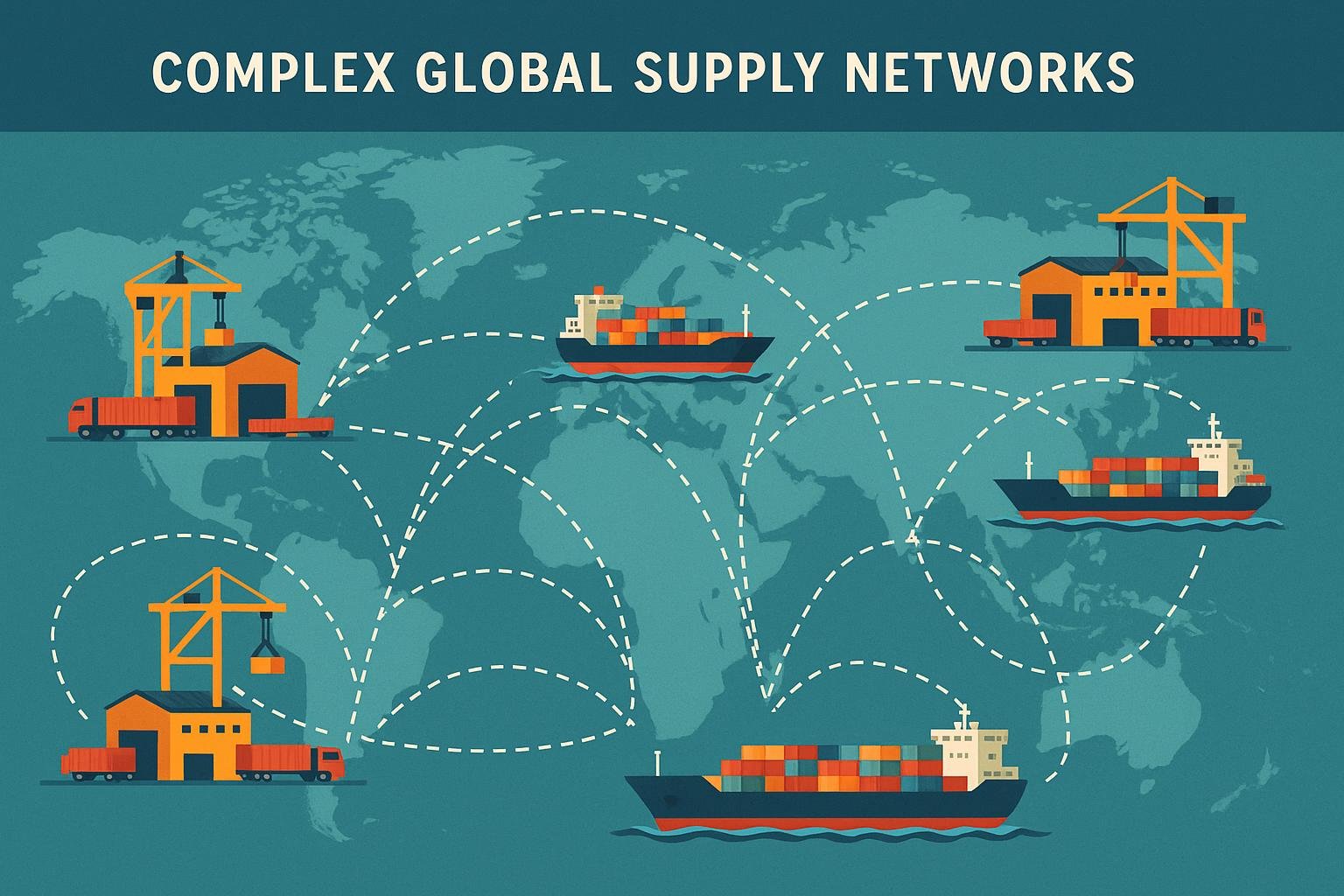
Supply chain orchestration is rapidly shifting from an appealing concept to an operational necessity as global networks grow more complex and disruptions multiply. At its heart, orchestration connects disparate streams of information, decision logic and on-the-ground execution so organisations can see what is happening across suppliers, carriers and channels and act faster and more coherently.
Where traditional setups rely on periodic reports and manual reconciliation, orchestr...
Continue Reading This Article
Enjoy this article as well as all of our content, including reports, news, tips and more.
By registering or signing into your SRM Today account, you agree to SRM Today's Terms of Use and consent to the processing of your personal information as described in our Privacy Policy.
ation treats every update as a trigger for response. According to the lead analysis on SupplyChain360, event-driven rules can automatically alert commercial teams, open alternative routes with preapproved carriers, reallocate inventory and update delivery commitments within minutes rather than hours. Industry measurements cited there indicate that firms adopting coordinated control towers can cut lead times and decision cycles substantially, with reported lead-time reductions between 10 and 30 percent once cross-functional workflows run on shared, current data.
The momentum behind orchestration is visible across vendor offerings and expert commentary. Forbes contributors argue the approach is essential in an era of heightened geopolitical friction, extreme weather, cyber risk and logistics volatility, noting that mere systems integration is no longer enough; enterprises need continuous, predictive awareness and the ability to remediate exceptions in real time. Forbes highlights the growing importance of common data models and AI in moving organisations from reactive firefighting to proactive network management.
Technology vendors present complementary perspectives on how to operationalise that ambition. Blume Global positions its cloud solution as a platform for real-time visibility and collaborative exception resolution, emphasising automated playbooks and predictive insights to reduce the manual burden on buyers and logistics teams. Kinaxis markets an AI-driven orchestration product that spans strategic planning through execution, offering scenario simulations and constraint-aware plans to balance service and cost. InterSystems describes its data-first approach as building a connective layer that unifies legacy enterprise systems, partner feeds and device telemetry to deliver prescriptive guidance in minutes rather than days.
Successful adoption, however, hinges on more than software. Practitioners caution that treating orchestration as a point technology leads to fragmented pilots and ephemeral dashboards. Sustainable change requires a governance function that owns the data architecture, rule catalogue and performance metrics while embedding local operating knowledge from planners, procurement and logistics leads. The SupplyChain360 piece stresses the need for explicit playbooks and pre-agreed thresholds, who acts, which signals trigger automation and when issues escalate to cross-functional teams, to avoid ad hoc decision-making under pressure.
Human factors remain a central barrier. Teams accustomed to siloed tools often resist transparency that exposes trade-offs between service, cost, cash and emissions. Change programmes must train staff to interpret forward-looking signals, to treat AI recommendations as structured inputs rather than automatic directives, and to appreciate how a single routing or allocation choice ripples through capacity and working capital.
Sustainability imperatives are accelerating board-level interest in orchestration. End-to-end traceability improves Scope 3 emissions accounting and streamlines the capture of supplier and transport data required by emerging disclosure regimes. Flow optimisation that prioritises consolidation, smarter modal choices and leaner inventory can improve both environmental and financial performance when governed by deliberate rules, industry suppliers argue.
As orchestration spreads, best practice is to begin with a tightly scoped use case that delivers visible value, transport exceptions, inbound supplier reliability or last-mile coordination in a specific market, then scale once governance, KPIs and playbooks prove effective. According to the vendor and analyst commentary synthesised here, organisations that combine a rigorous data foundation, clear accountability and iterative change management will realise material gains in resilience, commercial responsiveness and credible sustainability reporting. Those that do not may remain locked in manual coordination and after-the-fact remediation, unable to turn network signals into timely, aligned action.
Source: Noah Wire Services