


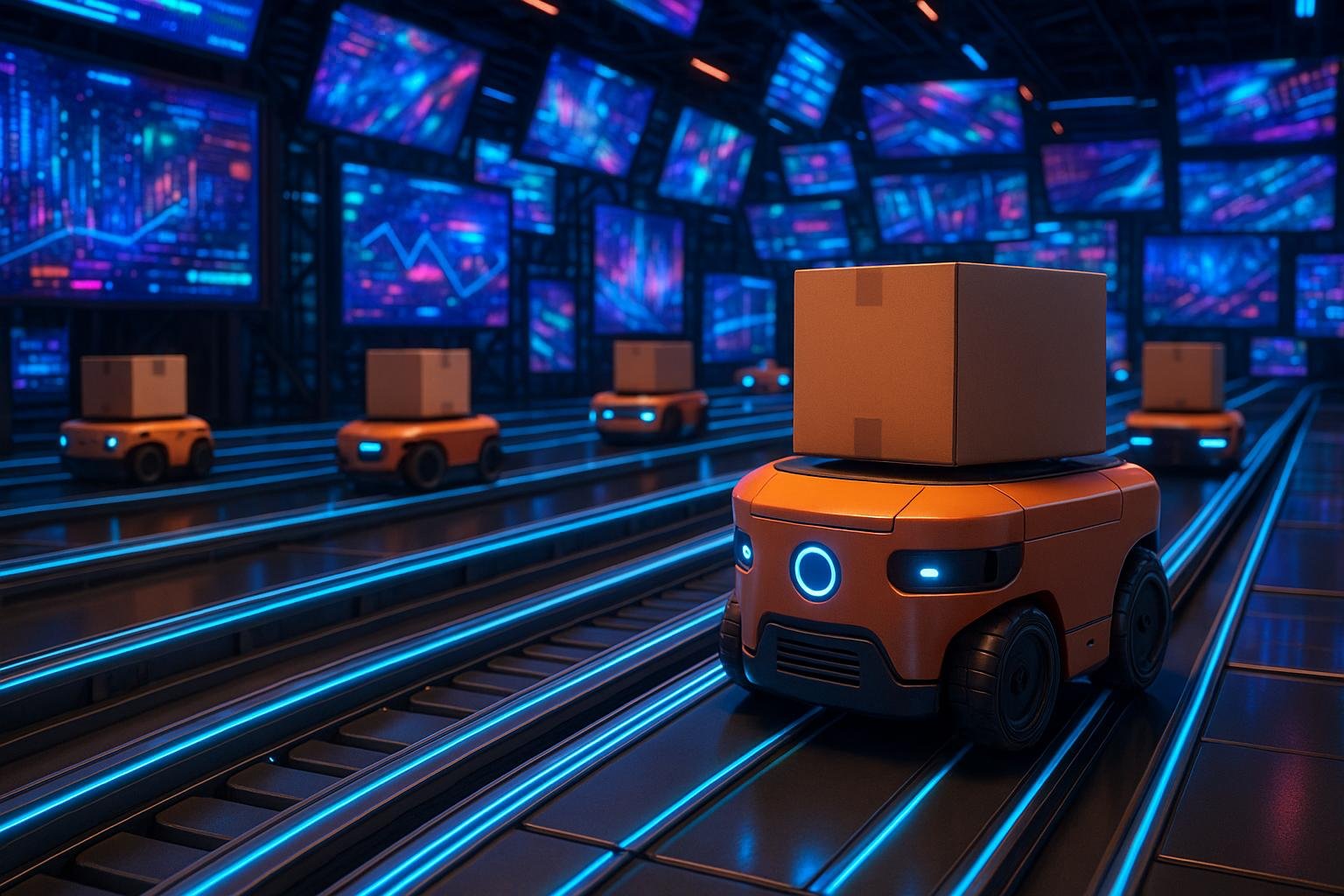
As disruptions increase, businesses are abandoning traditional static planning in favour of agile, real-time supply chain strategies powered by AI, IoT, and cloud technology to stay competitive and resilient by 2025.

Supply chain management is undergoing a profound transformation as we approach 2025, with the traditional model of static planning becoming increasingly obsolete. Historically, companies relied on rigid, cyclical processes—quarterly forecasts, fixed inventory targets, and pre-set logistics schedules—that were sufficient when market conditions were stable, consumer demand was predictable, and global disruptions were relatively rare. However, today’s complex, fast-evolving commercial environment renders these methods ineffective and risky.
The notion of static planning is fundamentally flawed in a world defined by constant disruption. Events such as pandemics, geopolitical conflicts, extreme weather, and soaring e-commerce demands (including near-immediate delivery expectations) require supply chains to be more agile and responsive. As reported by Gartner, by 2026, some 70% of firms that cling to static planning risk falling behind in profitability compared to those adopting real-time supply chain strategies. The shift is from “forecasting better” to “adapting faster,” requiring networks that can sense disturbances, respond instantly, and perpetually recalibrate.
A real-time supply chain is much more than frequent data updates; it constitutes a connected ecosystem spanning raw material sourcing to last-mile delivery, ensuring visibility and adaptability at every stage. Unlike static planning, which relies on outdated snapshots and incurs reaction delays—often leading to inventory imbalances—real-time systems continuously ingest live data streams to anticipate challenges and recommend optimal actions. This dynamic approach enables decisions such as rerouting stock mid-transit, flagging supplier risks early, and adjusting manufacturing schedules daily instead of quarterly.
Driving this shift are several macroeconomic and societal forces. High connectivity in marketplaces has heightened consumer expectations for speed and transparency, compelling companies to decentralize sourcing and diversify suppliers, sometimes bringing production back to North America. Additionally, increased regulatory and customer demand for sustainability reporting demands real-time data on carbon footprints and waste. Investors, too, play a role by prioritizing resilience and risk mitigation in supply chains. These factors render static planning not only inefficient but a liability.
Underpinning the real-time supply chain is a suite of enabling technologies. Cloud ERP platforms serve as the backbone, integrating financial, inventory, and logistics data to break down organizational silos. Artificial intelligence and machine learning augment demand sensing, anomaly detection, and predictive analytics. IoT and sensors provide granular tracking of shipments and warehouse conditions, while blockchain enhances transparency and trust in supplier contracts and product provenance. Robotic process automation (RPA) helps automate routine planning tasks, allowing teams to focus on strategic oversight. However, such technology depends on a foundation of precise, consistent data and integrated systems that communicate seamlessly.
The benefits of real-time supply chains extend well beyond operational efficiency. Businesses experience increased revenues by moving faster to market and reducing lost sales opportunities. Customer loyalty strengthens through reliable fulfilment that meets the “instant gratification” demand. Costs decrease by minimising excess inventory, markdowns, and logistical waste, while risk diminishes as internal alerts enable proactive rather than reactive management. Moreover, real-time supply chains serve as visible proof to customers and investors that a brand is resilient and forward-thinking.
Nevertheless, numerous obstacles hinder widespread adoption. Legacy IT infrastructures may lack capacity for real-time updates, and leadership can be hesitant due to upfront costs. There is often a shortage of skilled data professionals capable of managing advanced systems, alongside concerns about cybersecurity in data sharing. Cultural inertia within organisations accustomed to static processes can also impede transition. Overcoming these barriers requires committed leadership and a clear strategic roadmap focused on evaluation, consolidation, technology upgrades, talent development, and iterative improvement.
Real-world applications underscore the stark contrast between static and real-time approaches. In retail, static forecasting can cause costly stockouts during peak periods, whereas real-time systems dynamically reallocating inventory ensure product availability. Manufacturing can suffer shutdowns due to supplier delays if it relies on static plans, while real-time ERP solutions identify alternative suppliers to maintain production flow. E-commerce brands that only depend on forecasts risk missing sudden demand spikes, which real-time sensing systems can manage effectively to uphold customer satisfaction.
Looking ahead, the evolution continues beyond real-time responsiveness toward autonomous supply chains that self-correct using AI, circular supply chains emphasising returns and recycling, and AI-enabled “copilots” that assist planners with scenario modelling. Emerging frameworks like Global Trade 4.0, combining blockchain and AI, promise hyper-optimized, transparent logistics networks.
To keep pace, businesses must embrace cloud ERP systems designed for agility and integration. Versa Cloud ERP, for instance, offers unified dashboards connecting finance, inventory, and logistics with automated workflows and seamless integrations to major platforms. Unlike traditional rigid ERP systems, such flexible solutions scale with business growth and foster resilience needed in today’s volatile markets.
In conclusion, static supply chain planning is dying because it cannot contend with the relentless unpredictability and speed demanded by modern commerce. Enterprises that fail to adopt real-time planning systems risk inefficiencies, lost revenue, and reputational damage. Conversely, those investing in connected, AI-enabled, and cloud-integrated supply chains position themselves for sustainable growth, customer trust, and market leadership in 2025 and beyond. The transformation journey requires strategic commitment but offers rewards in operational excellence and competitive differentiation—making the choice unmistakably clear: adapt now or be left behind.
Source: Noah Wire Services

