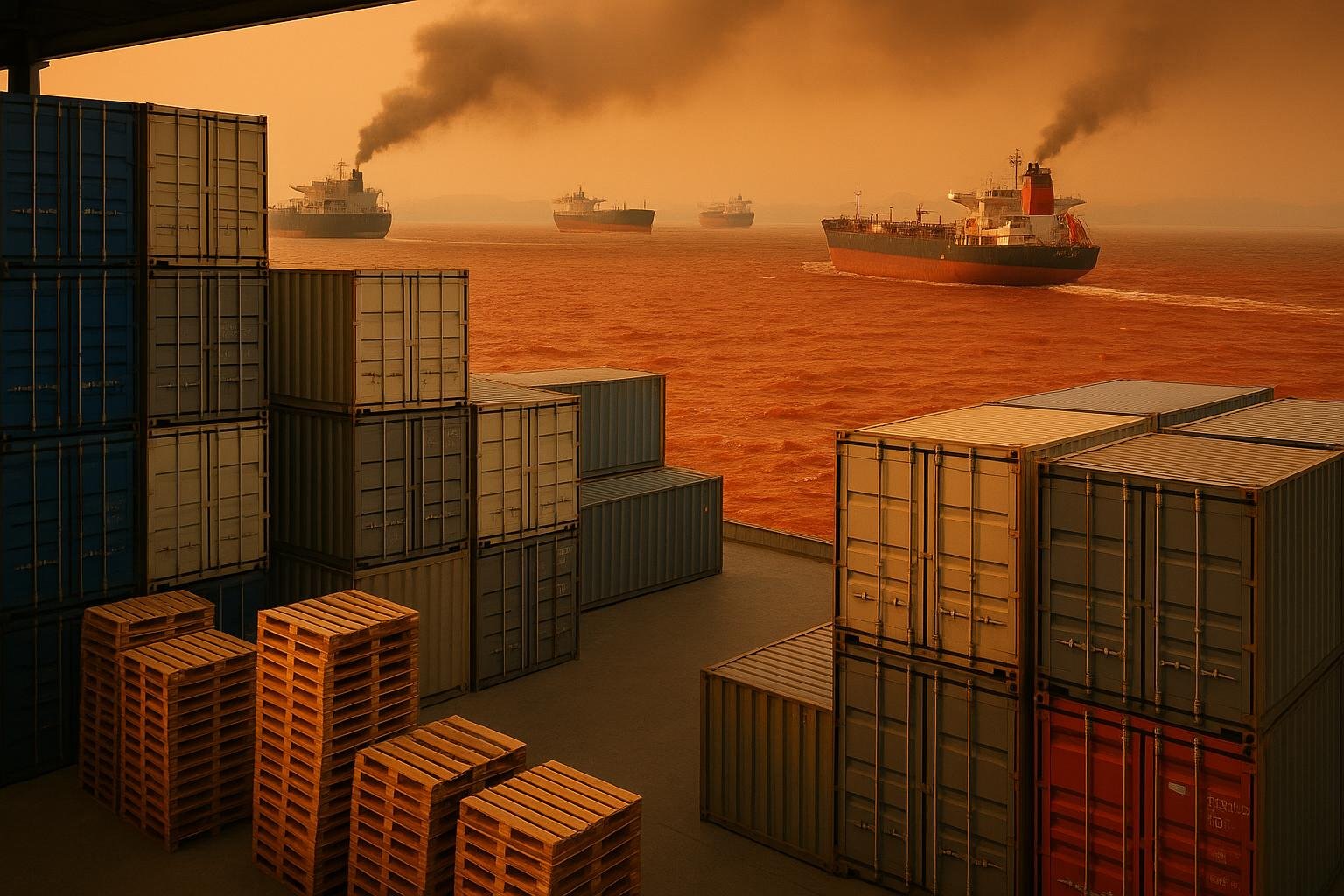
The ongoing closure of the Strait of Hormuz, a critical maritime chokepoint for global energy and petrochemical flows, has thrust international oil markets back into turmoil, with Brent crude prices surging beyond USD100 per barrel. While much commentary has centred on the immediate energy crisis and geopolitical tensions, the ripple effects extending to the global packaging industry reveal a deeper structural fragility embedded within today’s interconnected supply chains.
Pa...
Continue Reading This Article
Enjoy this article as well as all of our content, including reports, news, tips and more.
By registering or signing into your SRM Today account, you agree to SRM Today's Terms of Use and consent to the processing of your personal information as described in our Privacy Policy.
ckaging manufacturers face a unique double bind: not only is their cost base highly sensitive to sharp increases in oil prices, but an equally vital concern is the physical scarcity of petrochemical feedstocks traversing the strait. Plastics, which dominate many packaging applications, rely on ethylene, propylene, and naphtha derivatives, all hydrocarbon-based intermediates, directly linked to crude oil and natural gas liquids. The effective blockade of the strait restricts maritime transport of these inputs, intensifying the squeeze beyond mere price inflation. Sheikh Nawaf al-Sabah, CEO of Kuwait Petroleum Corporation, encapsulated this risk by warning that “the costs of this war don’t stay within geographical lines in this region. They extend all the way through the supply chain.”
This supply shock is acute because petrochemical production has limited alternate logistics pathways. Unlike crude oil, which can sometimes be rerouted via pipelines or alternative maritime routes albeit at higher cost, the concentrated nature of feedstock and resin shipments through the Strait of Hormuz leaves the plastics supply chain exposed to mechanical bottlenecks and physical shortages. Industry observers note polypropylene and polyethylene markets, already operating on tight inventories, are vulnerable to immediate shortages should the disruption persist or worsen.
But the consequences extend beyond plastic substrates alone. Paper and board manufacturers confront surging energy costs prompted by liquefied natural gas (LNG) supply constraints, given LNG’s significant transit through the gulf region. Pricing pressures are compounded by the need for longer, more costly shipping routes detouring around Africa’s Cape of Good Hope, which can add up to two weeks in transit time and elevate freight expenses sharply. Aluminium packaging production, which is heavily energy intensive and relies on Middle Eastern smelters, faces parallel challenges due to restricted port access, war-risk premiums, and energy supply instability. Even glass packaging industries, often assumed to be less exposed, are not insulated given their dependence on natural gas for furnace operations.
Logistics disruptions multiply these effects. The Strait of Hormuz accounts for a significant portion of containerised trade in addition to energy commodities. With bunker fuel costs surging alongside crude prices and approximately 10% of the global container fleet caught within Gulf ports or adrift awaiting clearance, shipping capacity has tightened considerably. Many carriers have curtailed services to the region, triggering cascading capacity shortages worldwide. These disruptions trigger overlapping cost escalations, from fuel and war-risk surcharges to congestion-related fees at alternative ports, feeding through to packaging manufacturers and ultimately to consumers.
The broader global economy is feeling the tremors too. Analysts warn that a protracted closure could usher in stagflationary pressures across major economies reliant on oil imports, deepening recession risks especially in Europe and East Asia. For sectors dependent on packaging as an enabling layer for food distribution and consumer goods, these shocks threaten not only cost structures but also the reliability of supply.
Geopolitically, the disruption is accelerating market realignments. Asian petrochemical producers in South Korea, Japan, and Taiwan are reducing operating rates due to feedstock shortages and energy constraints, whereas China, leveraging coal-based petrochemicals and access to Russian raw materials, is positioned to maintain or increase capacity. North American producers, bolstered by abundant shale gas and oil, may also expand their global footprint amid these shifts. However, such concentration potentially increases global buyers’ long-term dependency risks, underscoring the strategic fragility revealed by this crisis.
These converging pressures are catalysing structural changes within the packaging industry. The reliance on a single, geopolitically sensitive maritime chokepoint for critical feedstocks is prompting renewed investments in regional and near-shore production capacity to enhance supply chain resilience. Rising oil-linked resin costs are revitalising economic incentives for recycled polymers, advancing circular economy initiatives that had previously been driven largely by sustainability goals. Additionally, the urgency to reduce material usage through lightweighting and design optimisation is gaining traction as companies seek immediate cost benefits amid volatile input prices.
The present crisis thus lays bare how packaging supply chains, long optimised for lean inventory and global efficiency, are vulnerable to simultaneous shocks in energy supply, materials availability, and logistics. Sheikh Nawaf al-Sabah’s stark characterisation of the disruption as “an attack… holding the world’s economy hostage” resonates particularly strongly for packaging stakeholders contending not only with cost inflation but with threats to continuity and predictability in supply.
As the situation remains in flux, the duration of the Strait of Hormuz’s closure will be decisive in determining both the depth and length of the impact. Yet it is evident that the global packaging sector is entering an era where resilience, built through supply diversification, regional presence, and circularity, will eclipse pure efficiency as the defining competitive advantage. This upheaval underscores the interdependence of global energy, material substrates, and logistics networks and signals a fundamental reckoning for industries dependent on petrochemical feedstocks within a turbulent geopolitical landscape.
Source: Noah Wire Services