


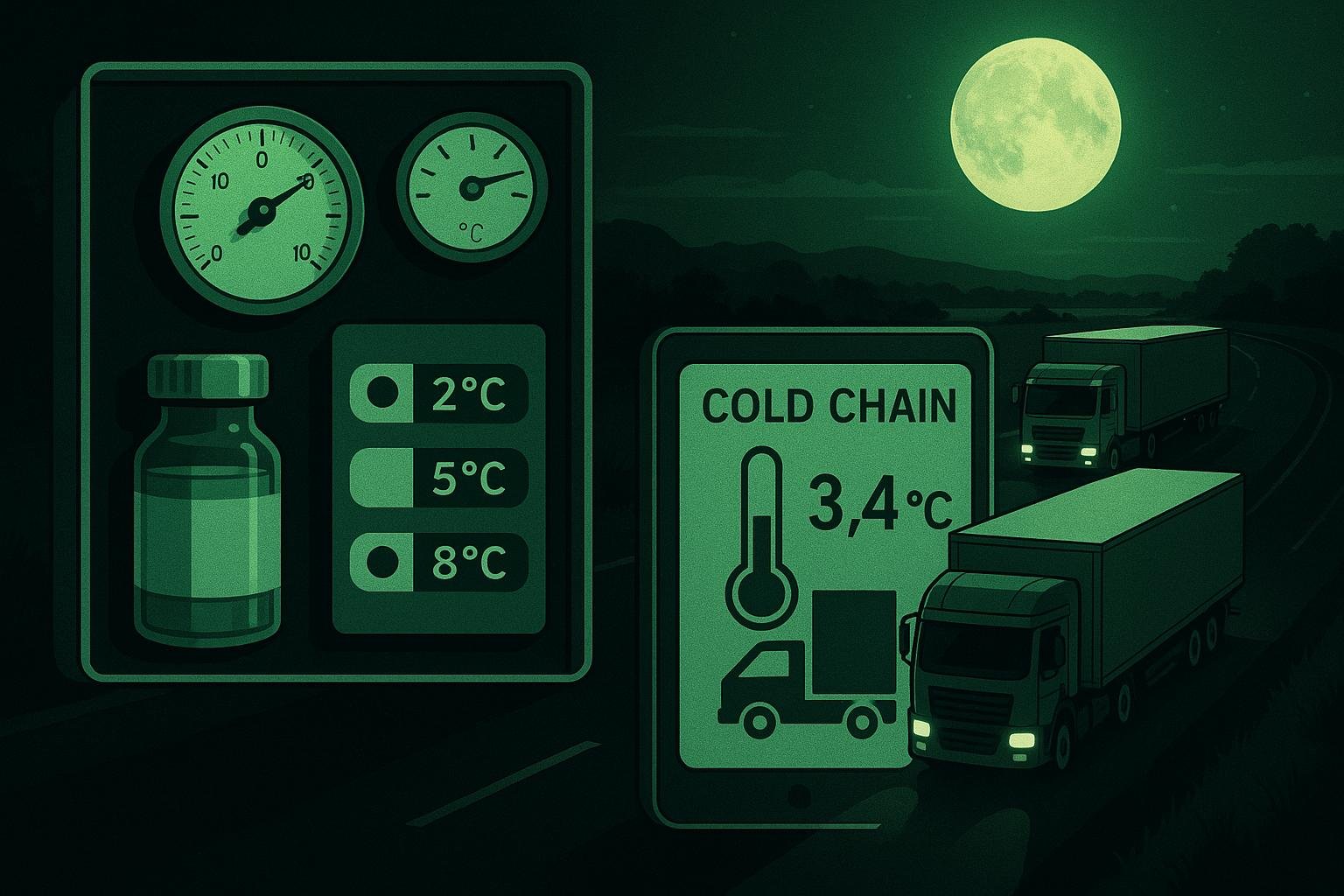
SpotSee and Controlant have launched a strategic alliance that combines physical temperature indicators with real-time telemetry to improve oversight and safety of temperature-sensitive pharmaceuticals during transit.

SpotSee and Controlant have formed a strategic partnership to tighten oversight of temperature-sensitive pharmaceuticals by combining physical, shipment-level indicators with cloud-based, real-time telemetry. According to Pharmaceutical Commerce, the allia...
Continue Reading This Article
Enjoy this article as well as all of our content, including reports, news, tips and more.
By registering or signing into your SRM Today account, you agree to SRM Today's Terms of Use and consent to the processing of your personal information as described in our Privacy Policy.
The collaboration pairs SpotSee’s single-use WarmMark QR temperature indicators with Controlant’s connected-device platform. A co‑branded Controlant Go device has been introduced to simplify continuous connectivity for higher‑value consignments, and the companies plan a software integration in 2026 that will permit WarmMark QR reads to flow directly into Controlant’s visibility and quality-management workflows. The firms say the layered design lets users target monitoring investments: continuous IoT capture for critical shipments, and economical package-level indicators for last‑mile verification.
Controlant’s chief executive Gísli Herjólfsson stressed the customer need for automated sharing and uninterrupted visibility, stating, “The market is clear: customers need automated data sharing and continuous, end-to-end visibility.” In a similar vein SpotSee’s CEO Tony Fonk argued the approach addresses specific logistics shortfalls, saying the tie-up “closes the monitoring gaps from pallet to patient.” Fonk also projected that integrating indicator-based last‑mile checks with cloud analytics and connected devices could sharply reduce returns and boost patient satisfaction.
Industry data underline the urgency for improved cold‑chain controls. According to reporting from Pharmaceutical Commerce and earlier analyses by ABI Research and consulting firms such as Infosys, failures in temperature management in the biopharma supply chain are estimated to cost the industry roughly $35 billion annually. Those losses reflect not only product value destroyed by excursions but also the compliance and safety risks of compromised therapies.
The operational case for a dual‑layer model rests on risk differentiation and scalability. Real‑time devices generate continuous environmental traces that support dynamic interventions during transit; single‑use indicators deliver a simple, low‑cost audit at delivery that can validate whether individual packages experienced excursions. By linking these data types in a single cloud environment, manufacturers and specialist logistics providers can reconcile transit telemetry with proof‑of‑condition evidence at the last mile without substantially increasing handling complexity.
Beyond cost containment, the partners frame the integration as a way to simplify supplier and carrier workflows. Pharmaceutical shippers with global networks face heterogeneous operational practices and regulatory scrutiny; the companies say standardized digital ingestion of QR indicator reads into visibility platforms will reduce manual reconciliation and speed disposition decisions at receipt. According to Pharmaceutical Commerce, SpotSee and Controlant have moved into joint customer engagements and are beginning deployments of these combined monitoring programmes.
The move reflects a broader industry shift toward layered, data-centric cold‑chain strategies. Market commentary and white papers from multiple vendors and analysts recommend combining IoT track‑and‑trace with pragmatic, shipment-level verification to protect product quality while containing monitoring costs. By presenting an integrated hardware‑to‑cloud offering, SpotSee and Controlant aim to provide supply‑chain stakeholders a way to demonstrate unequivocal proof of condition from origin through final delivery.
Source: Noah Wire Services
Subscribe to Industry Updates

