


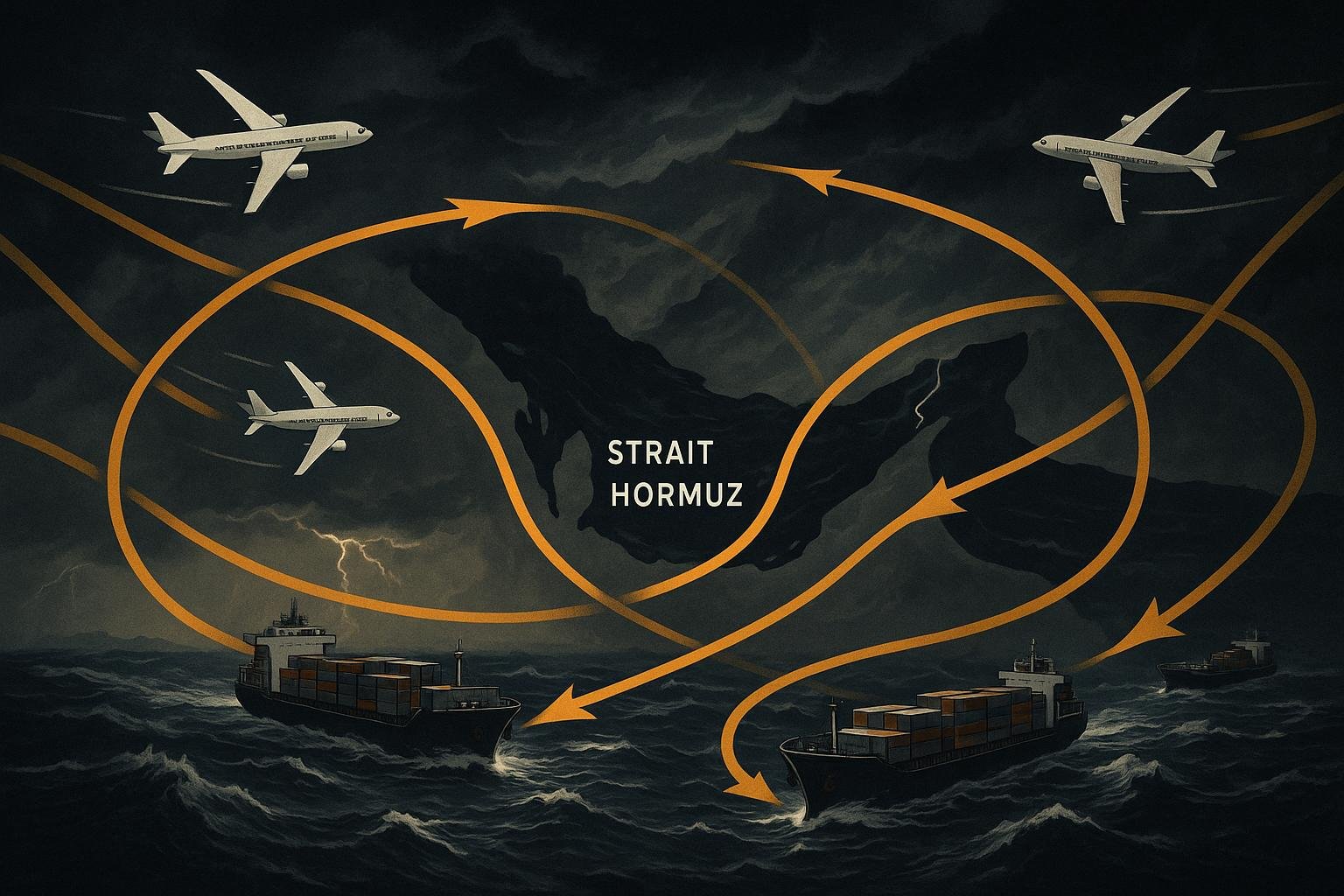
The escalation of hostilities in the Middle East is prompting major shipping and air carriers to reroute, raising costs, delaying deliveries, and threatening global supply chains as the Strait of Hormuz and surrounding airspace become perilous for commercial navigation.

Global trade routes are under fresh strain as the conflict centred on Iran spreads into the maritime and aviation domains, forcing carriers and shippers to reassess routes, timetables and costs.
A...
Continue Reading This Article
Enjoy this article as well as all of our content, including reports, news, tips and more.
By registering or signing into your SRM Today account, you agree to SRM Today's Terms of Use and consent to the processing of your personal information as described in our Privacy Policy.
Commercial responses have been decisive. Major shipping lines have announced suspensions of transits through the Hormuz and adjacent waters, while automatic and commercial advisories , even without an official blockade , have dissuaded many operators from using the route. AP reporting describes thousands of vessels stalled or waiting at ports in the Gulf region, and other assessments place the count of idled or delayed ships in the thousands, creating bottlenecks that extend far beyond oil markets to finished goods and bulk commodities.
The impact has expanded to air cargo. Several Middle Eastern airspaces have been restricted or closed, forcing carriers to take longer flight paths and curtailing capacity at key hubs such as Dubai. That reduction in lift, combined with greater fuel consumption on detours and potential war-risk surcharges, is pushing airfreight rates higher, particularly for high-value and time-sensitive consignments.
Ocean operators are increasingly rerouting services around the Cape of Good Hope to avoid the Middle East and Red Sea. Those longer voyages add days or weeks to transit times and concentrate vessel flows on alternate lanes, aggravating port congestion and inflating fuel and charter costs. Axios observes that while some economies , notably in the United States , may feel less immediate pressure, East Asian importers including Japan, South Korea and Taiwan are more exposed and have already shown market sensitivity to the disruption.
The financial effects are manifest in freight and insurance markets. War-risk premiums and special surcharges have surged; industry commentary points to insurance increases in many cases exceeding 50–60% and, in some instances, the outright withdrawal of coverage for voyages through higher-risk areas. Tanker freight rates from the Gulf to major consuming regions have also spiked, and carriers are passing elevated costs down the chain through fuel and security surcharges.
Beyond transport costs, the crisis threatens broader supply-chain stability. AP coverage highlights ripple effects on pharmaceuticals shipped from India, semiconductors and electronics from East Asia, and agricultural inputs such as fertilisers. Time and AP accounts note that disruptions to energy flows amplify inflationary pressures and could imperil energy-intensive industries , Taiwan’s chip sector being singled out as particularly vulnerable , while poorer countries in Southeast Asia may face fuel shortages and price rationing.
These developments come after earlier maritime security challenges in the Red Sea and Gulf of Aden, where Houthi attacks have already prompted risk-averse routing and contingency planning. The present escalation compounds those prior stresses, reducing the resilience margins supply chains had rebuilt after the pandemic.
What shippers should be doing now is becoming clearer from market practice and expert commentary. Forward planning and longer lead times are essential as transit durations extend and capacity tightens. Companies would be prudent to stress-test their inventory strategies, consider geographic diversification of suppliers, explore multimodal and inland alternatives where feasible, and budget for greater volatility in freight and insurance. Maintaining access to real-time vessel and airspace data and close liaison with logistics partners can help manage disruption and cost escalation. Industry advisers quoted in the coverage recommend scenario planning for peak-season surges and explicitly factoring war-risk premiums into tendering and contract negotiations.
Logistics providers are positioning themselves to offer those contingency services. According to the Plane2Sea announcement, the company is offering clients scenario planning, routing analysis and ongoing communication through the shipment lifecycle; other freight forwarders and carriers are offering similar advisory and risk-management products as part of their response.
The duration and severity of these trade disruptions hinge on the course of the conflict. Time reports a dramatic shift in the region’s leadership dynamics and continued military exchanges, while analysts warn that sustained instability would deepen pressures on shipping lanes, energy markets and global inflation. For now, businesses reliant on timely imports and exports face a period of heightened uncertainty and must weigh the costs of alternative routing and increased buffer inventories against the risks of further interruption.
Source: Noah Wire Services
Subscribe to Industry Updates

