


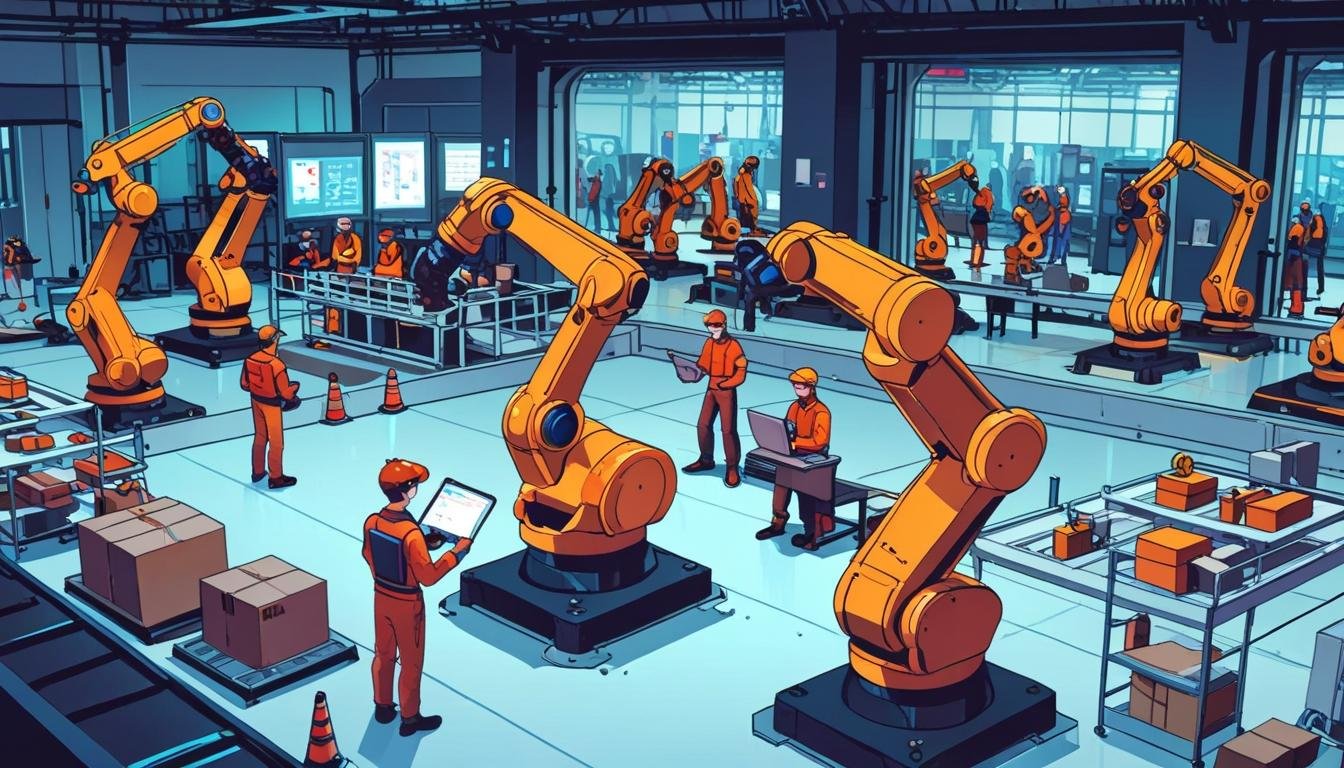
**London**: ServiceNow has acquired Quality 360, an AI-driven quality management solution, to strengthen its Manufacturing Commercial Operations platform. This acquisition aims to help manufacturers improve quality control processes, reduce operational costs, and mitigate risks in global supply chains, reflecting ServiceNow’s commitment to industry-specific innovation.
ServiceNow (NYSE: NOW) has recently finalised the acquisition of Quality 360, an artificial intelligence-powered quality management solution developed by Advania. This strategic move is aimed at enhancing ServiceNow’s capabilities within the manufacturing sector, particularly through its Manufacturing Commercial Operations (MCO) platform. The acquisition, announced on a recent date, underscores ServiceNow’s commitment to empowering manufacturers with proactive, data-driven insights that are essential for managing quality control, reducing operational costs, and mitigating risks associated with complex global supply chains.
The manufacturing industry is currently grappling with heightened demands to maintain quality benchmarks, as noted by the American Society for Quality, which reports that quality-related issues can consume approximately 15-20% of sales revenue. By integrating Quality 360 into its MCO platform, ServiceNow aims to improve quality control processes across various stages of production, from defect detection to corrective actions and final resolution.

Quality 360, initially developed on the ServiceNow platform by Advania, utilises AI to facilitate deep-rooted analysis, automated issue detection, and structured frameworks for resolving quality-related issues. Key features of the solution include a centralised Quality Workspace, standardised playbooks, and real-time communication tools, all designed to enable manufacturers to proactively address quality challenges and adhere to regulatory compliance.
“Manufacturers are under increasing pressure to maintain high-quality standards while managing complex supply chains,” said Rohit Batra, vice president and general manager of Manufacturing, Telecom, Media & Tech Industries at ServiceNow, speaking to ERP Today. He continued, “By integrating Advania’s Quality 360 into the ServiceNow platform, we’re providing manufacturers with the AI-driven insights and automation they need to proactively manage quality issues, drive operational efficiency, and enhance customer trust. This acquisition exemplifies our commitment to partner-led innovation and delivering industry-specific solutions that drive meaningful transformation.”
The acquisition aligns seamlessly with ServiceNow’s overarching strategy to nurture co-innovation within the manufacturing landscape. The company has previously invested in several digital transformation initiatives, including collaborations with Siemens on industrial cybersecurity and the acquisition of 4Industry from Plat4Mation, aimed at improving operational efficiencies across industrial ecosystems.
ServiceNow has been making steady strides in AI-driven enterprise solutions focusing on unique industry use cases. The integration of Quality 360 marks a pivotal advancement solidifying its status as a reliable technological ally for manufacturers. The MCO platform’s integration is designed to enhance manufacturers’ management of intricate partner ecosystems, such as Original Equipment Manufacturers (OEMs), resellers, and dealers, through real-time visibility and AI-driven insights.
Advania executives have expressed optimism regarding the transition, highlighting the long-term advantages for manufacturers. Hege Støre, Group Chief Executive Officer at Advania, remarked: “As quality management becomes a critical differentiator, Advania is excited to see Quality 360 join ServiceNow’s Manufacturing Commercial Operations. ServiceNow’s AI capabilities and scalable platform will empower manufacturers with a proactive, data-driven approach to quality management, helping them mitigate risks and strengthen their competitive edge.”
While the acquisition positions ServiceNow favourably, challenges remain within the MCO platform. The subscription-based model may deter smaller and mid-sized manufacturers due to potentially high costs associated with initial investment in customisation and integration. Manufacturers have reported that adapting the platform to meet specific operational needs can be complex and protracted, affecting deployment timelines.
Furthermore, the full potential of the MCO platform is best realised when used within the comprehensive ServiceNow ecosystem, which may necessitate additional investments in modules like IT Service Management (ITSM) and Asset Management. The platform may also face limitations with native integrations of non-ServiceNow third-party applications, posing challenges for manufacturers already utilising alternative ERP or Product Lifecycle Management (PLM) systems. Lastly, while the MCO excels in quality management and visibility across the supply chain, it does not encompass capabilities associated with manufacturing execution systems (MES) required for shop floor automation and real-time production monitoring, compelling some manufacturers to still depend on third-party MES solutions.
In an industry where maintaining quality is paramount, effective quality management can significantly impact financial performance, operational efficiency, customer satisfaction, and overall brand reputation. Quality management fails can yield substantial financial losses, escalating to 15-20% of sales revenue, with some firms incurring costs as high as 40%. This range of losses stems from defective production costs, including raw materials, reworking defective items, and production delays caused by rejected parts.
As of 2024, the manufacturing sector is witnessing a notable uptake in AI technologies, estimated to reach about 35% of firms implementing AI for operations such as predictive maintenance and quality control. ServiceNow’s ongoing blended growth strategy through both organic and inorganic means has led to a total of 33 acquisitions by early 2025, averaging nearly two acquisitions per year over the prior three years, with an average acquisition cost of approximately $136 million. Revenue figures have substantially increased from roughly $1.39 billion in 2016 to nearly $11 billion in 2024. Although acquisitions bolster ServiceNow’s growth, the company also focuses on cultivating organic growth, particularly under CEO Bill McDermott’s leadership since 2019, as demonstrated by workforce expansions and capability enhancements without a heavy reliance on large-scale acquisitions.
The financial specifics regarding the integration success of ServiceNow’s acquisitions remain undisclosed; however, the company’s continued market expansion and revenue growth suggest effective strategies in leveraging acquisitions for value creation.
Source: Noah Wire Services

