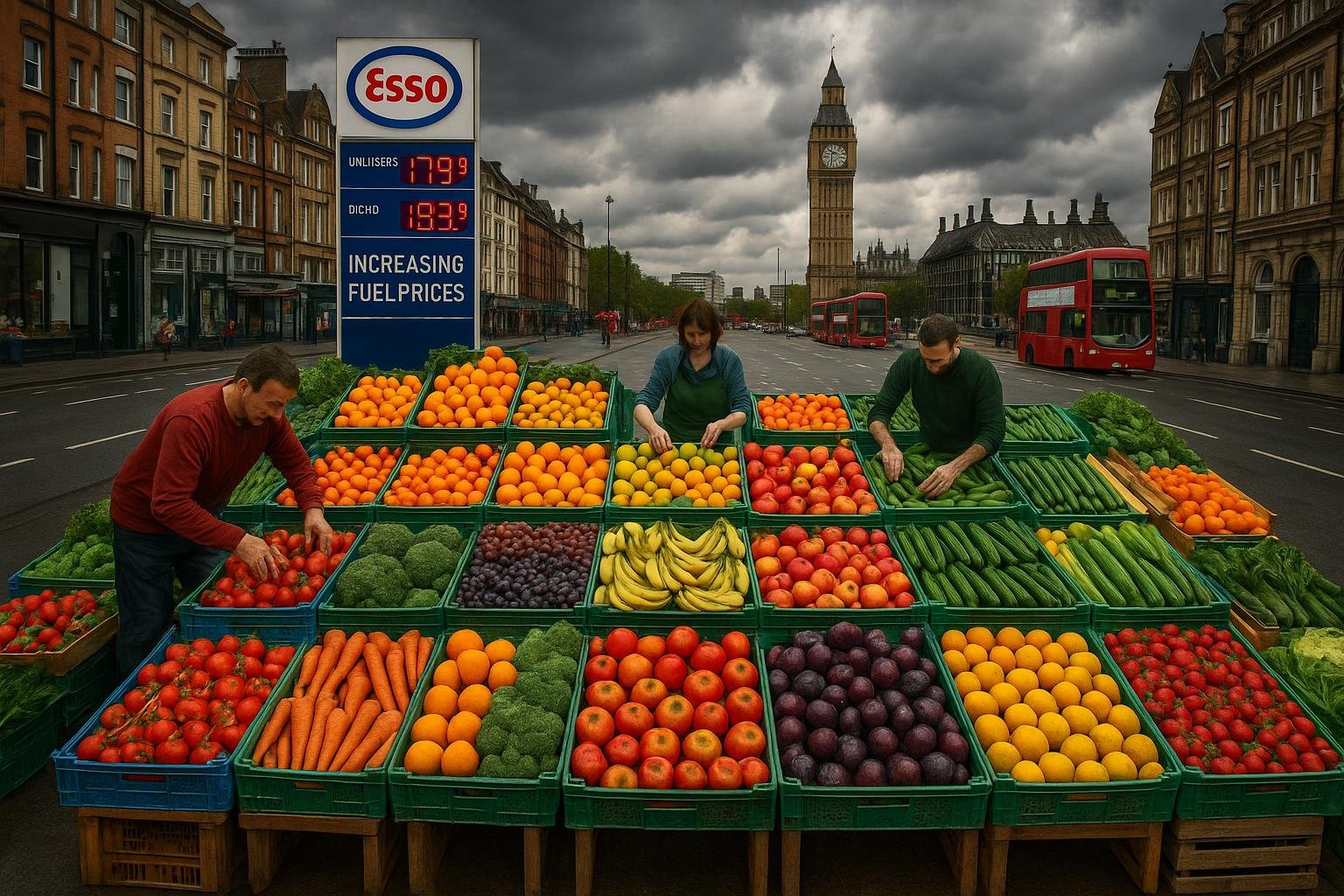
The fallout from renewed fighting in the Middle East is spreading well beyond energy markets and is now exerting palpable pressure on London’s fresh-food network, according to traders and industry groups at New Covent Garden Market in Nine Elms.
Those who supply the capital’s top hotels and restaurants say higher oil prices, disrupted shipping and strained logistics are compounding an already difficult season. Brent crude has risen above $115 a barrel, increasing the cost o...
Continue Reading This Article
Enjoy this article as well as all of our content, including reports, news, tips and more.
By registering or signing into your SRM Today account, you agree to SRM Today's Terms of Use and consent to the processing of your personal information as described in our Privacy Policy.
f road, sea and air freight for goods that the market imports heavily at this time of year. Traders describe the effects as immediate: fewer available flights for perishable cargoes, higher freight bills and the need to source produce from more distant, and often more expensive, origins.
“The people in the market are obviously going to be feeling like everyone else, very concerned,” said Gary Marshall, chairman of the Covent Garden Tenants Association, pointing to the cumulative effect of rising business rates, tariffs and supply-chain disruption. For suppliers serving high-end kitchens, the balancing act has become daily. “We’re bringing in produce like tender stem broccoli from Kenya and Spain,” said Marcus Rowlerson, managing director of Le Marché. “But flying goods in or even securing flights has become more difficult, and the supply chain is now intermittent.”
Those sourcing difficulties coincide with a seasonal lull before UK harvests ramp up, leaving businesses dependent on imports for staples such as herbs and citrus. Suppliers warn their customers have limited headroom to absorb further price rises, and that mounting duties and operational costs risk eroding margins across the hospitality sector.
The strains seen at Covent Garden are part of a broader pattern warned about by humanitarian agencies and market analysts. According to the World Food Programme, disruptions to fuel supplies and trade routes threaten not only commercial markets but also humanitarian operations; the agency warns that up to 45 million additional people could be pushed into acute hunger if food and fuel costs keep rising. The WFP says it is re-routing supply chains and scaling up assistance to try to keep aid moving amid mounting bottlenecks.
Industry and research bodies echo those concerns for global food security. S&P Global Energy and analysts at the International Food Policy Research Institute highlight the conflict’s knock-on impacts on fertiliser availability, shipping routes and freight rates, each element capable of pushing farm-to-fork costs higher. Rabobank’s analysis similarly points to the strategic role of the region in refined fuels, petrochemical feedstocks and logistics, warning that disruptions in the Strait of Hormuz can quickly cascade through fuel, power and input costs across agriculture chains.
Domestic business sentiment reflects this uncertainty. A survey by the Institute of Chartered Accountants in England and Wales found two-thirds of UK firms name rising energy costs as their primary worry, with more than half citing supply-chain disruption. For food-sector companies that already face climate-driven shocks, such as floods in parts of Europe and atypically warm winters in the UK, those pressures are arriving on top of volatile input costs and tighter labour conditions.
The humanitarian toll is already visible in the region. Save the Children reports sharp hikes in food prices in some of the most vulnerable countries, stretching household budgets and threatening to deepen food insecurity as communities approach religious festivals. The charity says rising fuel and food bills are compounding the suffering of families long weakened by conflict and economic shock.
Market participants in London express frustration at how price moves are communicated to consumers. Marshall criticised what he says is a tendency among larger retailers to rapidly pass on cost increases and, at times, amplify perceived shortages, a dynamic he warns can undermine trust with customers in the premium segment where reliability and relationships matter.
For now, traders at New Covent Garden are focused on short-term mitigation: diversifying sourcing, negotiating freight and adjusting orders to protect supply and quality. But analysts and aid agencies caution that, unless energy prices ease and shipping stabilises, pressures will persist and could intensify, with implications for availability, prices and the resilience of both commercial and humanitarian food systems.
The market in Nine Elms offers an early indication of how geopolitical shocks in distant seas can ripple into everyday life in London, from the origin of a vegetable on a plate to the cost of a meal in the capital. As industry bodies, relief organisations and suppliers adapt, the coming months will test the ability of global and local supply chains to absorb sustained stress without severe disruption to consumers and vulnerable populations alike.
Source: Noah Wire Services