


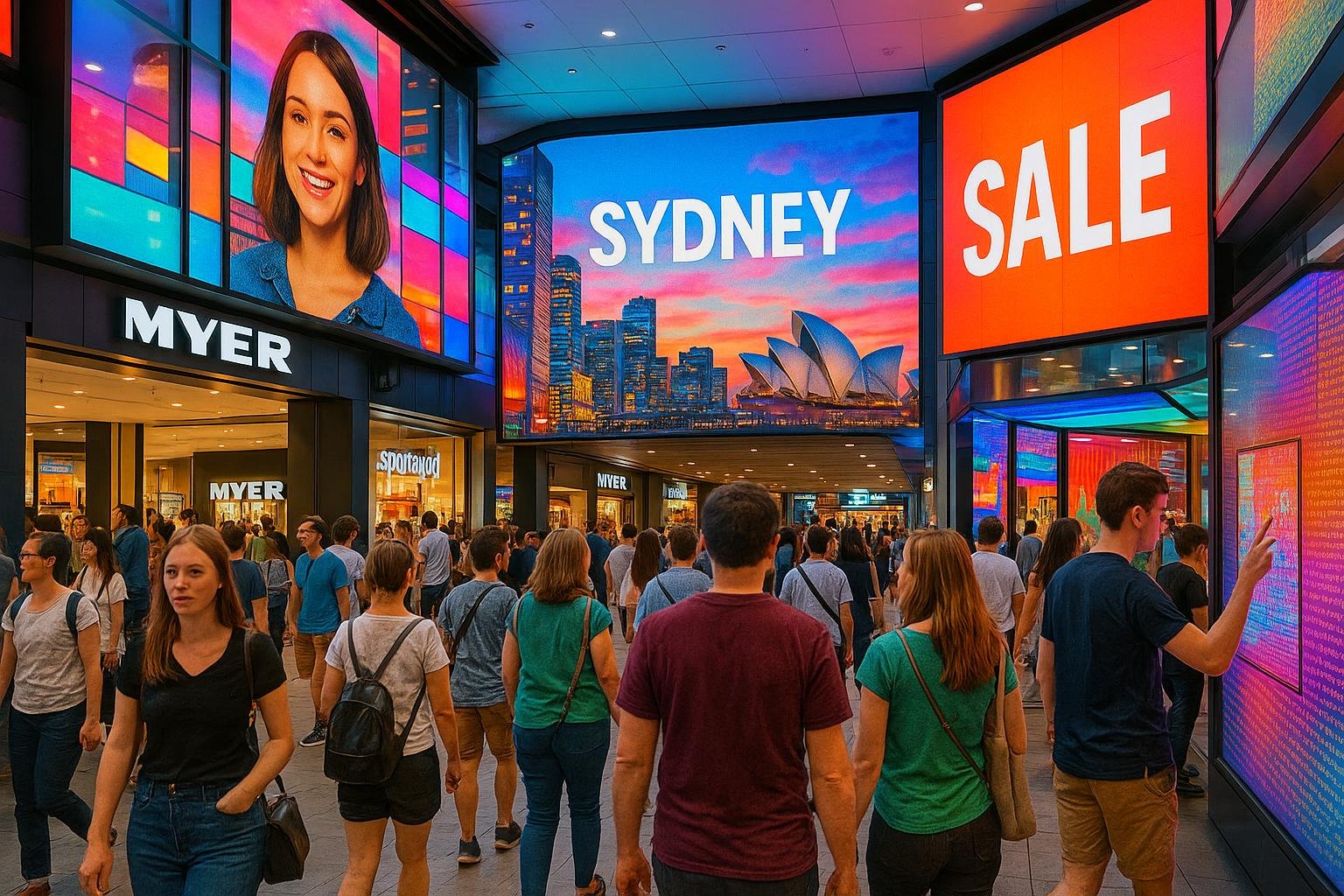
As Australian retail media enters 2026, the focus shifts towards unified platforms, operational integration, and AI-driven discovery, transforming the shopper experience and commercial outcomes.

As retail media in Australia moves into 2026, the conversation has shifted from raw expansion to refinement: how retail media can tie technology, retail operations and brand strategy into simpler, measurable outcomes that improve the shopper journey as well as commercial performance.
Three connected trends are shaping that transition.
Self‑service platforms finally mature
Advertisers have long faced a patchwork of retailer platforms with differing data models, activation flows and reporting. That fragmentation has forced trade‑offs between efficiency, cross‑retailer reach and access to high‑impact formats. In practice, local brands and agencies have had to pick between agility and scale.
That is changing as a new generation of self‑service tools provides both flexibility and unified reach. Platforms are increasingly built to support multiple operating models , from joint business planning with retail media networks to true self‑service cross‑retailer activation , while preserving control over measurement and creative formats. According to Criteo, vendors are combining unified execution, richer measurement options and AI‑driven optimisation that retains human oversight to avoid “black box” outcomes.
Concrete commercial moves underline this shift. In March 2025 Endeavour Group expanded its partnership with Criteo to power its on‑site retail media offering, with the aim of strengthening omnichannel execution through AI and analytics while tapping into Australia’s growing retail media market. Earlier collaborations between Criteo and other retail partners , including a March 2024 retail media deal with premium retailer David Jones , illustrate how vendors and retailers are consolidating tools and data to offer advertisers clearer paths from campaign to sale.
Retailers break down internal silos
A second evolution is operational: retailers are reconciling merchandising, media and customer experience rather than treating ad inventory as an isolated revenue stream. Historically, separate systems and teams made decisions about product assortment, on‑site placement and advertising yield without a single view of how those choices affected total commerce outcomes. That has limited retailers’ ability to demonstrate true incrementality to brand partners.
Partnerships that stitch together customer data, media technology and point‑of‑sale outcomes are beginning to change that calculus. In October 2025 Amperity, Criteo and MixIn by Endeavour Group announced a closed‑loop attribution capability intended to link digital exposures to verified in‑store transactions at scale. According to Amperity, the solution uses its customer data platform and Criteo’s commerce media technology to provide marketers with a cross‑channel view of performance, helping brands measure the offline impact of online campaigns.
As a result, brands are broadening evaluation beyond return on ad spend to include in‑store sales lift, category growth and profitability. Industry data indicates Australian retail media is now a multi‑billion dollar market, and vendors say proving incremental value across the full purchase funnel is essential for smarter investment and sustainable growth.
Agentic AI reshapes discovery and relevance
The third and most consumer‑facing trend is the arrival of more agentic AI in shopping. Adoption is rising quickly: a report by Retail Asia found roughly one in three Australians now use AI in their shopping, with particularly strong uptake among younger cohorts. As shoppers grow comfortable exchanging with AI assistants, expectations for conversational, contextually aware discovery will change how products are surfaced and how brands compete for attention.
That evolution will move many experiences beyond keyword matching to models that weigh intent, context, availability and margin. Retailers will face new ranking trade‑offs: balancing what best serves the shopper against what delivers commercial value, including advertising revenue and inventory considerations. Delivering relevance in an agentic environment will demand the integration of real‑time intent signals, past behaviour and privacy‑preserving customer data, while maintaining transparency so brands can understand and influence where they appear.
Bridging physical and digital experiences
The industry is already experimenting with ways to blend online, out‑of‑home and in‑store media. Partnerships such as the Criteo–TechMedia collaboration on out‑of‑home campaigns and the MixIn roll‑out across thousands of Endeavour‑owned stores show how digital activation and physical retail are being aligned to deliver coherent campaigns across touchpoints.
What this means for brands in 2026
Expectations for retail media are maturing. Brands should look for solutions that deliver:
- cross‑retailer activation without forcing compromises on measurement or retailer partnerships;
- integrated performance metrics that capture lift across the funnel, including offline sales and category effects; and
- approaches to AI that surface relevance while preserving transparency, control and shopper trust.
According to industry participants, the winners will be retailers and technology partners that prioritise open, flexible systems and closed‑loop measurement, enabling retail media to enhance discovery rather than disrupt it. The opportunity is to turn retail media from a short‑term yield generator into a strategic, measurable driver of commerce that benefits shoppers, brands and retailers alike.
Source: Noah Wire Services

