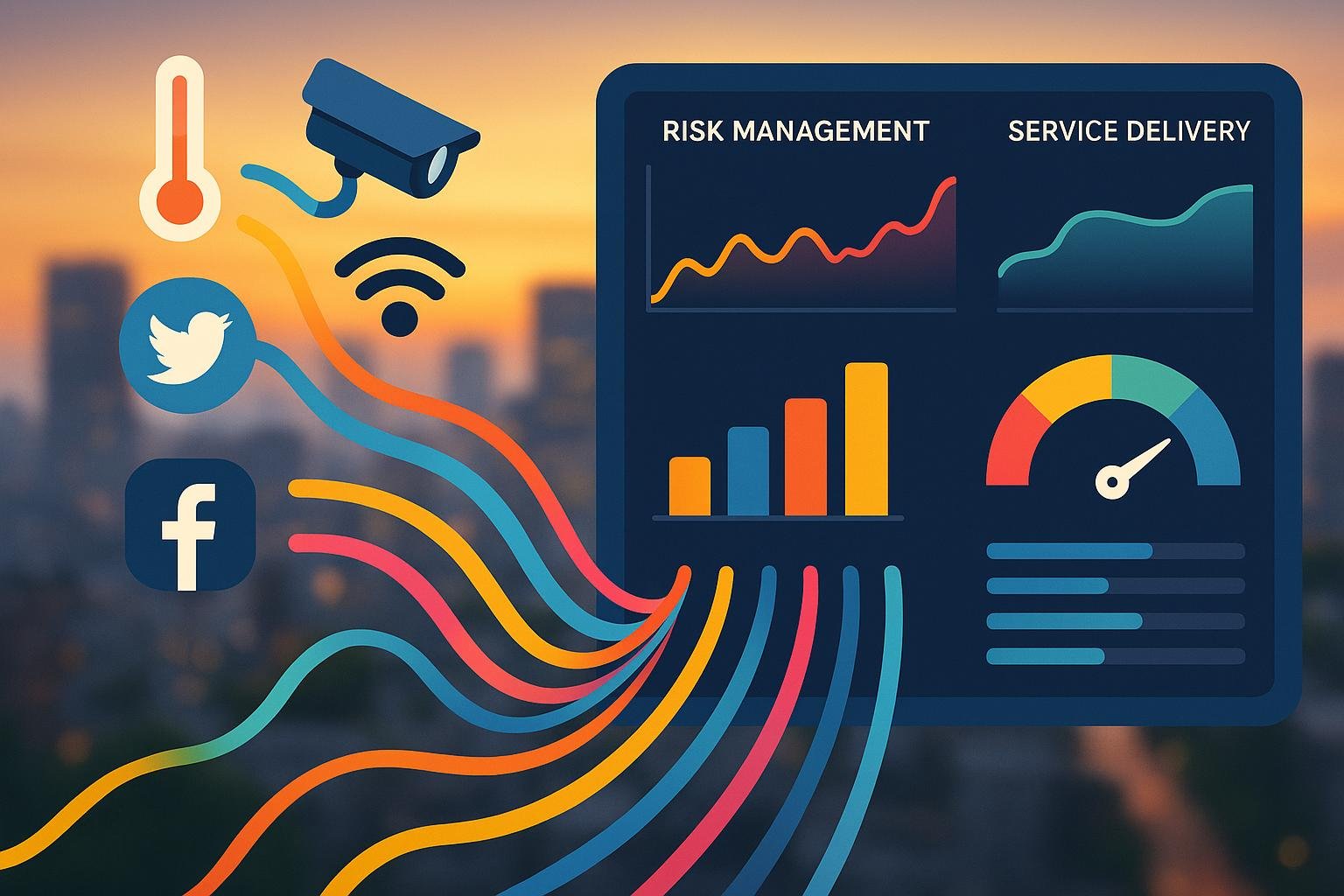
As organisations integrate continuous streams of data from sensors and social feeds, real-time analytics now underpin decision-making, risk management, and service delivery , turning technological capability into a competitive advantage.

Real-time data has shifted from a technical novelty to a core operational requirement for organisations seeking agility and precision. Digital platforms now capture continuous streams from sensors, mobile apps and social feeds, then con...
Continue Reading This Article
Enjoy this article as well as all of our content, including reports, news, tips and more.
By registering or signing into your SRM Today account, you agree to SRM Today's Terms of Use and consent to the processing of your personal information as described in our Privacy Policy.
Collection and storage strategies must balance immediacy with reliability. Organisations draw on a mix of on-premises databases and cloud systems to accommodate rising volumes while keeping retrieval times low. According to IBM, embedding real-time feeds into business processes helps firms respond to security incidents, adjust pricing on the fly and detect fraudulent activity, underscoring the strategic value of always-on data. Choosing the right storage topology and ensuring low-latency access is therefore fundamental to converting raw signals into operational advantage.
Turning streams into usable intelligence depends on both analytics and visualisation. Modern stacks apply statistical models and machine learning to spot anomalies, reveal trends and project near-term outcomes; interactive dashboards translate those outputs into clear, actionable summaries for teams. Quarks Technosoft’s analysis highlights that minimizing processing delays, preserving data consistency and adopting event-driven architectures are central to effective real-time analytics. Technologies such as Apache Kafka and Apache Flink are frequently used to sustain high-throughput, low-latency pipelines that underpin continuous decision workflows.
Embedding real-time insights into decision-making shortens the interval between observation and action. Teams that share a single, timely view of operations can reduce deliberation time, collaborate on responses and exploit fleeting opportunities. Yet integration is as much cultural as technical; firms must cultivate a data-literate workforce and adapt processes so that automated feeds augment human judgement rather than create confusion.
Security and privacy present constant tension as organisations expand their real-time capabilities. The same immediacy that enables swift action also amplifies exposure to cyberthreats and regulatory risk. Best practice therefore layers encryption, multi-factor authentication and continuous monitoring, combined with staff training on digital hygiene. IBM emphasises that using real-time data defensively, for example to detect intrusions or anomalous transactions, can itself strengthen resilience, provided governance and controls keep pace with deployment.
The benefits are substantial: improved operational efficiency, faster decision cycles and greater responsiveness to market shifts. But obstacles remain. Upfront expenditure on tooling and infrastructure can be significant, and developing in-house expertise takes time. Quarks Technosoft warns that architects must manage latency and ensure end-to-end consistency, otherwise insights can be misleading or too slow to matter. Attention to integration prevents information silos and enables the orchestration of disparate systems into a coherent, real-time fabric.
For organisations moving forward, the imperative is clear. Align technology choices with business priorities, invest in architectures designed for stream processing, and pair technical rollout with training and governance. When those elements come together, real-time data ceases to be merely a technical capability and becomes a sustained source of competitive edge.
Source: Noah Wire Services
Subscribe to Industry Updates