


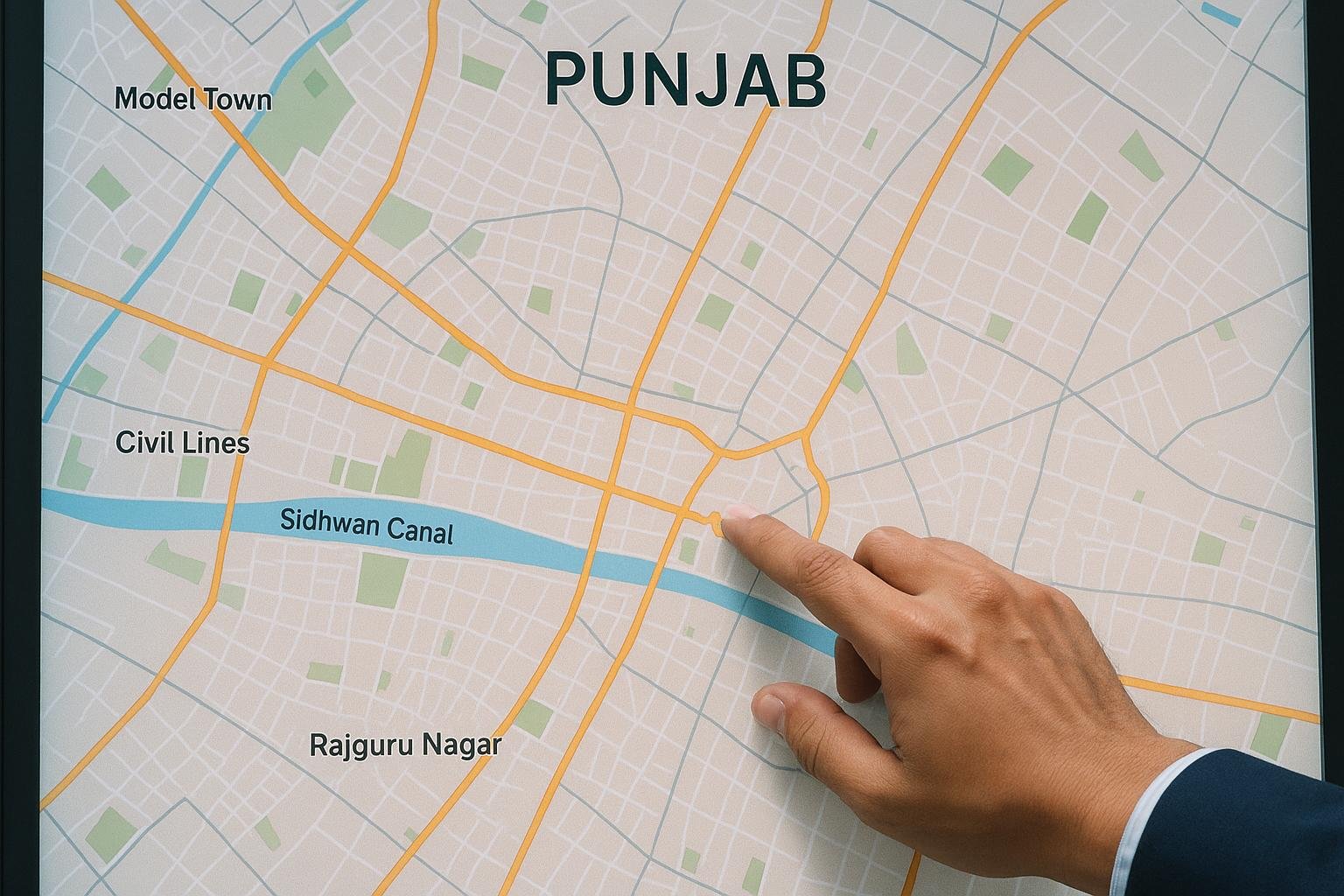
Punjab’s government is expanding its digital overhaul with integrated e‑systems designed to enhance oversight, streamline services, and curtail corruption. As implementation progresses, the success of embedding these reforms will determine lasting impacts on transparency and efficiency.

As the Punjab government marks two years in office this February, its administration under Chief Minister Maryam Nawaz Sharif has sought to remake provincial governance by substi...
Continue Reading This Article
Enjoy this article as well as all of our content, including reports, news, tips and more.
By registering or signing into your SRM Today account, you agree to SRM Today's Terms of Use and consent to the processing of your personal information as described in our Privacy Policy.
According to a report in The Express Tribune, the administration has pursued structural change rather than one‑off headline projects, prioritising initiatives designed for timely completion and measurable outcomes. Central to that approach is the rollout of e‑governance tools that touch core bureaucratic functions: an e‑Filing and Office Automation System has been used to move personnel files, leave records, postings, transfers and pension cases onto a common digital platform, while an e‑FOAS module and a province‑wide e‑procurement system aim to replace the traditional file culture with paperless, trackable workflows.
The government claims these systems permit real‑time monitoring of files and projects, automatically flagging delays and allowing senior officials to intervene earlier. The shift has also been paired with mandatory third‑party validation for development schemes and wider training: provincial authorities say more than 14,000 officials from over 6,600 offices have been instructed in e‑procurement procedures, a measure the administration argues has increased competition for contracts and produced savings for the public purse. Daily Times coverage echoes this emphasis on digital integration, describing the measures as part of a broader attempt to reduce opportunities for corruption by limiting discretionary contact between citizens and officials.
Efforts to make doing business in Punjab less cumbersome have been central to the programme. According to an announcement from the provincial government, the eBiz Portal was launched to allow investors to obtain permits, licences, registrations and land‑use conversions online, thereby shortening approval times and reducing in‑person bureaucratic interactions. Business Recorder has reported that departments processing eBiz applications are required to decide on submissions within a two‑week window and that dedicated assistance desks have been established to support entrepreneurs unfamiliar with digital channels.
The digital agenda has extended beyond the civil secretariat. The chief minister has approved the electronic toll collection ‘One App, One System’ model for 38 toll plazas to replace manual collections, a move UNHCR Pakistan describes as intended to cut congestion, eliminate paper receipts and make revenue flows more transparent. In agriculture, a High‑Tech Farm Mechanisation Financing Program portal was launched offering interest‑free loans for specified machinery, reflecting the administration’s effort to pair service digitisation with sectoral support. Meanwhile, Business Recorder reported a push in late 2025 to remove paperwork from environmental regulation, with the Environmental Protection Agency becoming an early adopter of full digital processing to manage licences and laboratory certifications.
Taken together, these steps illustrate a governance strategy that stresses process reform and digital oversight as levers against time‑wasting procedures and corruption. Officials point to cost savings, faster approvals and improved record‑keeping as early indicators of progress. Critics, however, note that digitisation alone cannot guarantee integrity or inclusivity: effective outcomes depend on systems being secure, user‑friendly and widely accessible, and on continued political will to enforce rules impartially. Some civil society observers also warn that the transition must be accompanied by safeguards for data privacy and mechanisms to assist users who lack internet access or digital literacy.
Implementation challenges remain. Technical capacity across departments, the quality of digital records, interoperability between systems and the resilience of networks under heavy use are familiar risks in large‑scale e‑government programmes. The government’s training numbers and the establishment of help desks respond to those concerns, but independent audits and open performance data will be decisive in confirming whether the promised gains materialise and persist.
As other provinces and policy analysts watch Punjab’s experiment, the administration’s record will be tested by whether its digital tools become embedded features of governance rather than time‑limited projects. According to the provincial announcements and press coverage, the aim is to institutionalise paperless workflows, transparent procurement and streamlined business services so that oversight and delivery outlast the tenure of any single government. The coming year will be critical in determining whether the reforms translate into durable reductions in discretionary power, observable improvements in service delivery, and tangible benefits for citizens and businesses across Punjab.
Source: Noah Wire Services
Subscribe to Industry Updates

