


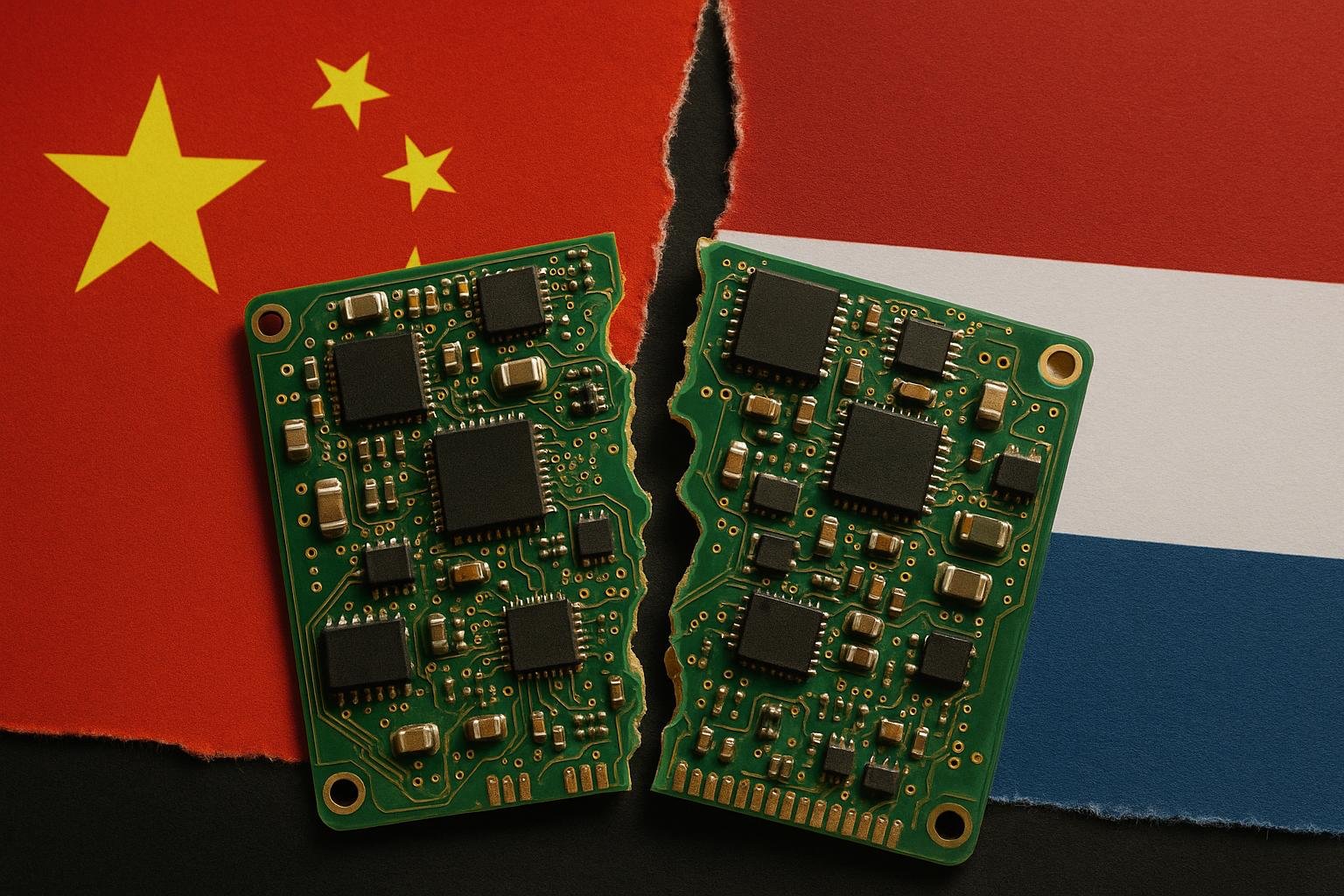
The recent disruption caused by Nexperia’s factory seizure in China and the Dutch government’s intervention highlights vulnerabilities in global automotive supply chains amid escalating international tensions and strategic conflicts over critical technology control.

A recent semiconductor shortage originating from Nexperia’s factory in Dongguan, China, has sent shockwaves through global automotive production, revealing the strategic vulnerabilities in ...
Continue Reading This Article
Enjoy this article as well as all of our content, including reports, news, tips and more.
By registering or signing into your SRM Today account, you agree to SRM Today's Terms of Use and consent to the processing of your personal information as described in our Privacy Policy.
This intervention in late September triggered Beijing to halt exports from Nexperia’s Chinese plant, a crucial supplier of inexpensive yet essential chips used in critical automotive systems such as brakes, power modules, and electric windows. Major automakers including Nissan, Honda, and Bosch were compelled to reduce production, with some companies like Volkswagen warning of potential factory slowdowns in Germany. The disruption also rippled down the supply chain affecting Tier 1 suppliers like Aptiv, Valeo, and Magna, who integrate Nexperia’s semiconductors into vehicle electronics.
The crisis starkly exposed the perils of the industry’s heavy reliance on just-in-time inventory and the lack of diversified supply chains for low-cost yet vital components. Despite prior disruptions wrought by the COVID-19 pandemic and incidents like the 2021 Japanese factory fire, many automakers remained unprepared for the geopolitical risks impacting even relatively low-tech semiconductor production. Industry experts underscore the difficulty of finding alternatives because Nexperia chips are often soldered directly into vehicle parts, necessitating months of testing before replacements can be safely integrated. Toyota stands out as one of the few manufacturers maintaining a sizeable chip inventory as a precaution, while many others had to scramble to meet production demands amid the shortage.
The Dutch government’s seizure of Nexperia’s European operations, aimed at preventing the transfer of sensitive technology to China, ignited a complex international dispute. While the Dutch intervention only affected the European headquarters in Nijmegen, leaving Chinese operations under Beijing’s control, the Chinese government reacted by imposing export restrictions and demanding that transactions be conducted in yuan, adding logistical and financial complications for distributors and manufacturers worldwide. Some companies resorted to routing payments through Chinese entities to ensure continuity of supply. The export controls were later eased after diplomatic negotiations involving the Netherlands, the EU, Germany, the United States, and China. Subsequently, the Dutch government suspended its emergency oversight after receiving reassurances about Nexperia’s future conduct, including the removal of CEO Zhang Xuezheng, founder of Wingtech, though the original seizure decision remains in place pending further legal review.
Wingtech, however, has contested the Dutch government’s actions, appealing the seizure on grounds of legality and asserting the move as an unprecedented deprivation of property. Beijing has aligned with Wingtech’s stance, urging the Dutch authorities to revoke the intervention fully and restore normal management control, warning that unresolved legal and governance issues continue to threaten the stability of global semiconductor supplies.
The episode illuminates the broader geopolitical risks inherent in the semiconductor sector, even for seemingly low-end chip production, and underscores the high cost and complexity of building resilient, diversified supply chains. Industry analysts warn that while immediate shortages may have somewhat eased, the automotive sector remains highly vulnerable to political disputes and supply chain disruptions in a globally interconnected industry that is still adjusting to the lessons of past shocks. For many automakers, shifting supply strategies away from concentrated sources like Nexperia requires substantial time and investment, entailing months of qualification for alternative components and logistical planning to prevent future interruptions.
China’s Commerce Minister Wang Wentao has criticised the Dutch intervention for creating “chaos and turbulence” in the semiconductor supply chain, emphasizing the need for practical, cooperative solutions to assist affected companies and restore stability. As the diplomatic talks continue, the Nexperia saga reflects a microcosm of the broader struggle between trade security concerns and market openness amid rising Sino-Western tensions and strategic competition over critical technologies.
In summary, the Nexperia chip shortage has rattled global auto production by exposing entrenched supply chain weaknesses and geopolitical fault lines. While the immediate crisis has been partially mitigated, the event serves as a cautionary tale about the fragility of modern manufacturing networks and the vital importance of securing semiconductor supplies in an era of increasing international friction.
Source: Noah Wire Services
Subscribe to Industry Updates

