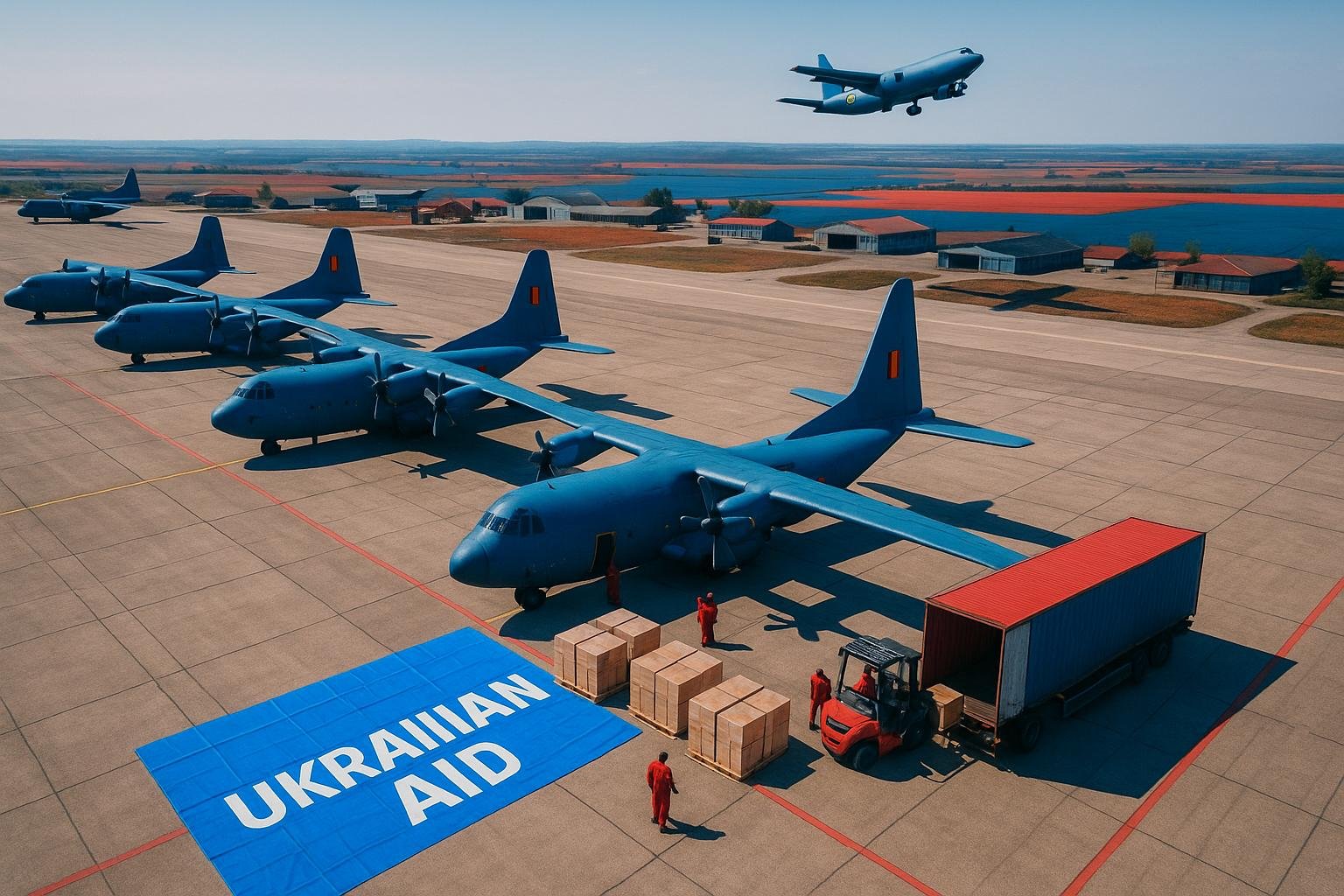
NATO plans to establish a second major logistics centre in Romania in January 2026, aiming to double the arms and aid flow to Ukraine and strengthen supply resilience in the eastern flank of the alliance.
NATO will open a second major logistics hub in Romania in January 2026 to coordinate and transit military aid to Ukraine, officials and multiple regional media outlets reported, a move aimed at doubling the flow of weapons and reducing reliance on a single logistics no...
Continue Reading This Article
Enjoy this article as well as all of our content, including reports, news, tips and more.
By registering or signing into your SRM Today account, you agree to SRM Today's Terms of Use and consent to the processing of your personal information as described in our Privacy Policy.
de in Poland.
According to Remix News and the Polish weekly Do Rzeczy, the new centre will operate alongside the existing hub in Rzeszów (Jasionka), which was established shortly after Russia’s 2022 invasion to serve as the main logistics node for international military, humanitarian and medical assistance to Kyiv. The Romanian facility will report directly to NATO and is intended to provide a stable southern supply route for eastern and southern Ukraine, enhancing logistical resilience across the alliance’s eastern flank, several reports said.
NATO’s deputy commander for support to Ukraine, General Mike Keller, confirmed the opening and told the press that in the past year roughly 220,000 tonnes of military aid transited through NATO-managed channels to Ukraine, involving about 9,000 truck movements, 1,800 rail wagons and some 500 aircraft carrying weapons and military equipment. Industry and regional outlets have repeated those figures in recent coverage.
The new hub is expected to handle deliveries under the PURL (Prioritized Ukraine Requirements List) mechanism, allowing NATO to increase the volume and predictability of shipments of ammunition, missiles and air‑defence systems, RBC Ukraine and other outlets reported. Censor and other Ukrainian-language sources add that the Romanian centre will specialise in transferring artillery, air‑defence systems and electronic‑warfare equipment.
Defence Express experts welcomed the diversification of supply routes, noting the strategic risk of concentrating supplies at a single centre. “This is actually quite positive news, considering the independence of arms supplies to Ukraine from a single logistics center in Poland. This concerns urgently needed air defense assets, and above all, missiles, ammunition, etc.,” they said.
The current Polish hub in Jasionka lies roughly 80 kilometres from the Polish–Ukrainian border. According to the lead reporting, goods there undergo security checks, including inspections for explosives and counterintelligence screening, before onward transport to Ukraine. For more than two years those tasks have been overseen by a special support inspectorate led by the Military Counterintelligence Service and involving police, the Central Bureau of Police Investigation, military counterintelligence and officers of the Military Gendarmerie, the report stated.
Regional commentators and defence analysts cited by Komersant, Euromaidan Press and Defence‑UA argued the Romanian hub will reduce the vulnerability of NATO’s supply lines by adding a southern route less exposed to disruption, while maintaining operational synergy with Rzeszów. The expansion also reflects an effort to institutionalise and streamline multinational logistics for sustained assistance.
The opening of the Romanian hub, while widely reported in regional media and confirmed by NATO’s deputy commander for support to Ukraine, comes amid continuing debate over the scale and pace of Western military support. Sources differ on granular details of command arrangements and exact throughput capacity; nevertheless the convergent reporting underlines a clear intent within NATO to bolster the logistical architecture underpinning support to Ukraine.
Source: Noah Wire Services