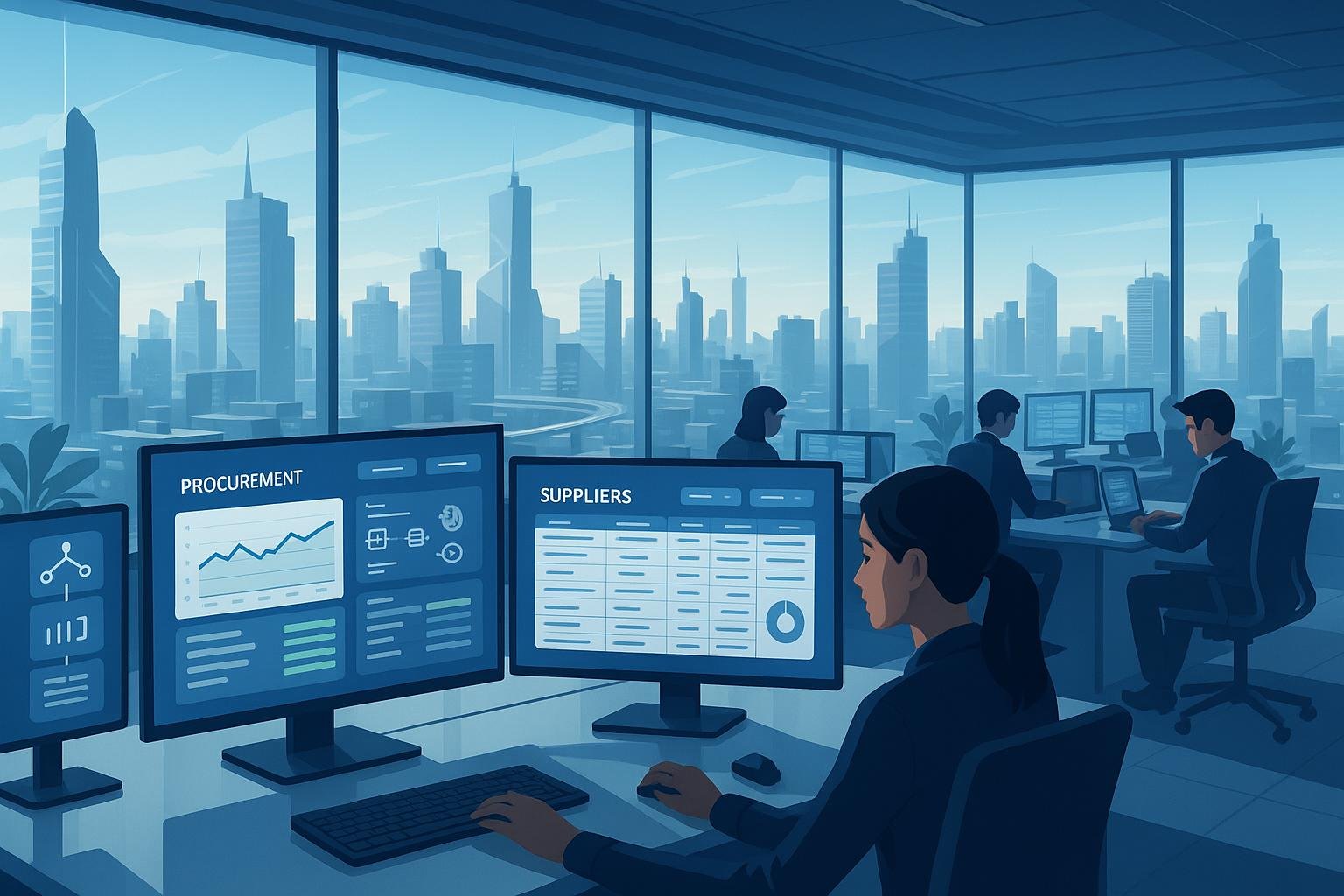
Modern procurement has outgrown the spreadsheets, email chains and manual approvals that still govern purchasing in many organisations. According to several industry explainers, the old model leaves firms with poor spend visibility, duplicated data entry and approval bottlenecks that consume time better spent on strategy. The result is not just inefficiency but a weakened ability to control costs, enforce policy and manage supplier relationships.
The case for change is stronges...
Continue Reading This Article
Enjoy this article as well as all of our content, including reports, news, tips and more.
By registering or signing into your SRM Today account, you agree to SRM Today's Terms of Use and consent to the processing of your personal information as described in our Privacy Policy.
t where procurement remains isolated from broader finance and planning systems. Amazon Business, in a recent blog on ERP and procurement, said traditional ERP tools often do not provide the visibility or automation needed for contemporary purchasing demands, while Ivalua has argued that a unified procurement layer can sit above multiple ERP environments to give companies a clearer view of suppliers, sourcing activity and spend. That approach reflects a wider shift: procurement software is increasingly seen not as a replacement for ERP, but as the tool that extends it.
The practical gains are easy to see. Procurement platforms typically automate requisitioning, approval routing, purchase order creation, contract handling and invoice matching, reducing the amount of repetitive work done by staff. The Enterprise Institute and Fraxion have both highlighted how standardised workflows and real-time data access can shorten cycle times, improve spend control and lower operating costs. When purchasing data flows cleanly into finance and inventory systems, organisations also reduce reconciliation work and the errors that come with manual rekeying.
Vendor management is another area where modern software changes the equation. Instead of treating suppliers as little more than names on a list, integrated platforms can centralise master data, track performance and support collaboration through supplier portals. That can improve communication, speed up payment processes and make contract terms easier to enforce. Tyasuite has argued that this stronger visibility also supports compliance, particularly where companies need to monitor certifications, purchasing rules and approval thresholds.
The appeal extends beyond efficiency. Better procurement systems can improve decision-making by giving leaders a more reliable view of category spend, concentration risk and savings opportunities. Embedded analytics, which Ivalua has promoted as part of a unified platform model, allow procurement teams to identify trends rather than react to them. In that sense, the function moves from processing transactions to shaping business outcomes.
Implementation still matters. Industry guidance consistently points to the same success factors: executive sponsorship, careful process redesign, phased rollouts and strong change management. Software alone will not fix a broken purchasing model if the underlying workflow remains unclear. But when the process is mapped properly and the technology is configured around it, organisations can expect faster approvals, tighter controls and better use of working capital.
For companies still relying on legacy procurement tools, the larger question is no longer whether digitisation helps. It is whether they can afford to delay it.
Source: Noah Wire Services