


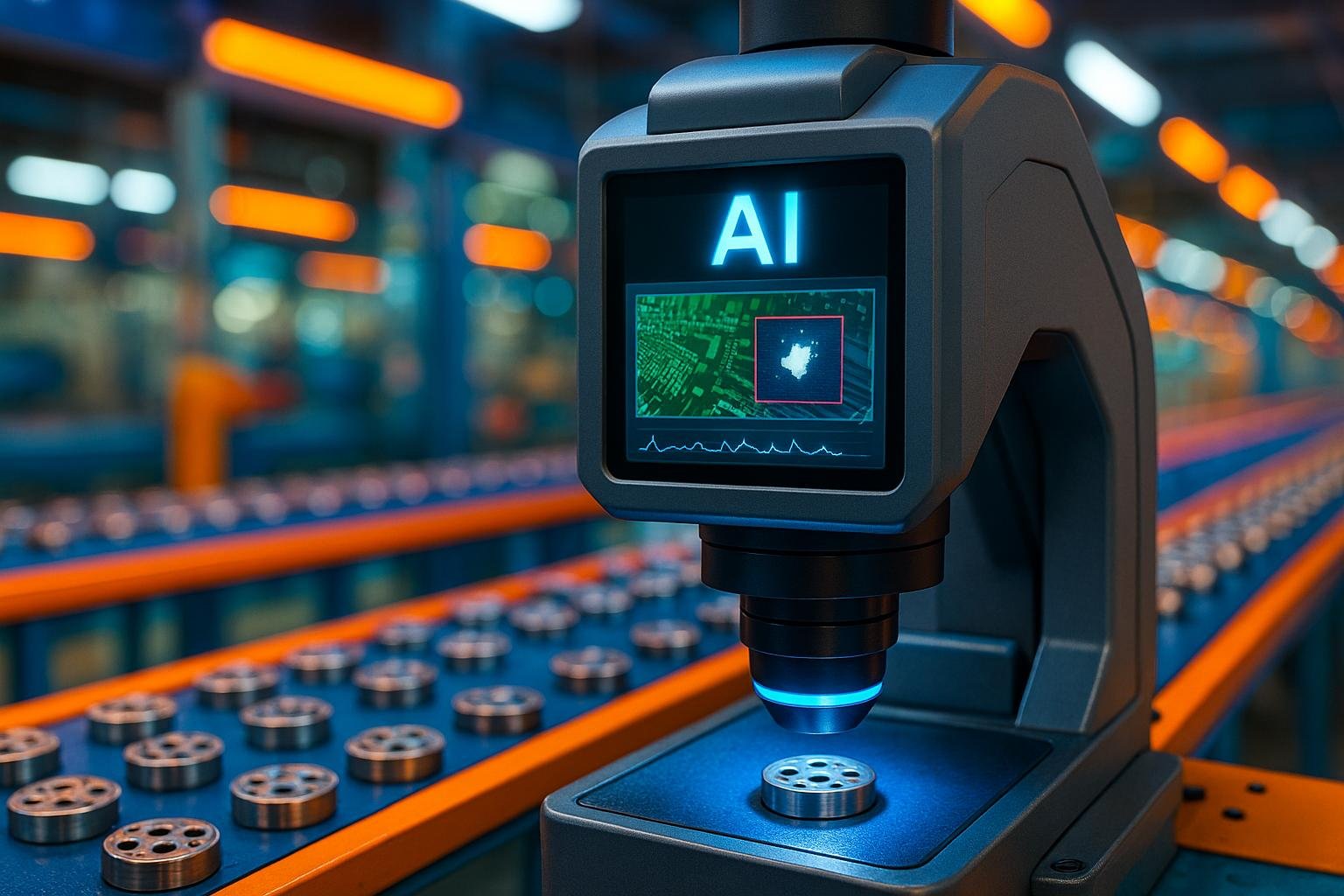
Mid-sized manufacturers are increasingly adopting affordable AI-powered quality control systems, achieving levels of defect detection and operational efficiency traditionally reserved for the largest corporations, with transformative results and competitive advantages.

Mid-market manufacturers are increasingly leveraging artificial intelligence (AI) to achieve quality standards traditionally associated with Fortune 500 companies, without the prohibitive costs or complexity that once limited adoption to the largest firms. AI-powered quality control systems are transforming the sector by providing automated, high-precision inspections that reduce defects, improve operational efficiency, and enhance customer trust.
Traditional quality control methods, predominantly dependent on manual inspections, suffer notable limitations. Human inspectors face fatigue and inconsistency challenges, resulting in variable defect detection rates and slower processing speeds. As production scales up, these issues exacerbate, forcing manufacturers to choose between slowing operations to preserve quality or increasing labour costs without guaranteed accuracy improvements. Moreover, manual inspections struggle with integration into modern manufacturing systems, leading to data gaps and difficulties in trend analysis, compliance documentation, and process optimisation.
By contrast, AI-powered systems offer consistent, 24/7 defect detection capabilities with remarkable accuracy—achieving detection rates around 99.7%, compared to typical human inspection rates of approximately 85%. Employing advanced computer vision and machine learning algorithms, AI ensures uniform quality standards across all shifts, rapidly identifies even microscopic flaws, and integrates seamlessly with manufacturing execution systems (MES), enterprise resource planning (ERP) platforms, and Internet of Things (IoT) networks. This integration enables real-time monitoring and proactive responses to quality issues, helping prevent costly downstream defects and reducing waste through early defect identification.
The strategic implementation of AI quality control often begins with a pilot program targeting specific product lines or defect types. This phased approach, which typically spans around 90 days, allows for hardware upgrades or retrofits—such as installing high-resolution cameras and upgrading sensors—AI algorithm training using historical quality data, system integration, staff training, and performance validation. This structured rollout mitigates risks, minimises production disruption, and allows for scalability planning.
Case studies of mid-sized manufacturers adopting AI systems demonstrate transformative results, including up to 40% improvement in quality, significant waste reduction, smoother production flows, and faster return on investment (ROI). Many companies report achieving ROI within eight months, underscoring the financial viability of these technologies. The operational efficiencies gained through AI also support higher production capacity without proportional increases in quality control labour, enabling manufacturers to meet growing market demands and accept more complex projects confidently.
Beyond operational improvements, AI quality control strengthens market positioning. Manufacturers delivering near-perfect defect detection and consistent quality can command premium pricing, secure long-term contracts, and become preferred suppliers to larger corporations, including Fortune 500 companies. This capability is particularly valuable in highly regulated sectors such as aerospace, automotive, and medical devices, where compliance demands meticulous documentation and consistent standards—both facilitated by AI-generated automated reports and traceability.
Financially, AI implementations can be tailored to fit mid-market budgets by prioritising software-based solutions, leveraging existing inspection equipment with AI enhancements, and utilising cloud-based computing to reduce upfront hardware costs. Subscription models and equipment leasing further ease financial commitments, enabling a gradual investment aligned with demonstrated benefits. However, investments in training, technical support, and system optimisation remain essential to ensure smooth adoption and sustained performance.
Challenges in adopting AI include internal resistance due to unfamiliarity, data silos hindering integration, and limited in-house AI expertise. Effective change management, cross-functional collaboration, comprehensive training, and careful vendor selection are critical to overcoming these barriers. Continuous performance monitoring, model retraining, and predictive maintenance ensure AI systems adapt to evolving production conditions and maintain accuracy as operations scale.
Industry analysis shows AI’s broader impact in manufacturing beyond quality control, including predictive maintenance, real-time production monitoring, inventory optimisation, and labour management efficiencies. Integrating AI into these areas further enhances operational resilience and cost-effectiveness.
In conclusion, AI-powered quality control is no longer the preserve of large enterprises. Accessible, scalable, and financially viable solutions now enable mid-market manufacturers to reach Fortune 500-level quality standards. Early adopters are already capitalising on superior defect detection, operational efficiency, and enhanced market competitiveness. The imperative for manufacturers is clear: integrating AI into quality control is no longer optional but essential for sustaining growth and leadership in today’s demanding manufacturing landscape.
Source: Noah Wire Services

