


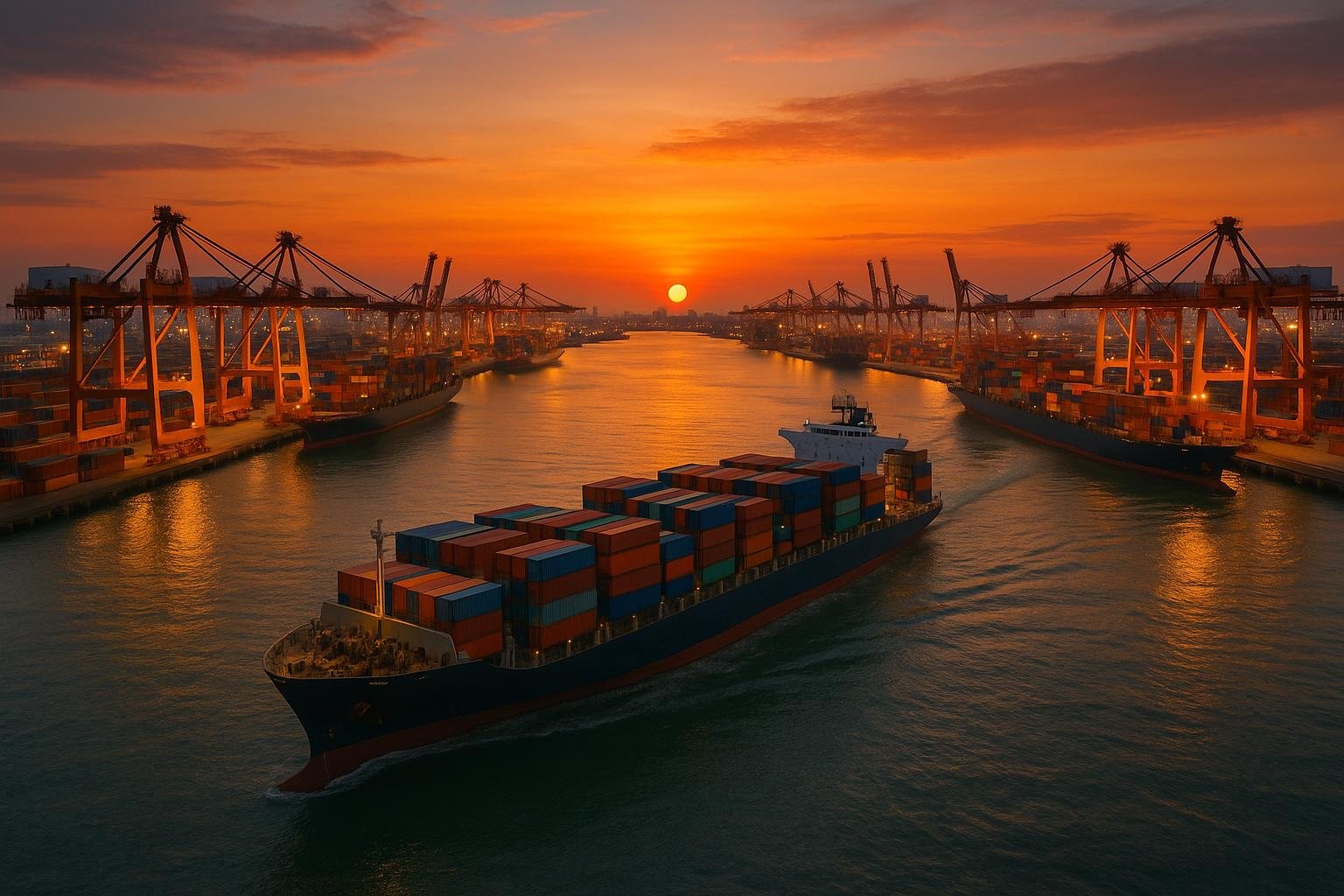
Mark Carney’s push for a redefined international trading framework is prompting firms to diversify routes and bolster operational agility, shaping the future of global logistics amid geopolitical frictions and shifting alliances.

Mark Carney’s call for a reconfigured global trading architecture has clear operational consequences for the movement of goods. His central contention, that the era of a single, uniformly applied rulebook for global commerce is fading a...
Continue Reading This Article
Enjoy this article as well as all of our content, including reports, news, tips and more.
By registering or signing into your SRM Today account, you agree to SRM Today's Terms of Use and consent to the processing of your personal information as described in our Privacy Policy.
The geopolitical backdrop helps explain the urgency. Recent spikes in tariffs, the routine use of sanctions and judicial uncertainty over trade measures have shown how quickly access and cost can change. According to analysis by McKinsey, changing trade corridors driven by geopolitical frictions will compel businesses to diversify routes and partners to avoid over‑concentration in any single region. That prescriptive thread runs through reporting from multiple outlets: The Straits Times and Yahoo Finance describe efforts by Canada, led by Mr Carney, to cultivate stronger ties with the EU and Pacific partners as a hedge against U.S. dominance,while The Independent and the Canadian Centre for Policy Alternatives warn that rapid decoupling strategies can disrupt supply chains and raise costs for domestic firms.
For logistics operators the practical implications are straightforward and tangible. Diversification of sourcing and routing produces more complex networks: greater multi‑modal movements, more transhipments and a proliferation of customs and compliance touchpoints. The immediate operational effects likely include longer planning cycles, higher working inventory or contingency warehousing, rising compliance and insurance outlays, and a premium on digital visibility and scenario planning. At the same time, demand for regional distribution hubs is apt to grow, reducing some long‑haul container flows while boosting intra‑regional freight.
Service providers that can navigate this environment will see opportunity. Firms offering rapid customs clearance, flexible multimodal options and transparent pricing will attract business as shippers seek partners able to reconfigure lanes quickly. As an industry note of caution, however, other commentators argue that hastily re‑routing at scale risks inefficiencies and higher unit costs; diversification must be executed strategically to avoid substituting one fragility for another.
That blend of risk and opportunity is reflected in the operational checklist emerging across expert commentaries. Carriers and third‑party logistics providers should map single‑point supplier risks, build redundant lanes for priority SKUs, expand container and pallet flexibility for irregular loads, and negotiate freight and warehousing terms that permit rapid regional scale‑up. Industry data and consultancy guidance emphasise investments in digital end‑to‑end visibility and robust scenario planning as the most cost‑effective buffers against sudden policy shifts.
Institutional change, another pillar of Carney’s argument, matters for shippers because a reformed dispute‑resolution framework or new trading umbrellas could, over time, lower uncertainty for some corridors. Efforts to link regional agreements, such as moves to interconnect the Comprehensive and Progressive Agreement for Trans‑Pacific Partnership with EU trade initiatives, illustrate attempts to create alternatives that dilute single‑country leverage. Yet transition periods are likely to be messy; while new frameworks are negotiated and implemented, logistics managers should expect short‑ to medium‑term frictions.
For platforms and marketplaces that match shippers with carriers, the changing order reinforces the value of enabling rapid experimentation. The lead article recommends trying alternative corridors and testing routes in live operations rather than relying solely on modelling or expert commentary. That operational approach echoes reporting that Canada is actively pursuing new markets in China and Europe to balance U.S. exposure,underscoring both the strategic intent and the practical work required to open and prove new corridors.
From a global perspective, Carney’s proposal signals a pivot rather than an abrupt collapse of international trade. The macro‑trend points toward more regionalisation and a heavier emphasis on resilience,not complete fragmentation. For many multinational supply chains the impact will be significant, requiring reengineering and investment, while for smaller, purely domestic flows the effect may be limited. In short, this is material for global logistics,with a spectrum of consequences depending on a firm’s exposure to cross‑border trade.
GetTransport.com positions itself to help customers navigate these shifts by offering access to multiple carriers and corridor options so firms can trial alternative lanes without disproportionate cost. The company’s service model is relevant in an environment where “fortune favors the prepared.” Shippers seeking to test new routes, secure contingency capacity, or obtain transparent comparative pricing can use marketplaces to move from planning to execution quickly,discovering how a candidate corridor performs under real conditions.
In the months ahead, logistics professionals should treat Carney’s diagnosis as a prompt to accelerate diversification strategies,stress‑test networks and invest in visibility and contractual flexibility. Those who adapt with measured experimentation and upgraded operational safeguards are most likely to convert policy‑driven disruption into competitive advantage.
Source: Noah Wire Services
Subscribe to Industry Updates

