


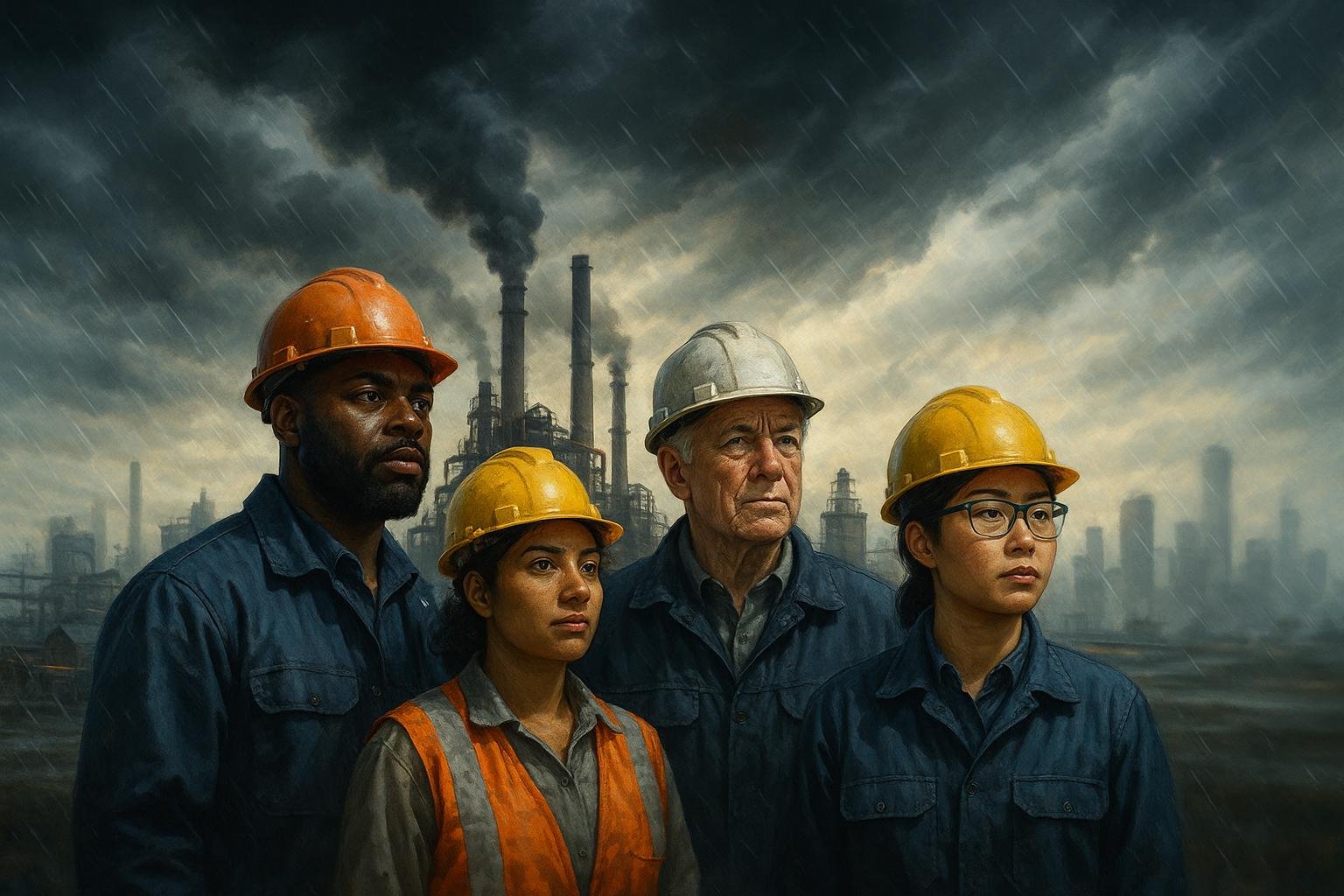
As disruptions become a persistent reality, industry expert Cindy Farrer advocates for embedding quality assurance into supply chain resilience planning to safeguard product standards and operational continuity in an increasingly volatile global environment.

Cindy Farrer draws on more than three decades in manufacturing quality and supply chain roles to warn that disruption is no longer an occasional shock but a persistent operating condition that must reshape how compa...
Continue Reading This Article
Enjoy this article as well as all of our content, including reports, news, tips and more.
By registering or signing into your SRM Today account, you agree to SRM Today's Terms of Use and consent to the processing of your personal information as described in our Privacy Policy.
Farrer says the interplay between quality and supply-chain resilience inspired her recent piece for Quality, noting that “the whole mindset of maintaining quality management system, it sometimes gets left aside, with all this volatility, but it needs to be, very much, in the forefront.” Her comments reflect the lived experience of executives who moved from steady optimisation to continuous crisis response after the pandemic, and she points to unusually high measures of uncertainty in recent years.
Those observations align with broader industry findings. According to a McKinsey survey of supply-chain leaders, many firms still only understand risks as far as their tier-one suppliers, with visibility and risk capabilities falling off for deeper tiers. That limited transparency leaves manufacturers exposed to shocks that can cascade into quality lapses if alternate sources or mitigation plans are not validated in advance. McKinsey also reports that companies which invested in advanced analytics before COVID-19 were far more likely to manage disruptions successfully, and that firms are increasingly turning to data-driven tools to regain control.
Farrer’s practical experience echoes one tactical shift industry-wide: greater use of redundancy. McKinsey’s more recent polling finds that nearly all respondents have adopted resilience measures such as higher inventories, dual sourcing and regionalised networks. Dual sourcing in particular has increased sharply, and many manufacturers are reorganising supply footprints to reduce single-point vulnerabilities.
Trade policy has added a fresh layer of volatility. An analysis in Forbes highlights how tariff negotiations and related policy changes have produced supply-chain turbulence that, in some cases, exceeds pandemic-era disruption. Supplyframe’s Commodity IQ Lead Time Index reached record highs in 2025, illustrating how rapidly lead times can lengthen when tariffs and trade frictions bite. Those shifts force purchasers to juggle cost, availability and, crucially, quality control when switching suppliers or rerouting components.
The economic stakes are material. Research from the Federal Reserve Bank of San Francisco links the post-pandemic bout of supply-chain strain to a substantial portion of the U.S. inflation surge, underscoring how disruptions that start in sourcing can ripple through prices and margins. For quality managers, that means commercial and operational pressures , from cost-cutting to expedited sourcing , can undermine process controls unless they are consciously managed.
Farrer recommends that quality leaders move beyond treating quality as a downstream checkbox and instead embed it into resilience planning. Practical steps she advocates include strengthening supplier assessments beyond tier one, preserving documented control plans during sourcing changes, and keeping audit and corrective-action rhythms intact even under pressure. Her ISO and auditing background informs an emphasis on systems and evidence over ad-hoc fixes.
Industry evidence supports those prescriptions. Firms that combine redundancy with rigorous supplier oversight and analytics can both absorb shocks and maintain standards. McKinsey’s work shows companies increasing inventory buffers and dual-sourcing while simultaneously investing in analytics to understand where disruptions will matter most. That dual approach , building capacity to withstand disruption while sharpening visibility and decision-making , is what Farrer sees as essential for protecting quality in volatile trade conditions.
As manufacturers confront a future where geopolitical shifts, labour market tightness and policy changes are interlaced with legacy pandemic aftereffects, Farrer urges a mindset change: resilience must be designed to preserve product integrity as well as continuity. “Supply chain resiliency is a very large topic. And then quality, in my role working with companies on implementing quality management systems, it’s very much impacted,” she said. Integrating quality into resilience strategy, she suggests, is the best way for firms to avoid trading short-term fixes for long-term deterioration in product standards.
Source: Noah Wire Services
Subscribe to Industry Updates

