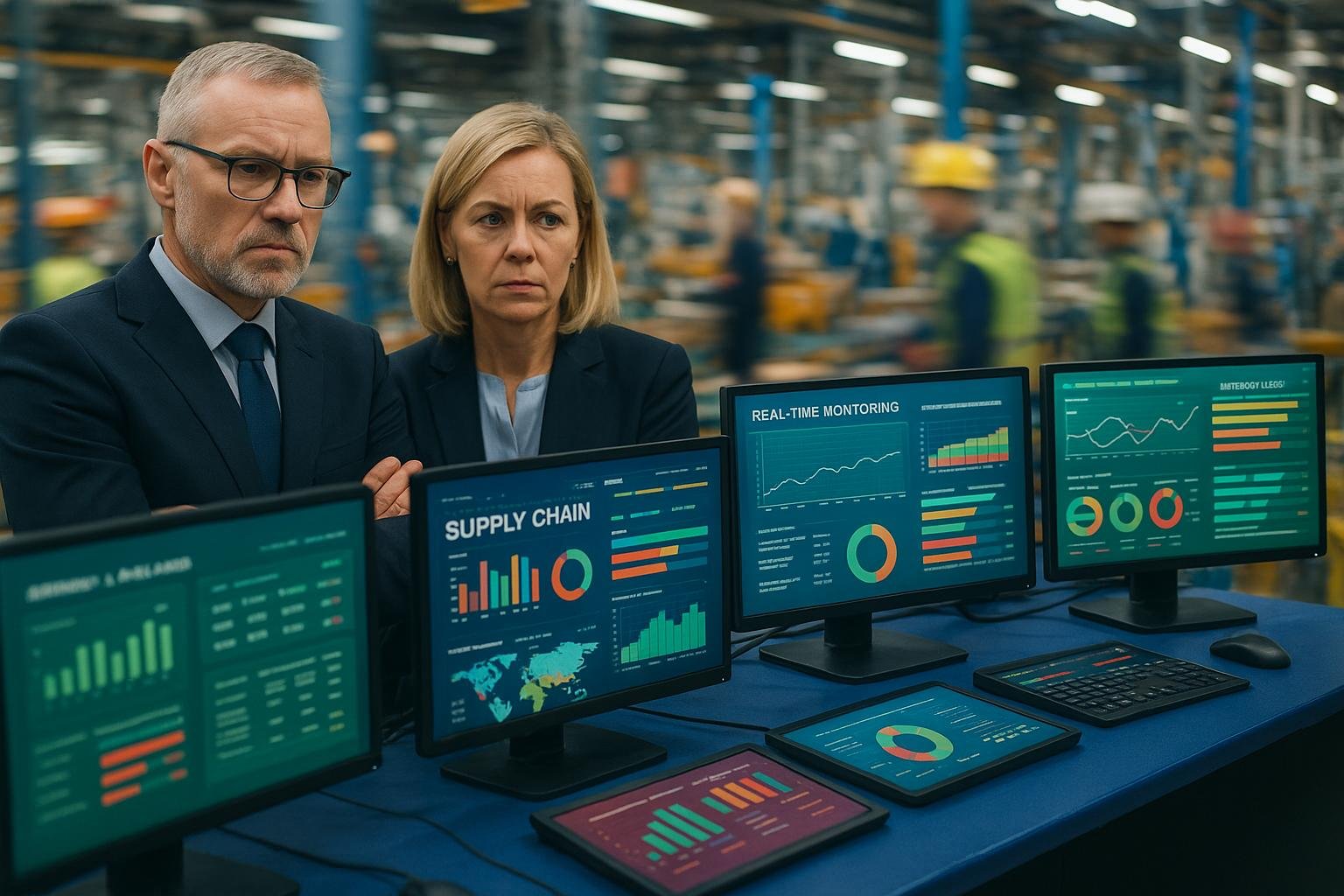
Manufacturers have spent heavily on forecasting software and planning systems, but new research suggests many of the delays that disrupt production are being caused elsewhere: on the factory floor, in supplier coordination and in the execution of plans that looked sound on paper.
According to a study commissioned by LeanDNA and conducted by Wakefield Research among 150 senior decision-makers at global discrete manufacturers, 74% said they had invested in demand forecasting tool...
Continue Reading This Article
Enjoy this article as well as all of our content, including reports, news, tips and more.
By registering or signing into your SRM Today account, you agree to SRM Today's Terms of Use and consent to the processing of your personal information as described in our Privacy Policy.
s. Yet 75% said supply plan failures are most likely to happen during factory-level execution rather than in the forecast itself. The findings point to a familiar but often underestimated problem in industrial operations: the plan may be right, but the system that turns it into action is not.
The disruption is showing up in day-to-day operations. LeanDNA said 83% of manufacturers reported supplier changes causing multiple production interruptions each quarter, while 56% said this happened at least monthly. Nearly three-quarters said they only discovered a material shortage after delays had already become unavoidable, suggesting the warning signs were present long before the damage was visible.
Reaction times are also slowing the response. More than half of those surveyed said it takes a week or longer to work out corrective action once a disruption is identified, a delay that can be costly in environments where schedules are measured in hours rather than days.
A central weakness, the study argues, lies in enterprise resource planning systems. While 73% of manufacturers said their ERP platforms can show which materials are required, they cannot prevent execution failures, and 93% said they struggle to get visibility into what actually happens in manufacturing execution. That gap leaves planning teams with a picture of what should happen, but not enough insight into whether suppliers, materials and shop-floor priorities are aligned well enough to make it happen.
The broader theme is echoed in industry commentary from other manufacturing software providers, which argue that excess inventory, late production changes and missed shipments are often symptoms of execution breakdowns rather than pure forecasting errors. Others say real-time visibility and faster decision-making are increasingly important as factories face volatile supplier conditions, more product variation and tighter delivery expectations.
LeanDNA said artificial intelligence could help bridge that gap by turning supply planning into a live monitoring process rather than a static forecasting exercise. Andy Ellenthal, the company’s chief executive, said in a statement that supply planning should be seen as “the first act of execution”, not just the output of demand planning. He argued that firms that grasp that distinction can reduce inventory, improve delivery performance and make supply chains a competitive advantage rather than a constant firefight.
Source: Noah Wire Services