


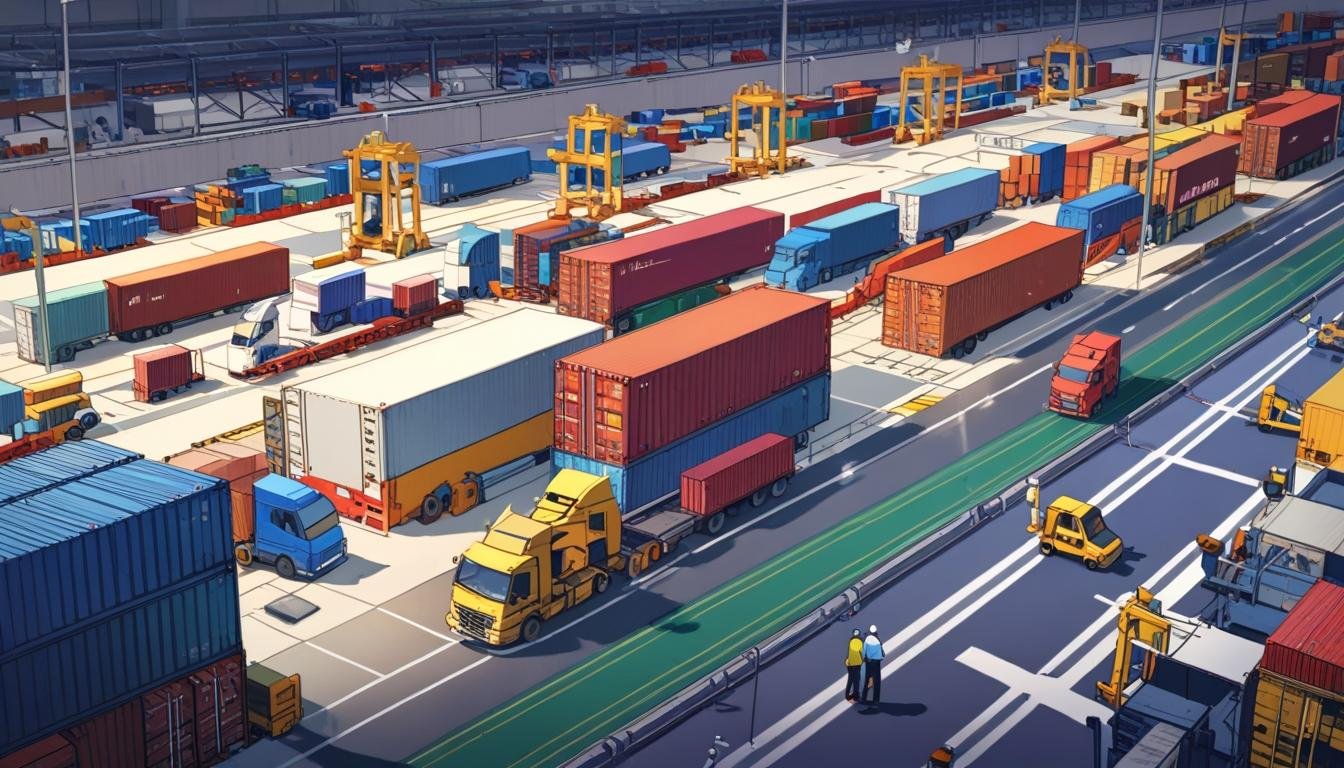
**London**: Logistics service providers are navigating a transformative phase marked by tariff negotiations and nearshoring. Experts highlight the need for strategic flexibility and advanced technology solutions to adapt to shifting dynamics and optimise operations, ensuring competitive resilience in a complex market environment.
Logistics service providers (LSPs) are facing a notable period of transition as tariff negotiations progress and industry dynamics shift towards nearshoring and process adaptations. Experts suggest that maintaining flexibility and strategic insight will be crucial for LSPs looking to navigate the changing landscape of costs and supply chain availability.
Ann Marie Jonkman, Vice President of Global Industry Strategy at Blue Yonder, outlined both the challenges and opportunities that lie ahead for logistics companies. In comments made to FreightWaves, Jonkman stated, “If there’s one constant, it’s change. But what’s truly transformative is how technology enables us to adapt quickly.” She noted that many of her LSP customers began investing in advanced supply chain solutions in the previous year, anticipating the ongoing market shifts that would require them to remain agile.

Transport leaders are reportedly keen to understand how technology can bolster their competitive edge and resilience. Jonkman shared that inquiries are common from her clients about leveraging technological enhancements to optimise operations, such as refining transportation routes and improving inventory placement.
The complexity of supply chain strategy is underscored by Jonkman’s assertion that there cannot be a universal approach to navigating upcoming changes. “Every company has a unique business mix, and that shapes their approach,” she explained. Depending on sourcing origins, the ramifications of tariff adjustments can vary significantly. For companies primarily importing from North America, the impact of tariffs will differ noticeably compared to those relying on overseas markets.
Potential strategies for businesses include increasing sourcing from North America, modifying the use of ocean containers, exploring alternative shipping routes, and fostering partnerships with other logistics firms to enhance geographical flexibility. Jonkman advised, “You need to analyse a vast amount of data to fully understand cost implications. You can’t simply hope the impact will be minimal or assume business as usual.”
The rapid advancements in artificial intelligence and machine learning facilitate more dynamic decision-making processes in logistics. Jonkman, who has considerable experience in operations, remarked, “Success depends on having strategies in place that account for labor, product positioning, final-mile delivery, and manufacturing timelines.” As conditions within the logistics sector can shift rapidly, businesses must align these factors to pivot effectively.
Blue Yonder services not only logistics but also the retail and manufacturing sectors, which will experience varied impacts from tariff changes and nearshoring trends. Jonkman elaborated, “For some companies, making their supply chain more efficient means keeping operations within the U.S. But if your products are sourced from China, Africa, or the Caribbean, tariffs will still apply.” Optimising domestic operations emerges as a critical strategy for offsetting tariff-related costs.
Cost-saving measures highlighted by Jonkman include utilising less-than-truckload (LTL) and parcel freight options, automating logistics processes, and establishing partnerships within an LSP network. However, she cautioned that no singular strategy guarantees success, remarking, “You have to evaluate every component carefully. Some costs will be passed on to consumers—but how much? It’s crucial to consider the full end-to-end supply chain rather than relying on a simplistic solution like moving everything to domestic production.”
Enhanced visibility through improved data connectivity is essential for effective management. Jonkman stressed the importance of having real-time visibility into every stage of the supply chain, stating that logistical decisions must not rely on delayed reporting but should allow for proactive responses. “Flexibility starts with visibility,” she emphasised, noting that many companies use multiple disconnected systems for data gathering.
The complexities expected in 2025 will require careful oversight across various logistical factors, and Jonkman highlighted the need for expert guidance to navigate these challenges. “This year will bring a variety of disruptions,” she concluded, reinforcing the importance of strategic partnerships in addressing the evolving needs of the logistics industry.
Source: Noah Wire Services

