


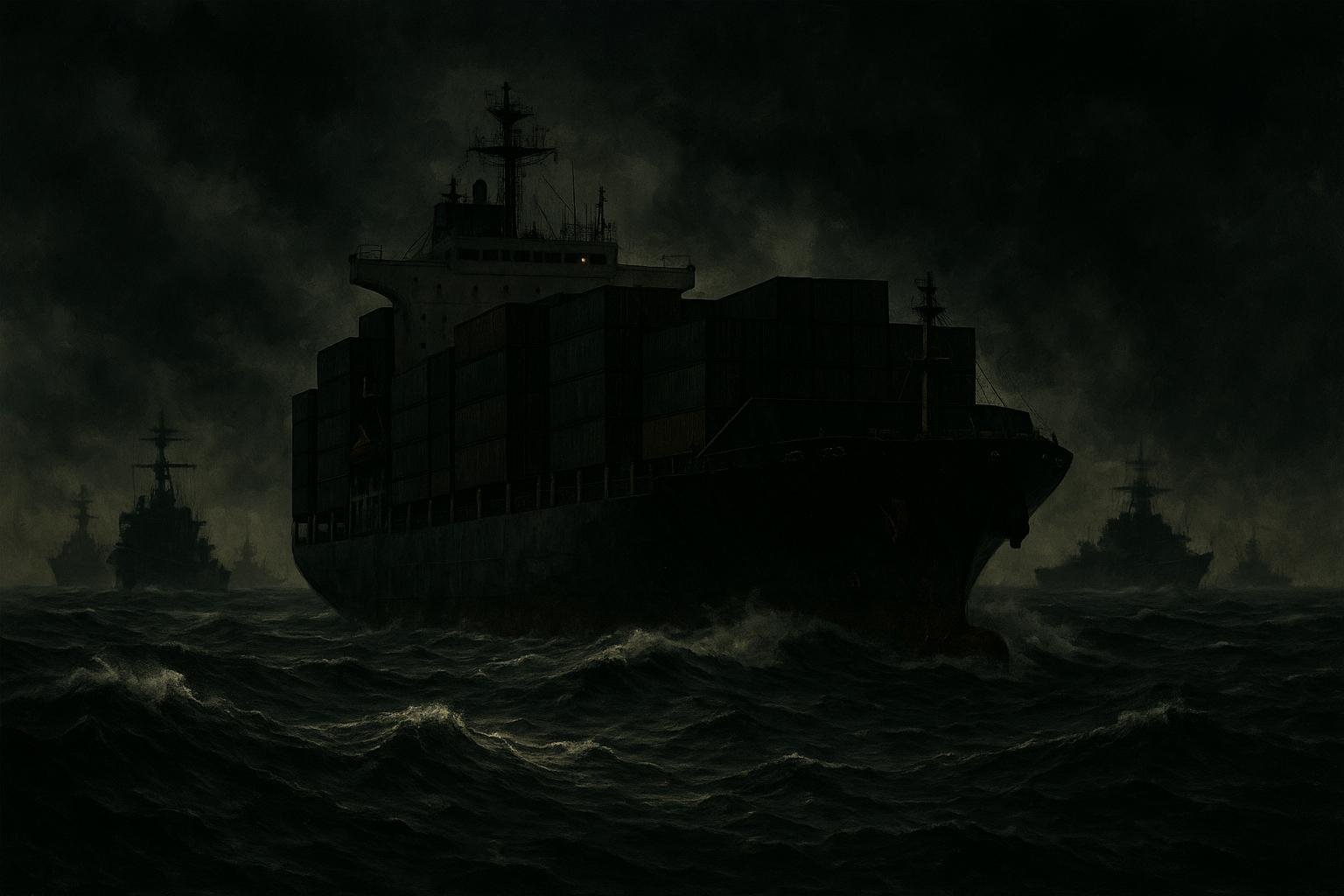
The escalating conflict involving Iran has caused significant upheaval in global logistics, leading to route suspensions, insurance withdrawals, and rising costs, with lasting implications for supply chains worldwide.

The widening conflict involving Iran has delivered a sharp shock to global logistics, forcing shipping lines to detour, insurers to withdraw coverage and shippers to absorb new surcharges as routes through the Middle East become increasingly hazardous.
...Continue Reading This Article
Enjoy this article as well as all of our content, including reports, news, tips and more.
By registering or signing into your SRM Today account, you agree to SRM Today's Terms of Use and consent to the processing of your personal information as described in our Privacy Policy.
Commercial carriers have responded rapidly. Major container operators have suspended sailings, halted bookings to parts of the region and re-routed services around the Cape of Good Hope rather than risk transits through the Red Sea, Suez Canal or Strait of Hormuz. Maersk, MSC and CMA CGM have all announced operational pauses and route changes, while other lines have altered in‑transit voyages or sought shelter for vessels in the Persian Gulf. According to Automotive Logistics, traffic through the Strait of Hormuz has fallen precipitously, with vessel movements down by roughly 70 percent following recent strikes.
That contraction in throughput matters: roughly one‑fifth of the world’s crude oil is exported via the Gulf, a concentration that amplifies market sensitivity. The immediate market reaction has already pushed oil and bunker fuel prices higher, feeding through into freight costs via increased bunker adjustment factors and related surcharges.
Insurers’ moves have compounded the disruption. According to The Guardian, leading maritime underwriters including Norway’s Gard and Skuld, the UK’s NorthStandard and the London P&I Club, and America’s American Club have cancelled war risk cover for ships operating in the Gulf with effect from 5 March 2026. The withdrawal of war risk policies is likely to deter owners from entering the area and to raise the cost of any voyages that do proceed, as owners and charterers face either higher premiums or the prospect of self‑insuring at elevated risk levels.
Ship operators are also implementing emergency levies. Lines have introduced war‑risk or emergency conflict surcharges for cargoes to and from at‑risk ports and waterways to offset rising security, fuel and operational expenses. Hapag‑Lloyd, for example, has signalled a war risk surcharge for cargoes to and from the Upper Gulf and adjacent waters, citing network disruption and equipment constraints as drivers.
The human and operational toll is evident. Reports indicate vessels and terminals have suffered damage, and there have been casualties among seafarers. Insurance market reporting, carried by Insurance Journal and tracing Reuters reporting, describes cancellations of war risk cover after at least three tankers were damaged and scores of ships were left unable to proceed around the Strait of Hormuz. Industry groups such as Bimco have documented a marked reluctance among shipowners to risk normal transits through the corridor amid ongoing hostilities.
Air freight has been affected in parallel. Several Middle Eastern states have closed or restricted airspace following missile and drone strikes, halting cargo flights to and from these countries and forcing airlines and forwarders to replan routes and schedules.
The disruption cascades through supply chains. Extended transit times from route diversions, vessel delays, and equipment bottlenecks can trigger higher inventory carrying costs and shortages of time‑sensitive goods. Automotive Logistics and other supply‑chain observers warn that the combined effect of rerouting, surcharges and insurance gaps will feed through to manufacturers and retailers reliant on just‑in‑time supply.
Political rhetoric underscores the strategic stakes. Speaking to reporters on Capitol Hill about the U.S.‑Israel strikes on Iran, Secretary of State Marco Rubio said, “… our mission and our focus is the destruction of their ballistic missile capabilities and their ability to manufacture them as well as the threat posed by their navy to global shipping.” He added, “The hardest hits are yet to come from the U.S. military.” That framing suggests military objectives tied directly to restoring maritime security, but the path to any sustained reduction in maritime risk is uncertain and likely protracted.
Longer‑term outcomes remain contested. The lead article characterises the removal of state sponsors of regional violence as potentially stabilising for shipping over time; conversely, recent reporting highlights how immediate policy and market responses , insurance cancellations, route suspensions and higher fuel costs , can deepen supply‑chain pain before any security improvements materialise.
For shippers, the calculus has shifted: routing decisions must now weigh not only distance and cost but also insurance availability and the political trajectory of the conflict. Industry notices from carriers and advisories from insurers are changing daily; operators and cargo owners are responding with contingency plans, increased use of alternative routing, and the application of conflict surcharges to manage financial exposure.
The short‑term picture is therefore one of pronounced disruption and cost escalation as global freight adjusts to closed waterways, withdrawn insurance and an uncertain security environment. Whether the surge in operational pain gives way to a more secure trading environment in due course will depend on how military, diplomatic and commercial actors navigate a volatile and rapidly evolving crisis.
Source: Noah Wire Services
Subscribe to Industry Updates

