


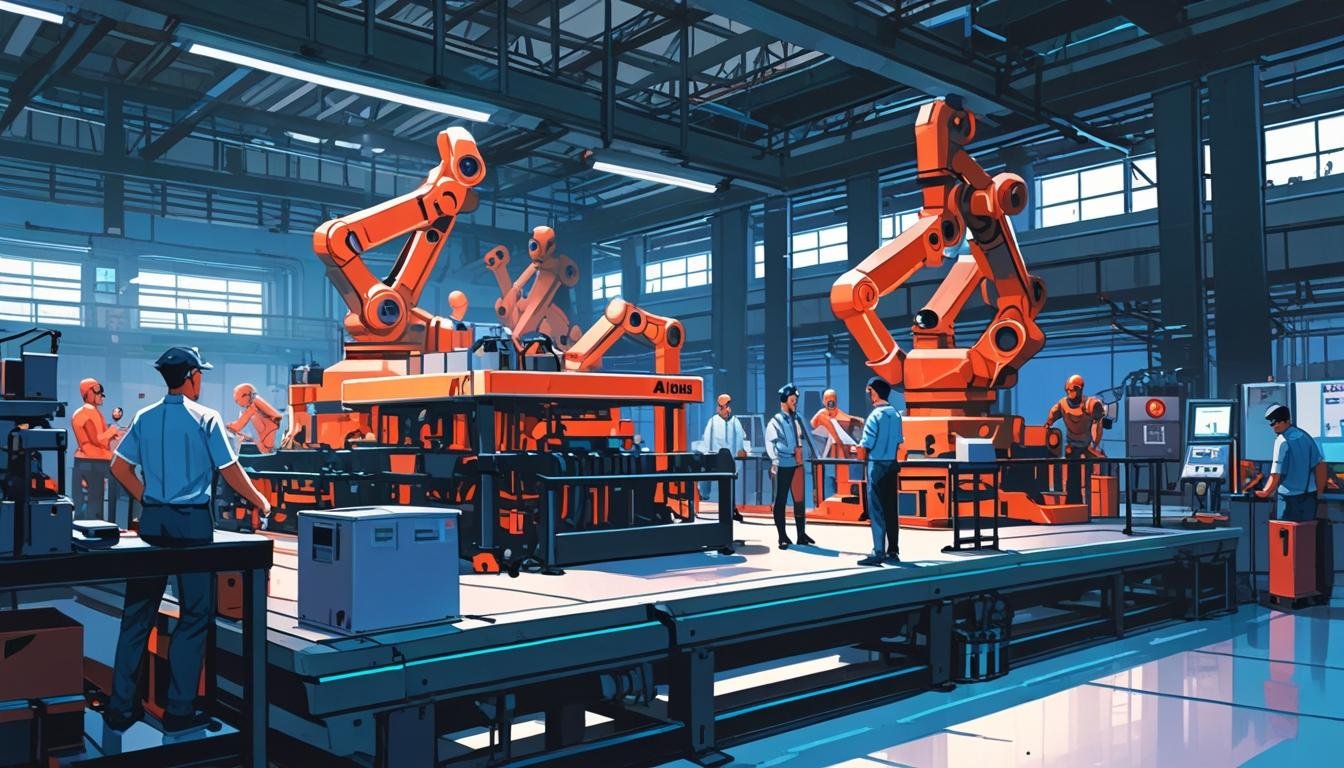
**London**: The emergence of Industry 5.0 promises a revolution in manufacturing, enhancing efficiency through AI, robotics, and sustainable practices, while also enabling mass personalisation. However, companies face challenges in adapting beyond traditional practices to harness these technological advancements effectively.
The landscape of industrial production is on the brink of a significant evolution with the impending rise of Industry 5.0. As numerous manufacturers grapple with the complexities of supply chain uncertainties and the demand for greater efficiency, the integration of advanced technologies and software solutions is becoming increasingly pertinent. Micah Statler, writing for Global Trade Magazine, explores the transformative opportunities and challenges that this next industrial revolution presents.
Historically, the industrial revolutions have marked pivotal advancements beginning with Industry 1.0 in the 1780s, driven by steam power, followed by electrification in Industry 2.0 during the 1870s, and the automation introduced in Industry 3.0 from the 1970s. Most recently, Industry 4.0 has focused on the Internet of Things (IoT), digital smart factories, and robotics, setting the stage for the anticipated shift towards Industry 5.0. According to experts, this new phase promises not only enhanced resilience in industrial processes but also improved sustainability, emphasising a collaborative interaction between humans and machines.

The potential of Industry 5.0 rests significantly on leveraging artificial intelligence (AI) and data analytics. These technologies can process vast amounts of information swiftly, leading to insights that enhance productivity and operational efficiency. Statler outlines how AI applications are likely to evolve from merely recognising trends to utilising sophisticated models for defect detection, predictive maintenance, and real-time quality assurance. The advancements in intelligent automation are expected to streamline workflows and allow robotic systems to work alongside human operators more effectively.
Moreover, robotics poised to play a crucial role in this transition are set to evolve beyond mere task execution. In a landscape where they will handle repetitive and labour-intensive tasks, autonomous robots will work in tandem with AI-driven systems. This integration aims to foster a safer and more productive environment, allowing human employees to concentrate on strategic activities and oversight.
A seamless connection between various technologies will be critical for a successful Industry 5.0 environment. As noted, integrating AI, robotics, IoT, and cloud platforms into a cohesive system will provide manufacturers with a substantial competitive advantage. Smart factories of the future will rely on real-time data sharing and cross-platform integration to harness new efficiencies.
Statler also highlights the sustainability aspect of Industry 5.0, which seeks to align corporate responsibility with cost-efficiency and waste reduction. By utilising AI-driven insights, businesses can better manage resources and minimise their environmental footprint while also improving financial performance. As global regulations tighten and consumer expectations shift towards greater accountability, employing sustainable practices is becoming essential.
In addition to sustainability, Industry 5.0 offers the capability for mass personalisation, enabling manufacturers to meet individual consumer preferences through enhanced data analytics. This shift means businesses can respond to customer behaviour in real-time, offering tailored products without sacrificing efficiency. Examples cited include the fashion industry producing customised clothing and automobile manufacturers enabling buyers to configure their vehicle features according to personal specifications.
However, as companies prepare for the transition, challenges are anticipated. Resistance to technological changes within organizations may require significant buy-in from leadership to facilitate adaptation to new systems. Furthermore, the energisation of advanced technologies presents financial implications, necessitating considerable investments in equipment and its integration with existing systems.
As Industry 5.0 looms, Statler emphasizes the importance for organisations to become acquainted with the advancements that will characterise this industrial revolution. The ongoing developments in AI, machine vision, and sensor technology will be pivotal for manufacturers aspiring to remain competitive as they navigate this transformative era.
Source: Noah Wire Services

