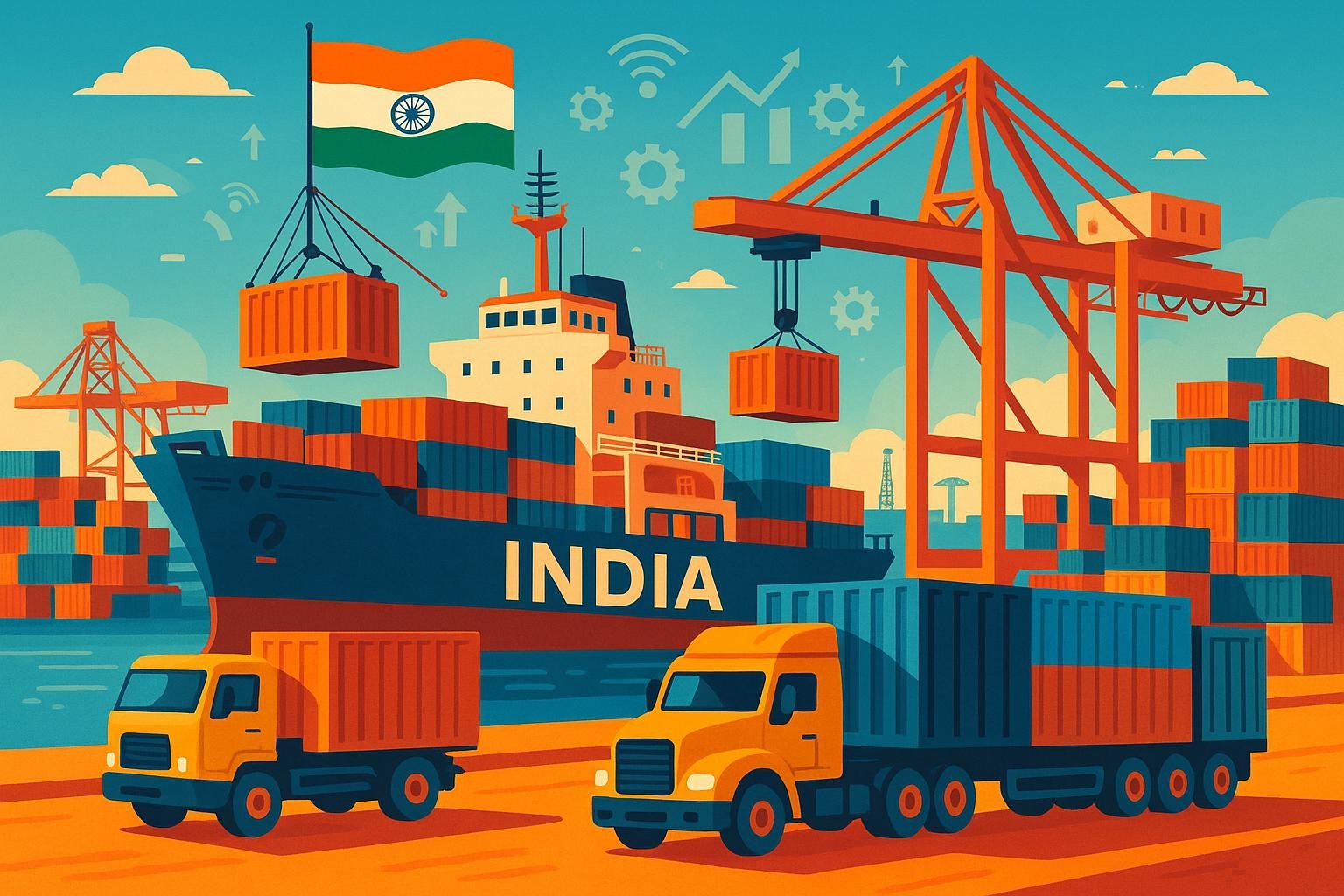
The 2026 Union Budget prioritises logistics development through a ₹12.2 lakh crore infrastructure investment, digital reforms, and policies aimed at reducing costs and boosting India’s global trade participation, with execution now key to realising these ambitions.

Union Budget 2026 places logistics at the heart of India’s growth strategy, pairing a sharp rise in public capital spending with a suite of measures designed to cut costs, quicken freight movement and b...
Continue Reading This Article
Enjoy this article as well as all of our content, including reports, news, tips and more.
By registering or signing into your SRM Today account, you agree to SRM Today's Terms of Use and consent to the processing of your personal information as described in our Privacy Policy.
The budget’s infrastructure programme targets a series of connectivity projects intended to shorten transit times and lower logistics bills. A new dedicated freight corridor between Dankuni and Surat and plans for seven high‑speed rail corridors were highlighted as ways to stitch industrial clusters together. According to The Economic Times, the budget also envisages bringing 20 new national waterways into operation over five years and launching a Coastal Cargo Promotion Scheme aimed at lifting the share of inland and coastal shipping from about 6% to 12% by 2047. Hindustan Times reports that the transport sector, which includes railways and roads, receives the largest share of allocations, underlining the priority given to modernising movement of goods.
Beyond capacity creation, the Budget seeks to address predictable delays and hidden handling costs that undermine competitiveness. Reforms include extended duty deferral for certified traders and simplification of customs warehousing aimed at speeding clearances for exporters and importers. Industry leaders cited in the lead coverage welcomed measures intended to reduce administrative friction: by shortening clearance times and improving customs processes, firms can better plan inventory and avoid costly idling of cargo.
Digitalisation and technology are central to the reform package. Electronic factory‑to‑ship sealing, automatic customs notifications for trusted importers and wider use of AI‑enabled non‑intrusive scanning at ports are intended to cut dwell times. Logistics executives have interpreted these measures as validation for private investment in route optimisation, predictive delivery systems and deeper integration with government platforms.
The Budget also attempts to widen participation in export and distribution networks by strengthening support for Micro, Small and Medium Enterprises. An SME Growth Fund with an initial corpus of ₹10,000 crore was introduced to provide equity for high‑potential firms, while the Self‑Reliant India Fund receives an additional ₹2,000 crore to provide risk capital for micro enterprises, according to IBEF. Liquidity reforms , including mandatory use of the Trade Receivables Discounting System by central public sector enterprises, invoice discounting backed by the Credit Guarantee Fund Trust for Micro and Small Enterprises, and securitisation of TReDS receivables , aim to ease working‑capital constraints that have long limited MSME scale‑up. Times of India notes the creation of a cadre of “corporate mitras” to help firms in Tier‑II and Tier‑III centres meet compliance affordably, reinforcing the drive towards decentralised industrial growth.
To attract private capital into long‑gestation projects, the government has proposed an Infrastructure Risk Guarantee Fund to offer partial credit guarantees during construction, a move flagged by LiveMint as intended to revive stalled projects and de‑risk investment. The greater visibility on long‑term capital allocation, industry participants say, should make it easier for companies to align their own investment plans with national trade and manufacturing priorities.
Maritime and container ecosystems are singled out for support. The budget includes incentives to spur domestic container manufacturing and investments in ship‑repair capabilities, measures that officials and industry commentators say will reduce import dependence and improve turnaround times for coastal and inland vessels. Fortune India described the plans for high‑speed corridors and the Dankuni–Surat freight link as complementary to the waterways and port upgrades, collectively aimed at rebalancing modal share and improving resilience.
A notable reform affecting cross‑border trade is the removal of the ₹10 lakh per‑consignment value cap on courier exports, a change that industry groups said will open global markets to more MSMEs and direct‑to‑consumer brands. The lead reporting also recorded industry support for exemptions on customs duty for aviation components, which logistics providers argued are essential to maintaining aircraft availability and ensuring time‑definite delivery services.
Taken together, the Budget blends hard infrastructure investment with policy and financing reforms intended to tackle soft bottlenecks: predictability, access to working capital and faster clearances. Execution, however, will determine outcomes. If projects are delivered on schedule and digital reforms are implemented across ports, customs and state networks, the measures could materially lower logistics costs and enhance India’s trade competitiveness. Conversely, delays or uneven rollout risk blunting the potential benefits for manufacturers and exporters that the Budget aims to unlock.
Source: Noah Wire Services
Subscribe to Industry Updates