


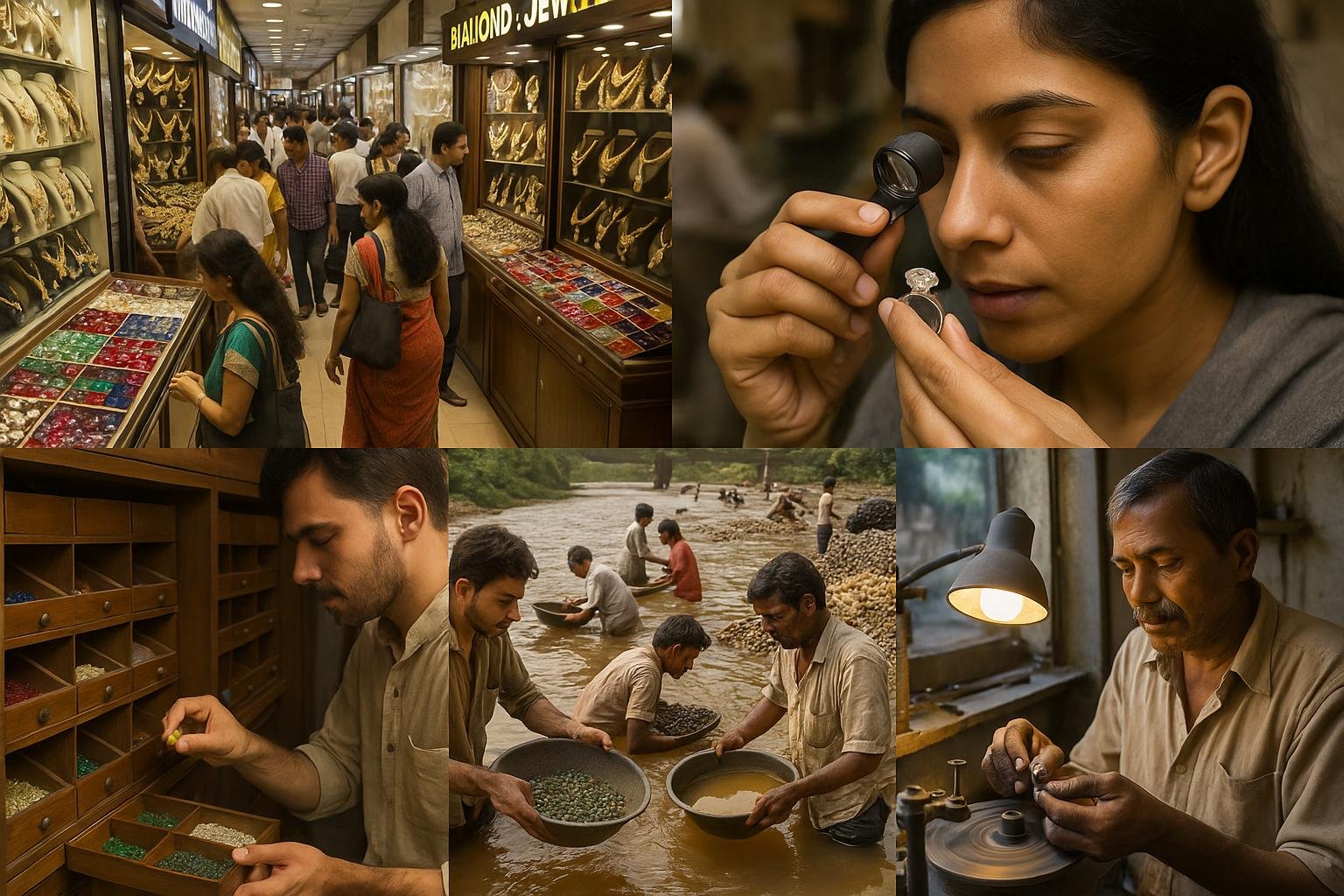
As India’s demand for natural diamond jewellery accelerates, the focus is shifting from traditional quality metrics to provenance and ethical sourcing, driven by consumer demand for transparency and sustainability.

As demand for natural diamond jewellery accelerates across India, buyers are increasingly focused on where stones originate and how they move through complex supply chains. Shoppers now expect more than traditional quality metrics such as cut, clarity a...
Continue Reading This Article
Enjoy this article as well as all of our content, including reports, news, tips and more.
By registering or signing into your SRM Today account, you agree to SRM Today's Terms of Use and consent to the processing of your personal information as described in our Privacy Policy.
India represents roughly 11% of global consumption of natural diamond jewellery, making it the world’s second largest market, a position bolstered by stronger post-pandemic spending and growing affluence outside major metros. Industry estimates and consultancy forecasts point to sizeable expansion: global diamond market valuations suggest near-term growth, and Indian trade bodies and analysts continue to predict a substantial rise in domestic gems and jewellery turnover in the years ahead. According to the Gem and Jewellery Export Promotion Council, the sector could expand markedly by the end of the decade, while research firms project the Indian diamond segment itself will grow significantly through 2028.
For retailers and manufacturers, answering provenance questions begins at the mine. Leading mining companies and state-backed concessionaires that supply rough, names such as Rio Tinto, De Beers and the Okavango Diamond Company, are routinely cited by industry participants as sources that facilitate traceability. Beyond supplier selection, brands and workshops are investing in independent audits and certification to reassure consumers. The Responsible Jewellery Council’s standards for business conduct and chain-of-custody documentation have become a widely adopted benchmark; RJC membership and certification allow companies to display recognised credentials once they pass compliance assessments. Independent assurance capacity has been enhanced recently, with accreditation granted to auditors such as DNV to carry out RJC Code of Practices and Chain of Custody audits in India and the Middle East, providing further third-party oversight.
Technology is playing a pivotal role in stitching together provenance records. Blockchain-based platforms are being used to log a stone’s passage from extraction to finished piece, while radio-frequency identification and advanced imaging and scanning systems enable item-level tracking and verification at multiple handoffs. Vendors are also combining these tools with artificial intelligence to improve screening and to create more granular audit trails. Despite the promise, implementation is uneven: blockchain platforms can be costly and technically demanding, a barrier for smaller artisanal miners and intermediaries and a source of blind spots in the chain.
Regulatory and multilateral frameworks provide partial solutions but have limitations. The Kimberley Process Certification Scheme addressed the worst abuses associated with conflict diamonds, yet its remit and enforcement mechanisms do not deliver full lineage for all stones. As a result, jewellers and consumers rely on layered approaches, supplier commitments, RJC certification, technology-enabled traceability and independent laboratory reports, to build confidence.
Market dynamics are also shifting the choice architecture for buyers. While natural diamonds remain prized for scarcity and tradition, lab-grown stones are expanding rapidly as an alternative, driven by younger consumers and by lower prices and sustainability claims. Industry analyses indicate the lab-grown segment is outpacing many forecasts, with higher compound annual growth rates projected over the coming decade, which is prompting established jewellers to articulate clearer provenance narratives for natural stones in order to differentiate them.
The supply chain’s many actors, from artisanal miners and rough dealers through to cutters, polishers, certifying laboratories and retailers, mean that full transparency is difficult to achieve. Nevertheless, a combination of formal standards, accredited auditors, digital platforms and enhanced retail disclosure is strengthening accountability. According to industry observers, these measures are helping Indian jewellers meet rising consumer expectations for ethical practice and documented origin, while also positioning the trade to capture demand growth beyond metropolitan centres as organised retail expands into tier-2 and tier-3 cities.
Ultimately, as Indian consumers increasingly view diamonds as heirlooms and investments, provenance has shifted from a niche concern to a commercial necessity. The sector’s trajectory will depend on how effectively stakeholders can scale affordable traceability solutions, extend independent verification to smaller supply-chain participants and communicate credible sourcing stories to a more discerning public.
Source: Noah Wire Services
Subscribe to Industry Updates

