


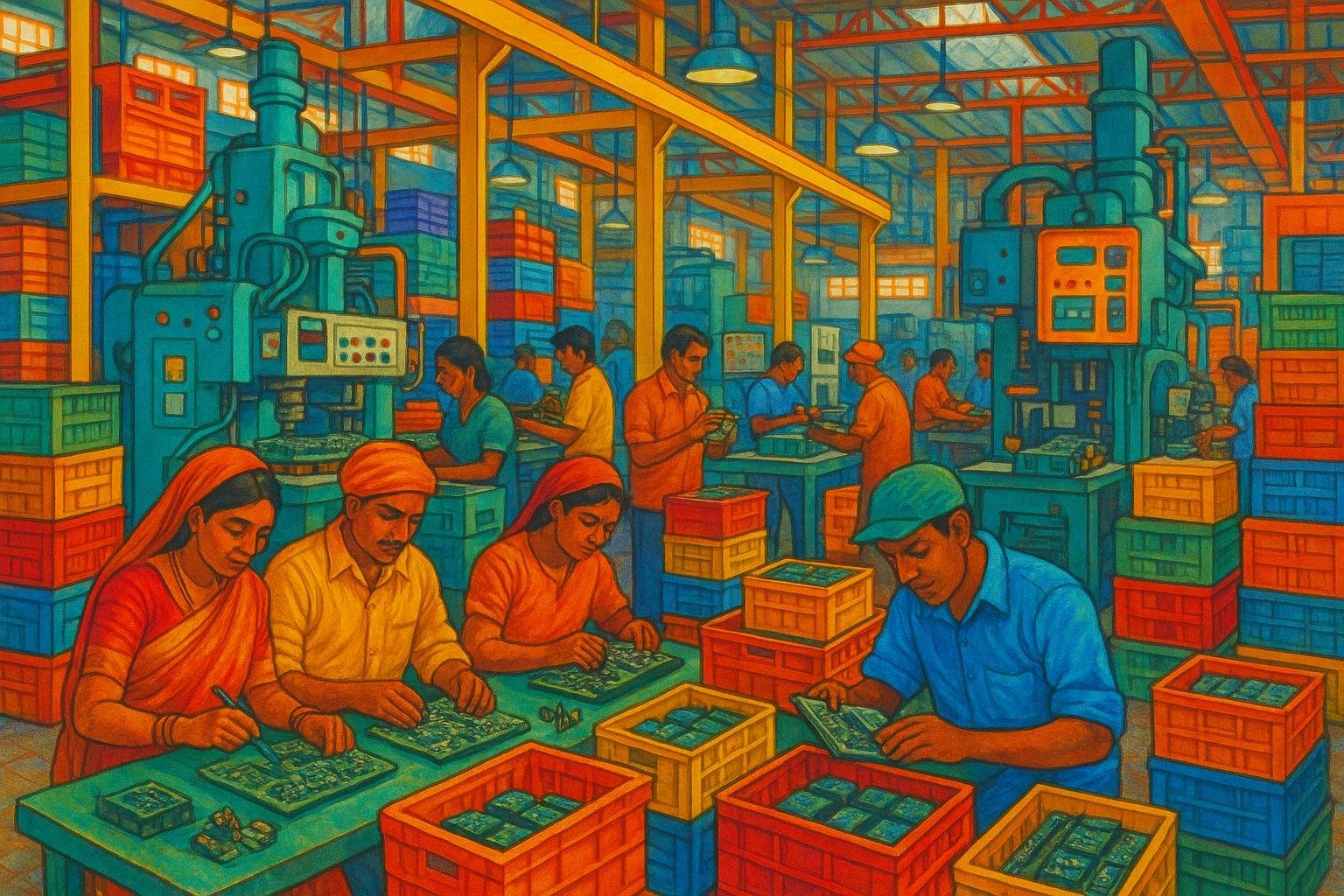
The Indian government has approved 22 projects under the Electronics Components Manufacturing Scheme, unlocking nearly ₹42,000 crore of investment and promising significant employment and output growth across multiple states.

The Indian government has moved to deepen domestic electronics manufacturing by clearing 22 projects under the Electronics Components Manufacturing Scheme, unlocking nearly ₹42,000 crore of proposed investment and promising substantial output a...
Continue Reading This Article
Enjoy this article as well as all of our content, including reports, news, tips and more.
By registering or signing into your SRM Today account, you agree to SRM Today's Terms of Use and consent to the processing of your personal information as described in our Privacy Policy.
According to a report by Trade Brains, the Ministry of Electronics and Information Technology on 2 January 2026 signed off on proposals with an aggregate investment commitment of ₹41,863 crore and forecast production of about ₹2.58 lakh crore. The ministry said the approved projects would create 33,791 direct jobs across eight states, including Andhra Pradesh, Haryana, Karnataka, Madhya Pradesh, Maharashtra, Tamil Nadu, Uttar Pradesh and Rajasthan, with some employment also planned for Telangana.
The approvals span 11 component categories , among them multi‑layer printed circuit boards (PCBs), lithium‑ion cells, connectors, camera and display modules, aluminium extrusions and mobile phone sub‑assemblies , and target end markets from mobile phones and consumer electronics to telecom, automotive electronics and strategic hardware. Major corporate names featured in Trade Brains’ coverage include Dixon Technologies, Samsung Display Noida, Foxconn’s Yuzhan Technology India, Hindalco Industries, Tata Electronics, Amara Raja‑ATL, Motherson and Vital Electronics.
The clearances follow the Union Cabinet’s March 2025 decision to launch a production‑linked incentive package for non‑semiconductor electronics components. Business Standard and The Week reported the Cabinet approved a ₹22,919 crore scheme aimed at building a domestic component ecosystem, with government targets that included roughly ₹4.56 lakh crore in production and creation of about 91,600 direct jobs over the scheme’s life. Wikipedia’s summary of subsequent developments notes that by January 2026 the ECMS approvals cited above had been formalised, reflecting a rapid roll‑out of the policy. The Times of India had earlier reported a related ₹25,000 crore PLI proposal in advance of final Cabinet clearance, underscoring variations in public reporting as the plan was refined.
Several project-level highlights illustrate the scheme’s ambitions. Trade Brains reports Motherson’s Tamil Nadu facility as the largest single employer among the approvals, expected to generate 5,741 direct jobs, while Amara Raja‑ATL’s Haryana battery components plant is projected to add 3,550 roles. Tata Electronics’ mobile handset manufacturing in Tamil Nadu is slated to create about 1,500 jobs. Other approvals include advanced PCB units at YEIDA and in Andhra Pradesh, display‑module work by Samsung in Noida, precision enclosure manufacturing by Foxconn’s Yuzhan unit, connector production by Amphenol in Karnataka and aluminium/copper foil capability from Hindalco.
Industry observers see the approvals as catalytic for India’s electronics system design and manufacturing (ESDM) sector. Trade Brains cites market research showing the ESDM market expanding sharply , from around US$36 billion in FY21 to a projected US$135 billion by FY26 , and notes contract manufacturers in India have been moving up the value chain into design and higher‑margin components. The new clearances are expected to accelerate that shift by incentivising domestic production of sub‑assemblies and precision parts that have been heavily imported.
For listed companies, the policy implications are material. Trade Brains argues Dixon Technologies stands to gain by transitioning from device assembly toward manufacturing higher‑value components and optical transceivers through its joint ventures, potentially improving margins and reducing import dependence. Hindalco’s planned entry into specialised foils and extrusion products for electronics and batteries represents a strategic diversification from its traditional metals businesses, the coverage says. For unlisted players , including Tata Electronics, Samsung Display Noida, Foxconn’s Yuzhan, Amara Raja‑ATL and Motherson , the approvals are positioned as steps toward onshore supply chains for items such as iPhone casings, batteries and PCBs, lowering logistics risk and shortening lead times for electronics assemblers.
Government figures and industry commentary point to a broader objective: reducing reliance on imports while attracting capital and jobs into manufacturing hubs across multiple states. Trade Brains’ analysis calls the tranche of approvals “rocket fuel” for India’s electronics ambitions, though public documents emphasise that the scheme’s success depends on companies converting approvals into timely investment and capacity building.
The government has signalled a sustained push: the Cabinet‑approved PLI package launched in March 2025 envisaged multi‑year incentives and substantial downstream production targets, while subsequent notifications outlined operational details and application windows. Reporting from Business Standard and The Week framed the scheme as the first major PLI specifically for passive and non‑semiconductor electronic components, designed to seed a domestic component ecosystem that supports larger device assembly and strategic electronics objectives.
As the projects proceed, policy watchers will be looking for evidence of local supplier development, technology transfer, and how quickly manufacturing footprints translate into finished‑goods competitiveness. If companies meet their investment and output plans, the approvals could mark a significant step toward deepening India’s role in global electronics value chains and reducing vulnerability to concentrated supply sources.
Source: Noah Wire Services
Subscribe to Industry Updates

