


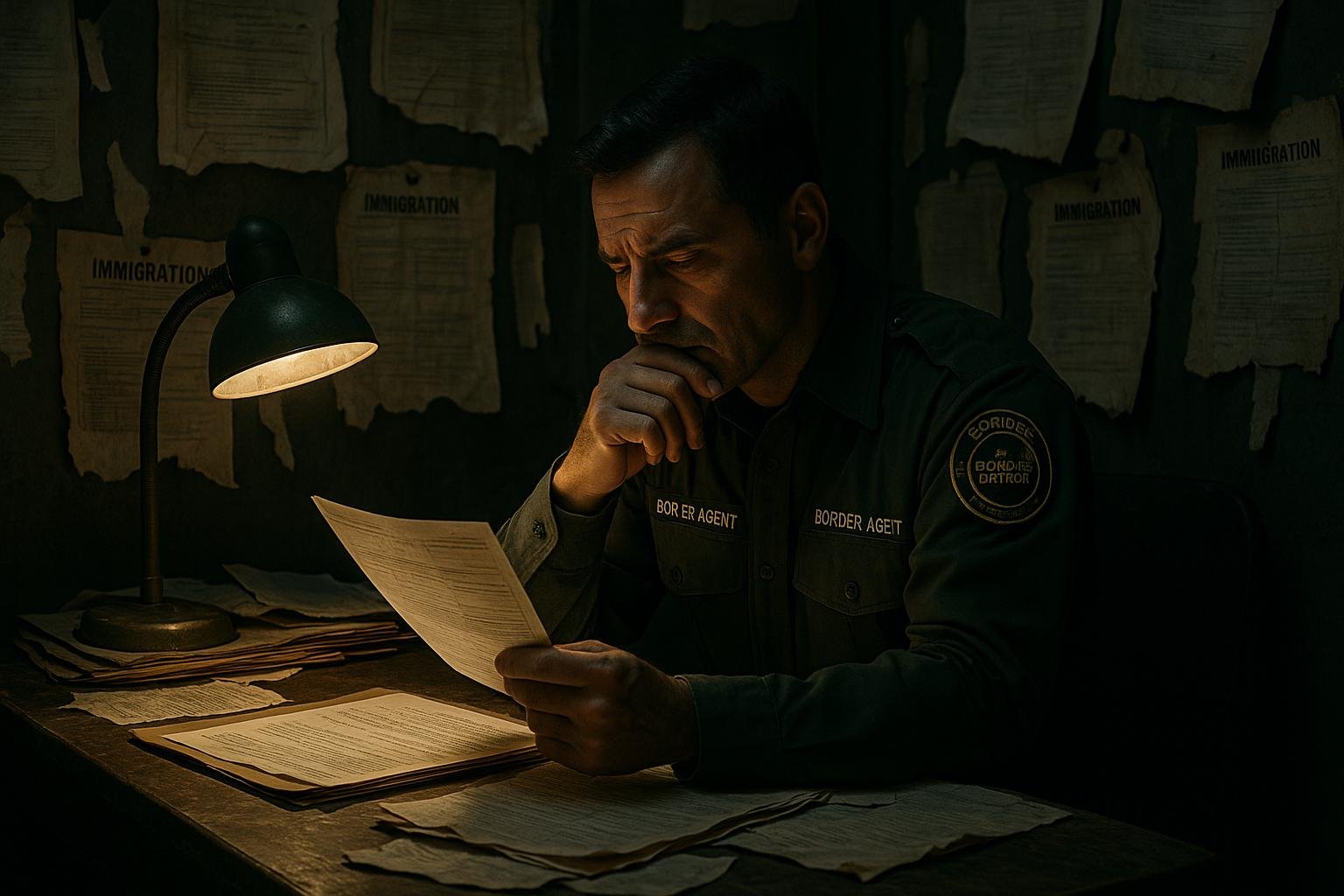
A public hearing in Illinois reveals alarming patterns of misconduct among border agents, prompting calls for federal and state reforms following decades of reported criminal behaviour and institutional failure.

At a second public hearing on Friday, the Illinois Accountability Commission heard testimony from five subject-matter experts who described a pattern of misconduct and institutional failures within federal immigration enforcement agencies.
Journalist Garr...
Continue Reading This Article
Enjoy this article as well as all of our content, including reports, news, tips and more.
By registering or signing into your SRM Today account, you agree to SRM Today's Terms of Use and consent to the processing of your personal information as described in our Privacy Policy.
Governor J.B. Pritzker used the hearing to ask the commission to broaden its inquiry to include senior officials involved in the federal deployments known as Operation Midway Blitz. According to the governor’s request, the review should examine the roles of former Trump administration figures including the Customs and Border Protection “commander at large” Gregory Bovino, White House border adviser Tom Homan, former Secretary of Homeland Security Kristi Noem and Stephen Miller, the onetime deputy chief of staff for policy. The commission agreed to take up that wider mandate, with chair Rubén Castillo indicating the panel may recommend disciplinary measures or seek prosecutions tied to recent fatal shootings, including the death of Silverio Villegas González in Franklin Park and the shooting of teaching assistant Marimar Martinez.
Former DHS official Deborah Fleischaker, who served as ICE’s chief of staff and assistant director for regulatory affairs, told the commission that immigration enforcement has shifted from being rule-bound to being driven by desired outcomes. “Leadership communicates desired headlines, and officers are expected to lead the news instead of delivering public safety results,” she said. Fleischaker warned that quota-driven hiring, compressed training and an emphasis on optics rather than procedure degrade public safety, erode community trust and curtail officers’ discretion.
The commission released a preliminary report that outlined priorities for reform, including tighter restrictions on the use of tear gas and other crowd-control measures and limits on concealment of identities by agents. The report offered few specifics on implementation and acknowledged the panel’s legal constraints: it has no subpoena power and cannot itself bring charges. Castillo said the commission intends to work with local law enforcement to identify cases that should be prosecuted and that “nothing is off the table” in its recommendations to the state.
Community organisations and mental-health advocates urged the panel to consider non-legal harms from the federal operations. Matt Davison, chief executive of NAMI Chicago, told commissioners that the psychological toll on residents has been severe and ongoing. Retired Chicago Police commander Cindy Sam described some incidents as not merely excessive force but as “cold-blooded killings of Americans,” reflecting a view among critics that federal agents have at times acted beyond traditional law-enforcement roles.
The hearings come amid broader political debate in Illinois over the future of immigration enforcement. According to reporting by Axios, Democratic officials in the state differ in what they mean by calls to “abolish ICE”: some, like Chicago Mayor Brandon Johnson, favour dismantling the agency and redirecting resources toward alternatives and immigration reform; others, including U.S. Senate hopeful Juliana Stratton, argue for full abolition. At the same time, legislators and advocates are pursuing narrower reforms such as mandatory body cameras, clear identification requirements and independent investigations of force, and Representative Delia Ramirez has introduced a “Melt ICE” bill aimed at ending detention for immigrants with pending deportation cases.
The state and the city of Chicago have pursued legal action as well. Illinois Attorney General Kwame Raoul and city officials sued the Department of Homeland Security, accusing ICE and CBP of unlawful tactics including warrantless arrests and indiscriminate use of tear gas. Former mayor Lori Lightfoot has emphasised that federal officers can be subject to local investigation and launched an ICE Accountability Project to catalogue incidents; a federal judge recently declined to dismiss a lawsuit alleging excessive force against journalists and members of the public, underscoring continuing judicial scrutiny.
To capture evidence from residents unable to attend hearings, the commission has established a submission portal and interest form for witnesses and victims of possible misconduct during Operation Midway Blitz. The portal invites people to submit photos, videos and narratives and notes that submissions will create a public record; it warns that the commission cannot guarantee confidentiality and that materials may be subject to the Illinois Freedom of Information Act. The IAC’s outreach is intended to broaden community participation as it compiles a record it can use to press for accountability.
The commission was originally tasked by the governor to provide an initial report no later than 31 January 2026, with a final report due by 30 April 2026. As the panel continues to collect testimony and evidence, its members face the challenge of translating public concern and documented incidents into concrete reforms within the limits of state authority.
Source: Noah Wire Services
Subscribe to Industry Updates

