


**Munich**: Neil Martin, former F1 data strategist, reveals how motorsport’s real-time data analysis, AI-powered decision-making, and operational precision provide a blueprint for telecom operators aiming to modernise legacy systems and enhance network resilience.
At the Huawei IDI Forum held in Munich, strategist and data scientist Neil Martin delivered an insightful presentation regarding the integration of advanced technologies in Formula 1 (F1), drawing significant parallels to the challenges faced by telecom operators in their digital transformations. Martin has a notable background, having held senior positions at prestigious racing teams like McLaren, Red Bull Racing, and Ferrari.
During his address, he underscored the immense scale of F1 as a global event, noting, “Each race reaches three to four hundred million viewers live. That’s the kind of global audience you get once every four years with the Olympics or World Cup. We do it every two weeks.” This statistic highlights not just the popularity of the sport but also the intricate logistics and technology that underpin its operation.

Central to Martin’s argument was the notion of data as the lifeblood of modern motorsport. An F1 car sends approximately 100 megabytes of telemetry data per lap, which is analysed not only at the race venue but also transmitted back to a headquarters that can process the information within a mere 60 milliseconds. “That gives us the same capability as being trackside—without the carbon footprint of flying a small army around the world,” Martin explained. This rapid data processing enables teams to make informed decisions in real-time, a necessity replicated in the operations of telecommunications providers tasked with managing complex, distributed systems.
In discussing safety, Martin recalled the historical context of the sport, where between 1950 and 1994 there were 47 fatalities. The introduction of predictive analytics in this domain has drastically improved safety outcomes. “By repurposing the black box data we were already collecting for performance, we were able to understand the anatomy of crashes and build predictive safety models,” he stated. A key innovation attributed to these analyses was the introduction of the “halo” cockpit safety structure, which, despite initial resistance based on aesthetics, was proven essential through modelling that predicted heightened risks without it. Since its introduction in 2018, the halo has been credited with saving multiple lives.
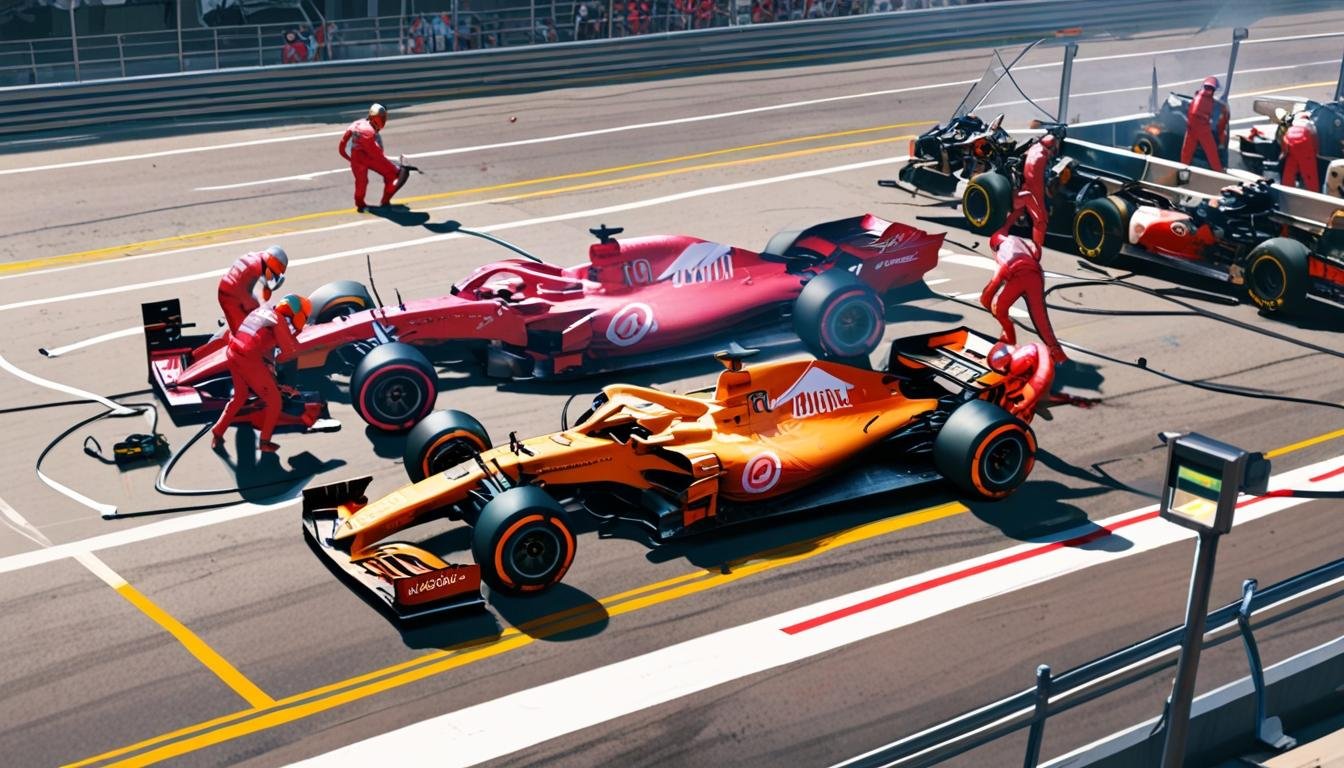
Martin urged telecom operators to consider how they might repurpose existing data—originally collected for performance optimisation—to enhance customer experience, prevent fraud, and bolster network resilience. He illustrated the importance of precision in operations through an analysis of F1 pit stops, which comprise 36 coordinated tasks completed in under two seconds. “We treat it like a mathematical equation, and everything—from the car’s parking position to the backup wheel guns—has been modelled and stress-tested,” Martin explained. His team identified that a car parked just 10 centimetres off target increased stop time by 25%, leading to the addition of stabiliser team members specifically dedicated to ensuring precise positioning.
Martin’s emphasis on operational efficiency serves as a noteworthy lesson for telecom operators, who often find themselves over-engineering solutions when simpler modifications could yield quicker returns on investment. As they contemplate updates to their OSS/BSS systems, the focus should be on the value of improved processes rather than mere technological upgrades.
Moreover, Martin highlighted the transformative power of digital twins and AI in both development and operational phases. “In the old days, we’d send 120 people to the track to test new parts. Now, we create mathematical models, run them in a simulator with the drivers, and only then commit to building a component,” he remarked. This shift aligns with a broader trend where telecom companies can accelerate innovation cycles through similar simulations, be it for testing customer journeys or stress-testing billing systems.
Looking ahead, Martin emphasized the role of AI in decision-making processes. He presented the example of Apex by PaceTech, an AI-powered “virtual race director,” which utilises rules, sensor data, and video feeds to suggest actions during races. “It removes the human from the data collection but not the decision itself,” he noted, outlining a model of hybrid intelligence that combines the efficiency of data analysis with human oversight.
In conclusion, Martin’s insights at the Huawei IDI Forum underscored the necessity for telecom operators to engage in a transformative journey, enhancing their legacy systems, embracing AI responsibly, and shifting operations from a reactive to a proactive stance. As he put it, “we were once a prototype engineering company, but now, F1 teams are data companies. And actually, we’re all in analytics races today,” highlighting the common ground shared by both industries as they navigate their respective futures.
Source: Noah Wire Services

