


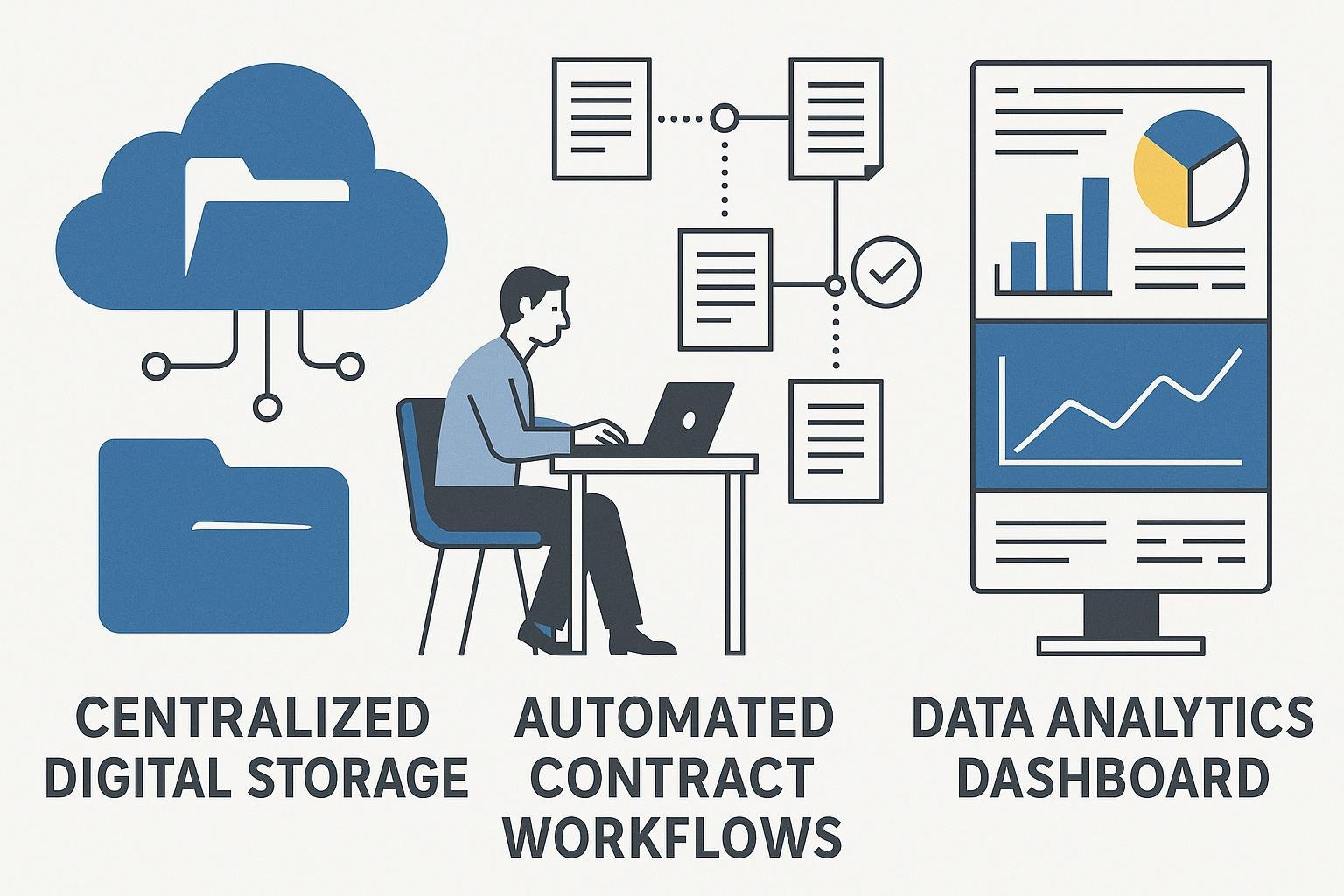
As companies grow, traditional paperwork methods falter. Modern contract-management platforms offer centralised storage, automation, and analytics to streamline operations, enhance compliance, and drive strategic decision-making, turning managing contracts from a challenge into a competitive advantage.

As companies expand, the modest paperwork practices that sufficed in early stages quickly buckle under the weight of scale. What begins as a few supplier agreements and s...
Continue Reading This Article
Enjoy this article as well as all of our content, including reports, news, tips and more.
By registering or signing into your SRM Today account, you agree to SRM Today's Terms of Use and consent to the processing of your personal information as described in our Privacy Policy.
Centralising agreements in a single, secure repository is the most immediate gain. According to a whitepaper from the Association of Legal Administrators, modern contract-management solutions replace ad hoc storage with a unified source of truth, enabling teams across procurement, legal, finance and operations to retrieve consistent contract terms, deadlines and performance metrics. That shared visibility reduces duplication of effort, cuts down on miscommunication and gives leadership a clearer view of supplier exposure.
Automation is the next step toward operational control. Practical trade publications and vendor analyses note that automated reminders, approval routing and review workflows remove much of the administrative toil from renewal management and compliance checks. Industry commentary from Ironclad and other vendors highlights how workflow automation accelerates internal sign-off and reduces the hours spent chasing signatures or tracking obligations manually. Lexagle’s visual analysis further suggests that digital contracting can roughly halve time-to-signature, speeding up commercial activity.
Stronger compliance and risk management follow from structured oversight. Government and sector rules often attach complex, changing obligations to contracts , from data-protection clauses to service-level guarantees. Wolters Kluwer’s expert guidance describes how platform features such as clause libraries, audit trails and amendment tracking help organisations ensure contractual arrangements remain aligned with governance policies. At the same time, firms should treat vendor claims with editorial distance: while vendors such as Atamis present their tools as solutions to supplier-governance challenges, buyers must evaluate features against their own regulatory and operational needs.
Contract data also supports more informed decisions. Several practitioner sources, including BigFormula and CRO Club, emphasise the reporting and analytics capabilities that allow firms to spot spending concentrations, renegotiation opportunities and supplier dependencies. By turning contract metadata into dashboards and alerts, organisations can move from reactive file-keeping to proactive supplier strategy , identifying underperforming partners earlier and reallocating spend where it delivers greater value.
Standardisation and improved accuracy are additional benefits widely cited. Pre-approved templates and searchable clause libraries reduce drafting errors and ensure mandatory language is included consistently across agreements, lowering legal and financial exposure. The cumulative effect is not only fewer missed deadlines and pricing surprises but also potential cost savings through shorter cycle times and better-negotiated terms.
Despite these advantages, decision-makers should be mindful of common traps. The ALA whitepaper warns that legacy systems with storage limits and brittle workflows can become bottlenecks themselves; migrating to a new platform requires careful planning, data cleansing and change management. Vendors and commentators stress the importance of scalability, integration with existing enterprise systems and user adoption strategies to realise promised efficiencies.
For organisations intent on scaling efficiently, contract-management platforms are more than a convenience: they are an operational capability that binds procurement, legal, finance and operations into a coordinated process. By centralising documents, automating routine tasks, strengthening compliance controls and turning contract terms into actionable intelligence, these systems help firms reduce risk while accelerating growth. The choice of solution and the quality of implementation will determine whether the investment becomes a catalyst for resilience or merely another layer of IT complexity.
Source: Noah Wire Services
Subscribe to Industry Updates

