


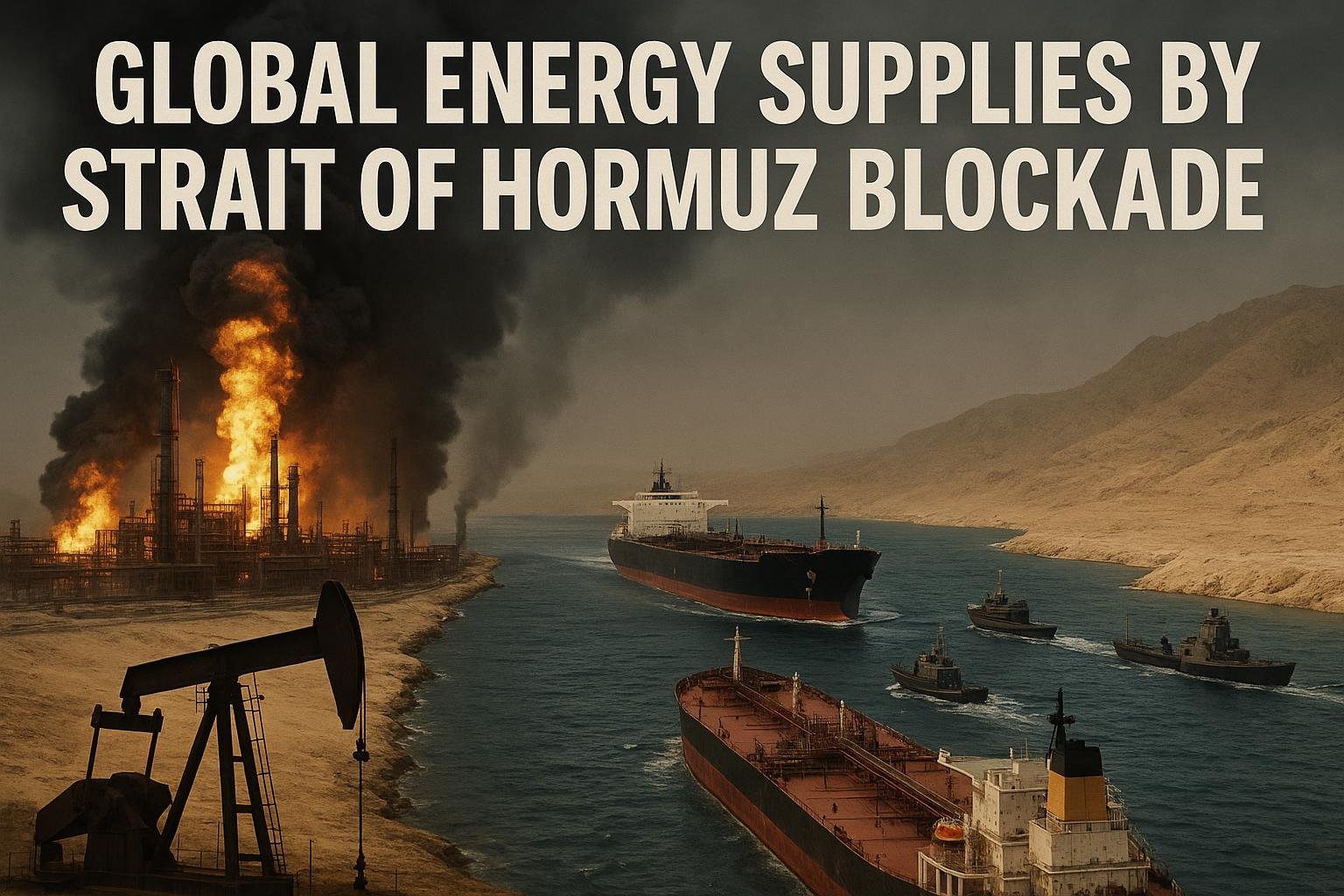
The blockade of the Strait of Hormuz has disrupted global energy supplies, triggering urgent policy shifts towards diversification, strategic reserves, and nuclear investment amid rising oil prices and geopolitical tensions.

The closure of the Strait of Hormuz after attacks on Feb. 28 has jolted energy policy debates worldwide, reviving questions about how to reduce long-term reliance on oil and liquefied natural gas that flow through that chokepoint. The blockade has i...
Continue Reading This Article
Enjoy this article as well as all of our content, including reports, news, tips and more.
By registering or signing into your SRM Today account, you agree to SRM Today's Terms of Use and consent to the processing of your personal information as described in our Privacy Policy.
“The issue of energy security has never been as acute as now. Until a few weeks ago, markets took Gulf resources for granted. That will not be the case going forward,” said Geoffrey Pyatt, who served as assistant secretary of state for energy resources under President Joe Biden and is now a senior managing director at McLarty Associates. According to E&E News, Pyatt is also launching a new practice at McLarty focused on critical minerals and energy, signalling a private-sector push to help companies navigate a more volatile supply landscape.
Governments have responded with a mix of short-term measures and longer-term shifts. A coordinated release of emergency crude stocks and calls for consumer conservation have been accompanied by renewed interest in nuclear generation. European Commission President Ursula von der Leyen described past reductions in nuclear capacity as “a strategic mistake” and the European Union last week announced financial guarantees to support advanced atomic projects. The EU is also exploring temporary changes to its carbon market and state aid to shield consumers from price spikes.
Not all accounts agree on the immediate market impact. Industry bodies and the International Energy Agency have described the Hormuz shutdown as among the most serious disruptions to world energy flows; the lead report noted Brent crude has risen above $100 a barrel. By contrast, reporting from the Associated Press cited a 15% jump in Brent to about $84 per barrel, underscoring variation in price readings and timing as markets react. Policymakers say such swings feed political as well as economic urgency, particularly in energy‑importing regions.
Asia faces acute exposure because the region imports the bulk of its oil and LNG from the Middle East. According to the Associated Press, countries including Japan, South Korea, India and China are especially vulnerable because of heavy reliance on shipments through Hormuz. Beijing has tried to blunt the shock through sales from strategic reserves and by restricting fuel exports; China’s high electrification rate and rapid expansion of renewables and electric vehicles have also provided partial insulation.
Taiwan and Japan illustrate different policy reactions. Taiwan’s economy minister, responding to public pressure after the conflict began, said the island is considering restarting its last nuclear plant while maintaining that any return to atomic power must prioritise safety. Japan has been debating restarts of reactors idled after the 2011 Fukushima crisis and politicians have urged Prime Minister Sanae Takaichi to accelerate measures to reduce import dependence.
Supply diversification and market flexibility are other immediate priorities. Governments in Japan, Taiwan, Bangladesh and Pakistan have signalled plans to broaden their import sources and purchase more LNG on the spot market rather than rely exclusively on long‑term contracts tied to Gulf suppliers. Analysts also expect renewed scrutiny of sanctions regimes and export controls as routes for replacing lost Middle East volumes. In Washington, a White House official said the disruption underscored the case for boosting production of fossil fuels to secure reliable supplies, while the administration has eased certain restrictions to allow higher purchases of Russian oil.
The crisis is reviving familiar trade‑offs between short‑term energy security and long‑term decarbonisation goals. Europe’s push to shore up nuclear and subsidise consumers sits alongside plans to accelerate renewables; yet some policymakers warn that deepening reliance on foreign-made clean‑energy hardware could create new strategic dependencies. “We’re building new dependencies and new problems inside our energy infrastructure by building dependencies, total dependencies, on Chinese hard and software,” said Bart Groothuis, a member of the European Parliament.
China’s response has emphasised accelerating the clean‑energy transition while expanding emergency reserves and seeking alternative suppliers. Wang Jin, senior fellow at the Beijing Club for International Dialogue, said on the first day of the war that governments worldwide “will reconsider their energy supply lines and production systems and perhaps pay more attention to nuclear and clean energy.” China’s position as a leading manufacturer of solar, battery and EV technology gives it leverage as other nations seek to scale low‑carbon alternatives.
While the immediate priority remains keeping markets supplied and stabilising household bills, the crisis may reshape longer‑term investment. Industry data and government announcements point to higher interest in strategic storage, modular nuclear and accelerated deployment of renewables, but experts caution that transitions take years and may create fresh geopolitical dependencies. The Iran conflict has underscored how fragile global energy flows remain and has forced policymakers to weigh whether energy security will be pursued through expanded domestic fossil production, greater electrification and renewables, or a renewed embrace of nuclear power.
Source: Noah Wire Services
Subscribe to Industry Updates

