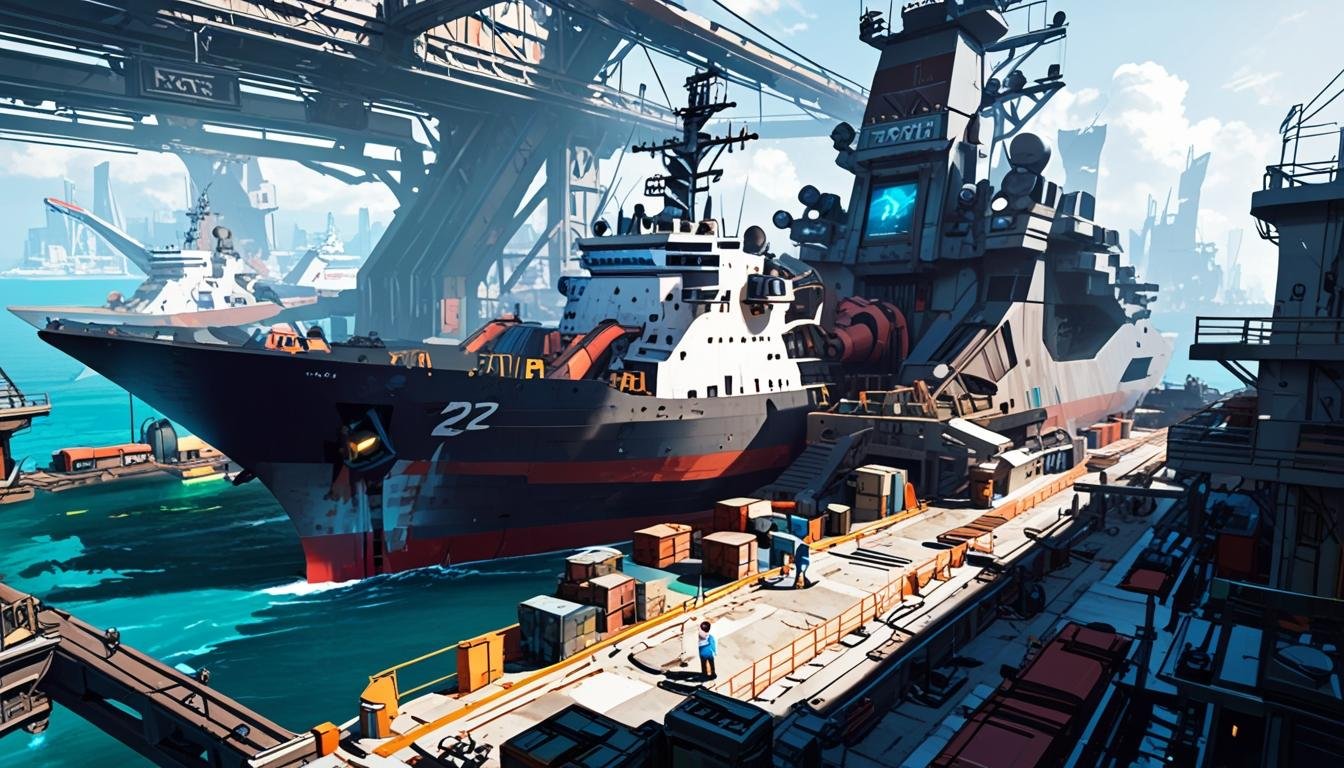
**Seoul**: HD Hyundai is collaborating with Palantir and Siemens to revolutionise shipbuilding by 2030 through advanced technologies, reducing human intervention. The Future of Shipyard project includes phases aimed at enhancing productivity and safety, with extensive investments in AI and data analytics for operational innovation.
In a significant advance towards the future of shipbuilding, HD Hyundai is enhancing its collaboration with major global technology companies, namely Palantir Technologies Inc. and Siemens. This initiative aims to revolutionise the shipyard industry by 2030, focusing on minimising human intervention through the integration of advanced technologies.
On 28 February 2025, during a promotional event, HD Hyundai’s Executive Vice Chairman, Chung Kisun, highlighted the company’s ambition to create an optimized and automated shipyard. He articulated this goal in a promotional video released by Palantir on 26 February, which showcases the partnership’s potential in digitally transforming shipyards. The video followed a presentation at the World Economic Forum Annual Meeting 2025 in Davos, Switzerland, earlier in January.

Chung remarked, “For many decades now, HD Hyundai has been leading the world’s shipbuilding industry with the most innovative technologies. Together with Palantir, we are drawing on the latest innovation in AI, digital twins, and so much more to transform our shipyards, unlocking a whole new level of productivity and safety.” This statement underscores the strategic intent to adopt technology in enhancing operational efficiency and safety standards.
Palantir’s Forward Deployed Engineer, Emile Victor, also weighed in on the collaboration, stating, “I believe their commitment to leveraging software for operational innovation positions them as a leader in digital transformation within the shipbuilding industry.” This recognition suggests a positive outlook on the impact of their technological integration within the sector.
The Future of Shipyard (FOS) project, which HD Hyundai has been pursuing since 2021, is structured into three phases: the “Visible Shipyard,” now completed; the current phase, the “Connected and Predictively Optimized Shipyard”; and the final phase, the “Intelligent Autonomous Operating Shipyard,” which aims to significantly reduce human intervention. Completion of this ambitious project by 2030 is projected to enhance productivity and hasten shipbuilding timelines by 30%.
The use of Palantir’s Foundry software, a big data platform, is at the core of this transformation. The integration of data analytics, virtual and augmented reality, robotics, automation, and artificial intelligence demonstrates a comprehensive approach to reimagining traditional shipbuilding processes.
Previously, in March, NVIDIA’s CEO Jensen Huang presented HD Hyundai’s Digital Shipyard and LNG Carrier during the NVIDIA GTC 2024, showcasing real-time visualisation using advanced graphics technology. This establishes HD Hyundai’s strong position in leveraging NVIDIA’s capabilities alongside Siemens to develop a digital twin of extensive shipyard operations.
Chung has consistently highlighted the importance of adopting future-oriented technologies to drive marine mobility innovation, focusing on electrification, autonomous systems, and eco-friendly solutions. He has placed substantial investment into building a sustainable energy ecosystem utilising renewable resources and high-efficiency technologies.
In line with these initiatives, HD Hyundai has bolstered its research and development efforts. The establishment of its Global R&D Center in 2022 centralises various subsidiaries’ research initiatives. This follows the opening of the India Technology Center in Pune in 2019 and the European R&D Center in Germany the same year, strengthening their partnership with global research institutions to expedite the development of next-generation technologies.
Source: Noah Wire Services