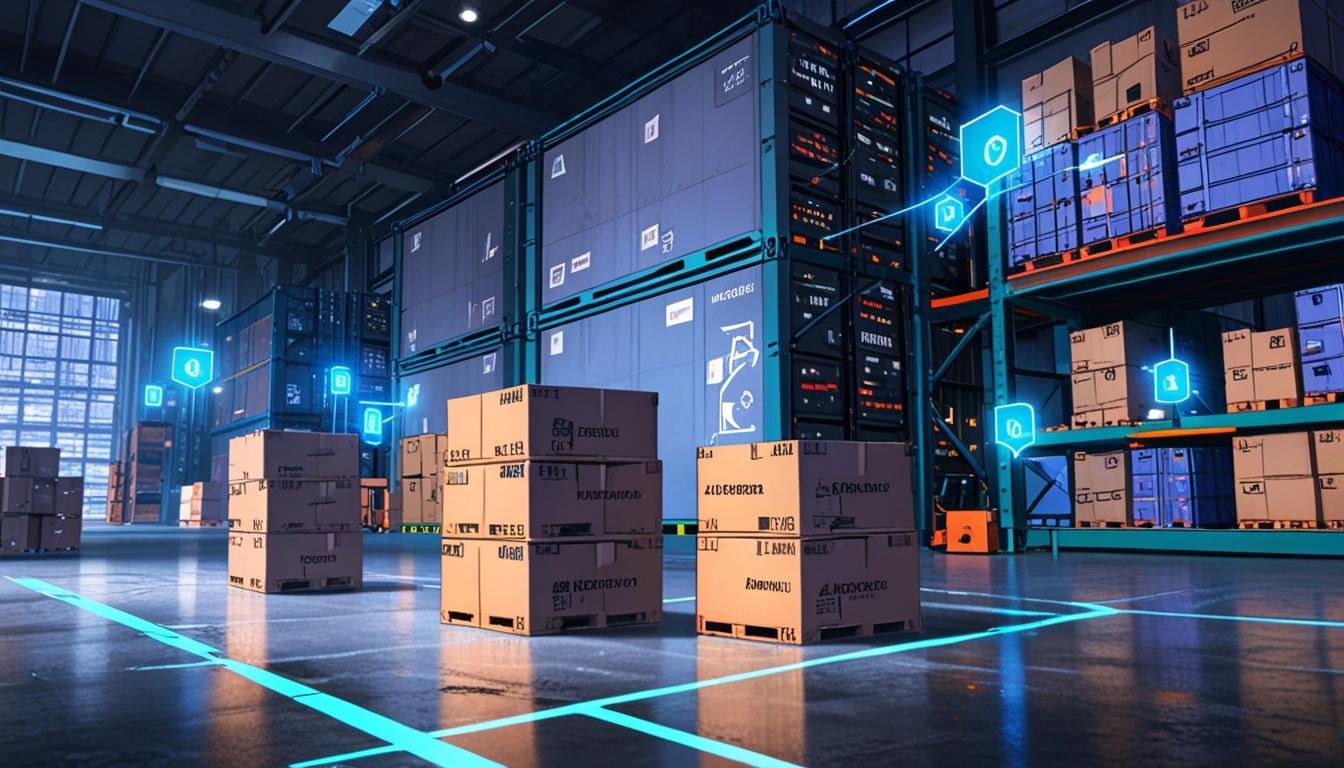
**Global:** Generative AI is revolutionising supply chain management by enabling autonomous enterprises that integrate real-time data, optimise operations, and reduce waste. Industry leaders like Foxconn, SAP, and Oracle are pioneering AI-driven decision-making despite ongoing challenges around infrastructure, cybersecurity, and ethical concerns.
Beyond Automation: Architecting the Autonomous Enterprise with Generative AI
In 2020, a logistical giant faced a significant crisis during peak season when a cascading supply chain failure exposed the limitations of its existing systems. Operating on an outdated demand forecasting model, the company grossly overestimated order volumes, leading to unnecessary stock movements across multiple fulfilment centres. This underlined a critical gap: the enterprise resource planning (ERP) system processed orders without flagging any problems because the data did not breach hard-coded business rules. Despite an ostensibly healthy performance across key performance indicators, the finance team later discovered over $30 million in unsold perishables, obsolete packaging, and lost working capital.
Fast forward to 2025, the same company has transformed its operations through a generative AI model that not only learns from historical data but also incorporates live economic indicators, weather predictions, and competitive analyses. This advanced system transcends basic automation; it hypothesises potential causes for anomalies, generates counterfactual scenarios, simulates outcomes, and autonomously adjusts orders. What once required a team of analysts and periodic reviews has been replaced by a continuous intelligence layer, embedded into the company’s operations. This evolution is emblematic of a broader shift from traditional AI that simply executes tasks to a new form of AI that thinks and adapts.

The advancements in AI capabilities have empowered these autonomous systems, allowing them to function much like ‘co-pilots’ transitioning into ‘autopilot’ settings across various industries. Recent discussions among experts highlight significant developments in large language models and the increasing computing power available, which enable AI agents to assess real-time data and make informed decisions. However, challenges remain, including data compatibility and potential cybersecurity risks, demanding vigilant governance as businesses increasingly adopt AI technologies.
Integrating AI into supply chain management has become paramount, especially as the complexities of modern logistics have been underscored by events like the COVID-19 pandemic. Chief executives are placing increased emphasis on supply chain visibility, recognising that traditional monitoring tools fall short in providing comprehensive insights throughout international transit. The value of intermediate goods traded globally has tripled since 2000, necessitating real-time tracking to mitigate disruptions caused by anything from extreme weather to cyberattacks.
Amid this progressive landscape, companies like Foxconn have begun leading the charge in developing bespoke AI solutions. Their newly launched large language model, ‘FoxBrain,’ is tailored for manufacturing and supply chain applications, utilising Nvidia’s cutting-edge GPUs. With plans for further collaborations, Foxconn aims to enhance decision-making and document collaboration processes within their systems, embodying the shift towards more intelligent operational frameworks.
Moreover, major corporations such as SAP and Oracle are positioning themselves at the forefront of this AI revolution. SAP’s upcoming AI agents will focus on optimising pricing and managing stock availability, while Oracle has unveiled generative AI features designed to streamline various corporate functions. Both firms acknowledge that while a vast majority of their customers may lack the necessary infrastructure for effective AI integration, the industry is poised for transformative changes that could redefine operational efficiencies.
As the autonomous enterprise becomes a reality, the interplay between AI-driven optimisation and ethical considerations cannot be overlooked. While the potential for reducing inventory waste and improving responsiveness to customer demand is significant, challenges such as overproduction and environmental impact remain pertinent. Companies like Shein, which leverages AI for rapid item listings in the fast fashion domain, exemplify both the promise and perils associated with the technology’s proliferation.
In conclusion, the move towards an autonomous enterprise, driven by generative AI, represents a paradigm shift in how businesses operate. The benefits of real-time data integration and continuous operational adjustments are profound, but the journey requires careful navigation through ethical and practical challenges. As businesses continue to evolve, the question remains: can they balance innovation with responsibility?
Reference Map:
- Paragraph 1 – [[1]](https://www.analyticsinsight.net/generative-ai/beyond-automation-architecting-the-autonomous-enterprise-with-generative-ai)
- Paragraph 2 – [[1]](https://www.analyticsinsight.net/generative-ai/beyond-automation-architecting-the-autonomous-enterprise-with-generative-ai), [[2]](https://www.ft.com/content/3e862e23-6e2c-4670-a68c-e204379fe01f)
- Paragraph 3 – [[4]](https://www.ft.com/content/1d07a823-43da-4c1b-84d3-7e453ebb1b16), [[6]](https://www.axios.com/2025/01/27/agentic-ai-big-next-step-evolution)
- Paragraph 4 – [[3]](https://www.reuters.com/technology/foxconn-unveils-first-large-language-model-2025-03-10/), [[7]](https://www.reuters.com/technology/oracle-adds-generative-ai-features-finance-supply-chain-software-2024-03-14/)
- Paragraph 5 – [[5]](https://time.com/7022660/shein-ai-fast-fashion/)
Source: Noah Wire Services