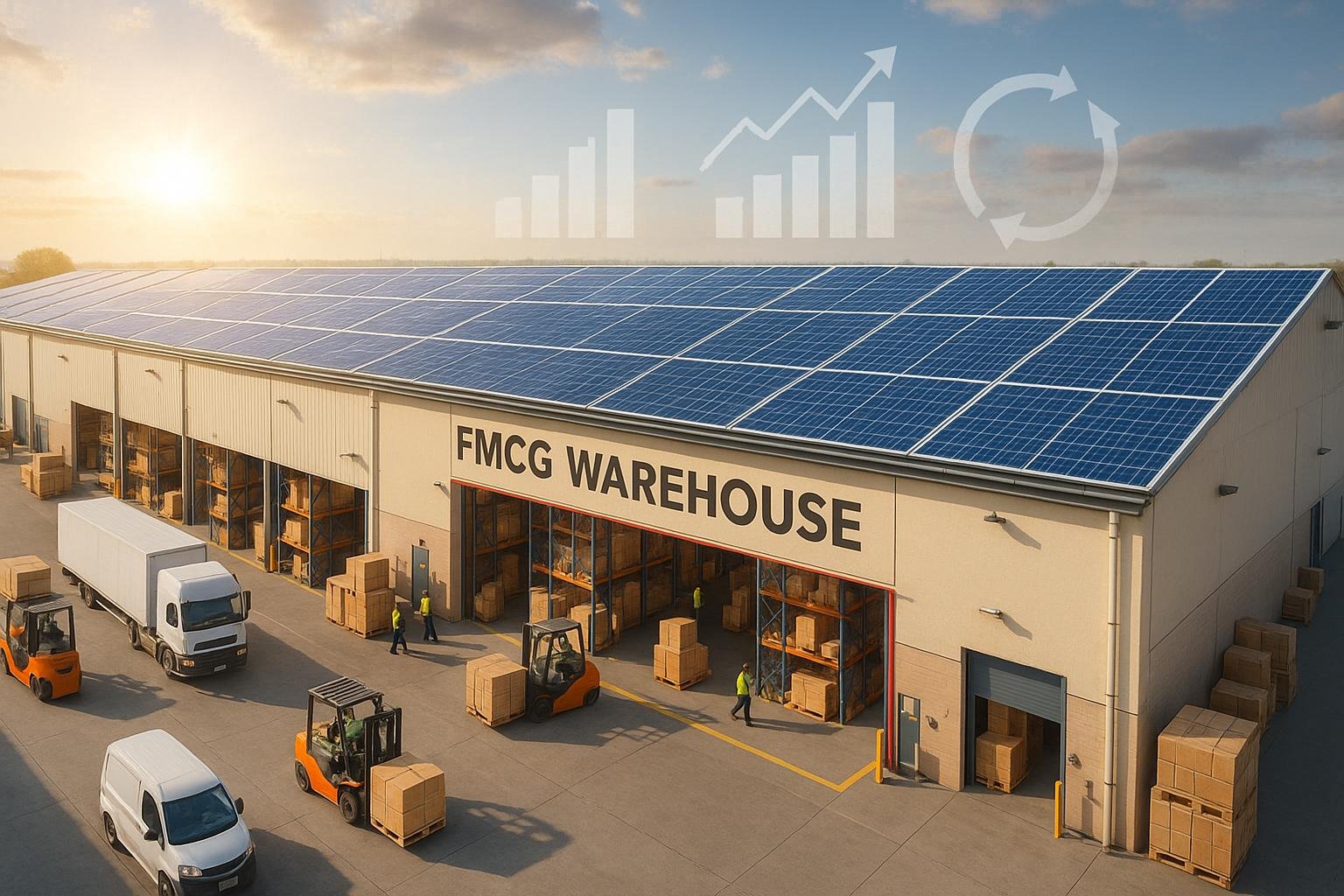
As consumer habits evolve and cost pressures mount, FMCG companies are transforming supply chains into strategic assets through data analytics, automation, and sustainability, aiming to gain competitive advantage by 2025.

As FMCG companies confront faster-changing consumer habits and tighter cost pressures, supply chains are shifting from back-office cost centres to strategic engines of customer value, according to FAN Transport News. The second piece in a three-part se...
Continue Reading This Article
Enjoy this article as well as all of our content, including reports, news, tips and more.
By registering or signing into your SRM Today account, you agree to SRM Today's Terms of Use and consent to the processing of your personal information as described in our Privacy Policy.
Executives are increasingly turning to data and automation to close that gap. According to a review of sector commentary, advanced analytics, AI and predictive tools are improving demand forecasting and network visibility, enabling inventory to be matched more precisely to shifting preferences. Research coverage by Webcast‑Inc highlights four defining trends for 2025: data‑driven decision making and location intelligence, sustainability and green logistics, AI and automation deployment, and end‑to‑end visibility for resilience and compliance. Gitnux’s industry statistics similarly point to rising uptake of IoT, AI and visibility platforms, and an expanding use of predictive analytics across the FMCG value chain.
Adoption, however, is uneven. FAN cites a Bain & Company survey showing generative AI ranks among the top five priorities for 84% of non‑tech executives but for only 37% of those in consumer packaged goods. For firms reluctant to build capabilities in house, outsourcing to specialist providers offers an intermediate route: partners can deliver traceability, temperature‑monitoring and other real‑time telemetry without heavy capital outlay, a model the FAN piece recommends for firms seeking operational insight with limited internal burden.
Sustainability and compliance are now integral to optimisation efforts rather than afterthoughts. Market commentary from FMI Blog and StoreSpace notes growing investor and retailer demands for greener logistics, blockchain‑enabled traceability and standardised handling practices. Industry moves towards uniform pallet designs and scalable packing standards , highlighted by FAN as an example of network coordination , aim to reduce handling costs, improve safety and simplify automation integration across multiple trading partners.
Automation remains a powerful lever but not a silver bullet. Analysts quoted across the sector counsel targeted deployment: start where labour intensity is highest, run pilots with third‑party platforms to validate interoperability between conveyors, robotics and AI inspection systems, and scale once performance and workforce impacts are understood. FAN references Gartner findings that many organisations still avoid the more radical manufacturing redesigns needed to realise automation’s potential, reinforcing the advantage for early but measured adopters.
Workforce strategy must evolve in parallel. Sources including Accio and StoreSpace emphasise blending human expertise with automated systems, reskilling staff into higher‑value roles such as robotics supervision, data stewardship and logistics planning. Supply‑chain optimisation therefore becomes as much about creating new career pathways as it is about machines and models.
E‑commerce expansion and changing retail dynamics add urgency. GSN News and other sector reports point to private‑label growth, premiumisation and the need for digital‑shelf optimisation, which place fresh demands on fulfilment speed, assortment agility and price management. The collective picture from industry coverage is that short‑term investments in visibility, forecasting and select automation can deliver faster responses to consumer signals while building the foundations for longer‑term loyalty and margin improvement.
Taken together, the evidence suggests a threefold approach for FMCG leaders seeking durable gains: use supply‑chain data to make the customer case for investment and to drive operational responsiveness; deploy automation deliberately in high‑impact areas while leveraging partners to accelerate capability; and pursue collaborative standards and sustainable practices that lower costs and simplify scale. Drew Merrill, senior vice president of sales, marketing and customer growth initiatives at CHEP U.S., is cited in the FAN piece as an industry voice supporting such coordinated, standards‑oriented change.
As firms refine their strategies for 2025 and beyond, the balance they strike between technology, partnerships and people will determine whether supply chains remain a tactical expense line or become a sustained source of competitive advantage.
Source: Noah Wire Services
Subscribe to Industry Updates