


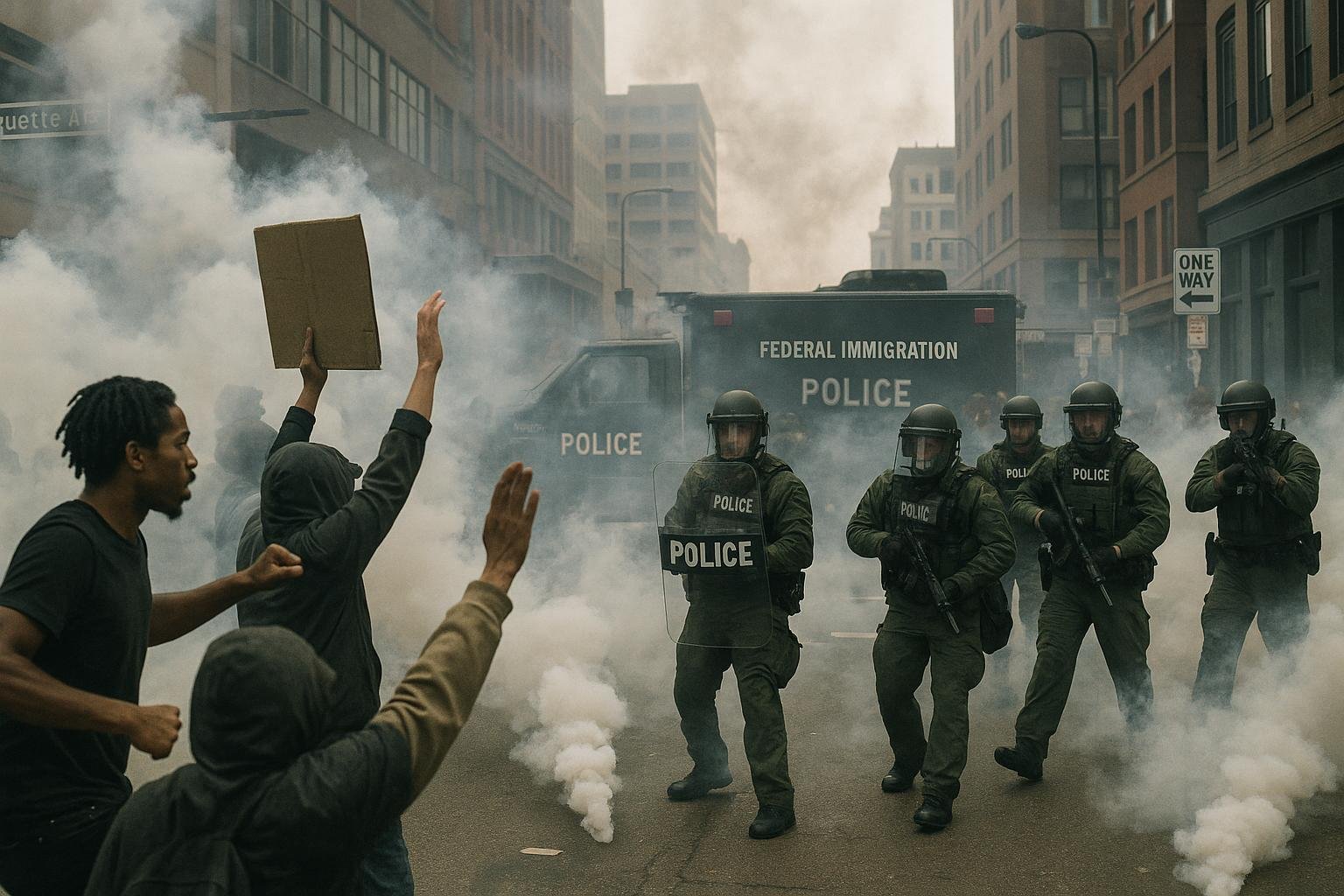
Tom Homan arrives in Minneapolis as Operation Metro Surge faces growing protests, court challenges, and partisan dispute over federal immigration enforcement, highlighting tensions between community safety and federal authority.

Tom Homan, the Trump administration’s senior immigration adviser, travelled to Minneapolis this week and said he has been working to restore order after unrest that followed two fatal shootings involving federal immigration officers.
Ar...
Continue Reading This Article
Enjoy this article as well as all of our content, including reports, news, tips and more.
By registering or signing into your SRM Today account, you agree to SRM Today's Terms of Use and consent to the processing of your personal information as described in our Privacy Policy.
The federal presence in Minnesota intensified after two residents were killed by immigration agents, igniting large-scale street protests. Renee Good, 37, was shot on 7 January after agents said her vehicle obstructed their operations. On 24 January, 37-year-old intensive care nurse Alex Pretti was also shot and killed by federal officers, prompting vigils and renewed calls for accountability. The killings spurred thousands to march in Minneapolis and prompted restaurants and attractions to shut as acts of protest against the weeks-long operation.
The operation, dubbed Operation Metro Surge, involved the deployment of thousands of federal immigration personnel to the state. AP reporting indicates roughly 3,000 enforcement officers were mobilised and that the administration has begun reshaping field leadership after intense criticism. Border Patrol commander Gregory Bovino, who drew fire for his public characterisation of events surrounding the Pretti shooting, has been transferred out of the city and will no longer lead the local effort, AP said. The administration has opened multiple internal reviews into Pretti’s death and is facing at least one federal court challenge from Minnesota seeking to block elements of the operation.
Homan has signalled some operational changes while emphasising continued enforcement. According to Time, he announced that some agents would be withdrawn contingent on improved local cooperation and reduced interference from protests, but said targeted operations would continue and that undocumented persons encountered by agents can still be detained. He also raised concerns about training gaps arising from ICE’s rapid expansion, asserting the need to tighten procedures even as enforcement proceeds.
Political friction has grown into a fiscal confrontation on Capitol Hill. Senate Democrats are threatening to withhold votes on legislation to fund the Department of Homeland Security and other agencies unless the administration agrees to new limits on ICE’s surge in Minnesota. Senate Democratic leader Chuck Schumer said Democrats would not supply required votes “until ICE is reined in and overhauled,” arguing that Americans support law enforcement but not what he described as “ICE terrorising our streets and killing American citizens,” a stance reported by Euronews.
The tensions come against the backdrop of a large increase in federal immigration spending under President Trump’s second term. According to the Euronews account, ICE’s budget has been dramatically expanded to $85 billion following passage last July of the One Big Beautiful Bill Act, a sweeping measure that significantly enlarged resources for enforcement, detention and removals. Time’s earlier reporting on related legislation describes similarly ambitious funding and staffing increases that helped fuel the agency’s rapid growth and the operational surge now drawing scrutiny.
Local officials have pushed back at the federal push. Minneapolis Mayor Jacob Frey and Minnesota Governor Tim Walz have pressed for de-escalation and engaged with the White House, and some county jails have resisted turning over detainees without judicial warrants, complicating federal requests for cooperation. AP reporting notes that attorneys general from 19 states and the District of Columbia have filed briefs supporting Minnesota’s legal challenge, underscoring wider implications for federal-state relations in immigration enforcement.
As protests continue, legal and congressional scrutiny is intensifying. The Justice Department’s and DHS’s reviews, ongoing court proceedings and calls for congressional oversight reflect pressure on a White House that has defended ICE’s operations. President Trump has posted sharply worded defences of the enforcement push on social platforms, blaming Democratic policies for what he terms chaotic conditions nationwide and citing ICE arrest statistics to justify the administration’s approach.
Homan has said he will remain in Minneapolis until tensions ease and has proposed operational adjustments intended to reduce friction while preserving the administration’s broader deportation goals. But with community outrage unresolved, multiple investigations under way and a partisan standoff over funding and oversight, the federal intervention in Minneapolis looks set to remain a focal point in the national debate over immigration enforcement and the limits of federal authority.
Source: Noah Wire Services
Subscribe to Industry Updates

