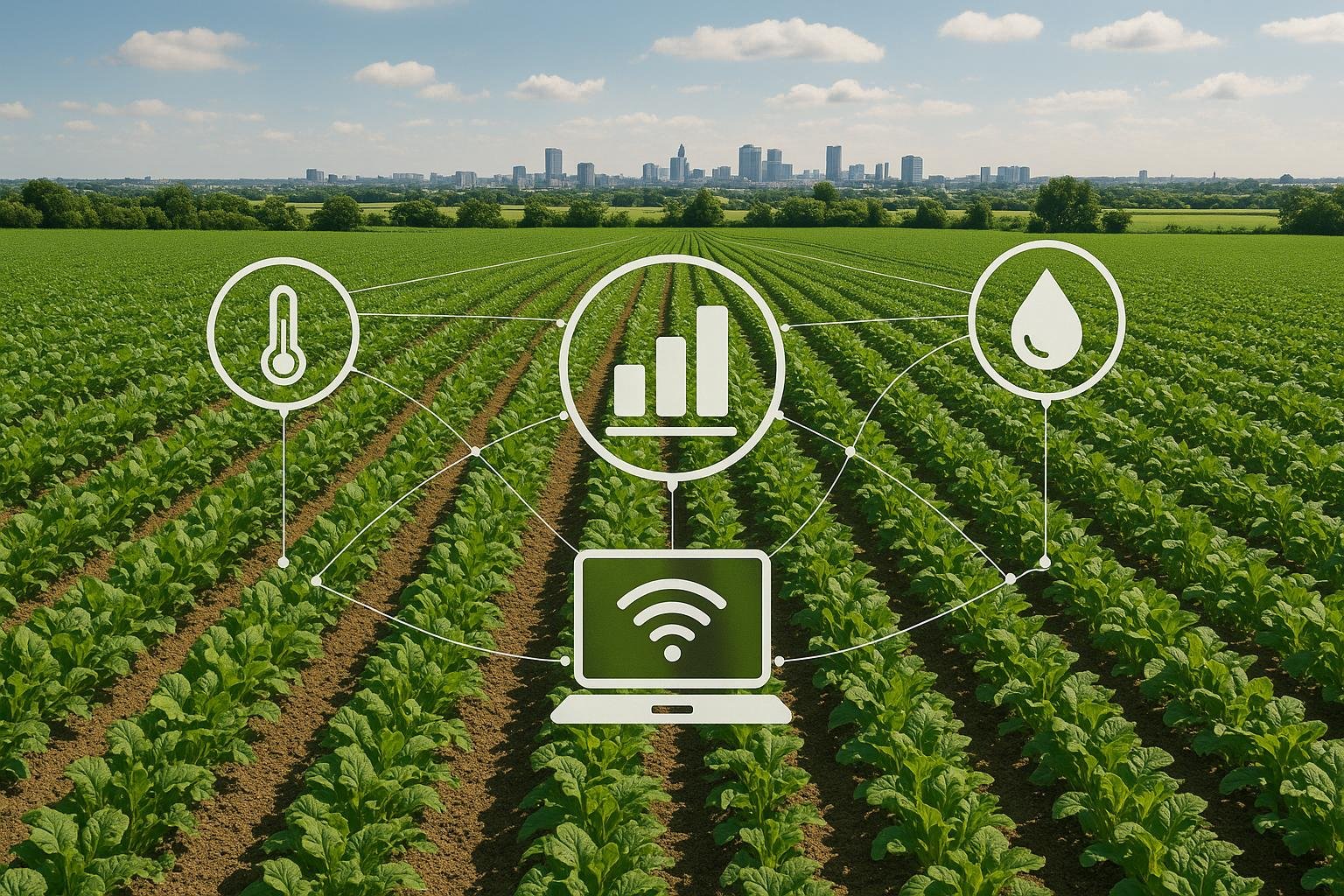
As extreme weather and supply shocks expose vulnerabilities, a shift towards real-time farm data integration is transforming supply chain visibility, operational control, and sustainability in agriculture.

For much of modern supply-chain evolution, farms have remained a peripheral element: essential in outcome yet seldom part of the organised information flows that govern procurement, processing and retail. Recent shocks, extreme weather, input shortages, quality failur...
Continue Reading This Article
Enjoy this article as well as all of our content, including reports, news, tips and more.
By registering or signing into your SRM Today account, you agree to SRM Today's Terms of Use and consent to the processing of your personal information as described in our Privacy Policy.
According to an opinion piece by the founder and chief executive of KhetiBuddy, published on February 8, 2026 in The Hindu BusinessLine, the change is not simply about adding sensors to fields. Rather, the shift is toward treating farm-origin data as an operational input that can be captured, standardised and fed into enterprise planning systems. Where businesses once started visibility at the point of procurement, digitised farm records now permit forecasting and operational alignment to begin at planting and progress through crop development, harvest readiness and lot-level quality outcomes.
That upstream visibility turns the persistent variability of agriculture from an unexplained risk into an analyzable signal. Industry commentators and platform vendors say systematic data collection makes it possible to compare practices, attribute causes to quality differences and identify where interventions will improve consistency. The Institute for Internet Economics notes that cloud services, IoT sensors, satellite analytics and predictive models are already reshaping both crop and livestock systems, though adoption varies widely between regions and farm types.
Traceability, long framed as a regulatory or reputational obligation, is also being recast as a tool for operational control. When farm-level practices are linked to batches and shipments, firms can conduct faster root-cause analysis and more surgical recalls, limiting commercial damage. TraceX, a provider of digital traceability solutions, emphasises how linking inputs to outputs across the supply chain supports regulatory compliance and reduces opacity in fragmented sourcing networks.
Technology vendors are responding with integrated platforms that aim to capture, connect and contextualise farm data across the food value chain rather than offering isolated point solutions. Cropin, for example, has launched an AI-driven ecosystem designed to integrate field data and deliver production, quality and yield forecasts that support dynamic sourcing and logistics optimisation. According to Cropin, its plug-and-play model can accelerate digital transformation for buyers and suppliers within months, enabling weather-proofed operations and improved procurement decisions.
Academic and technical proposals point further toward federated, standards-based architectures to reconcile commercial control, data privacy and verifiable provenance. Research describing the AgriTrust framework argues for a multi-stakeholder governance model and a semantic digital layer to permit federated data sharing and automated compliance; case studies cited include coffee, soy and beef supply chains in Brazil. Complementary work on decentralised identity and storage, labelled DIDChain in recent academic literature, suggests combining public ledger transparency with private system control to preserve traceability while respecting data sovereignty.
For enterprise customers and investors, the message is that value now accrues to scalable data architectures and enterprise-grade adoption rather than isolated pilots. Platform providers that can demonstrate integration with established ERP and quality systems, deliver decision-ready analytics for operations and sustainability, and offer governance models that address farmer incentives are most likely to capture large-scale procurement budgets.
There are, however, frictions to overcome. Agriculture’s fragmentation, millions of smallholders, divergent practices and seasonal rhythms, means data completeness and standardisation remain major hurdles. Commercial incentives for farmers to share accurate records, concerns about who benefits from the data and the practicalities of deploying hardware at scale all temper the pace of change. Moreover, regional variation in connectivity, regulatory regimes and market power will produce uneven adoption and potential governance conflicts.
Still, the trajectory is clear: firms that integrate farm-origin data into planning and control processes stand to gain predictability, speedier quality resolution and stronger sustainability reporting. As The Hindu BusinessLine piece concludes, scaling visibility back to the field transforms data from a retrospective ledger into a proactive element of how food supply chains are managed. In that new configuration, resilience and efficiency are pursued together, farm data ceases to be merely recorded history and becomes a working input to how food systems operate.
Source: Noah Wire Services
Subscribe to Industry Updates