


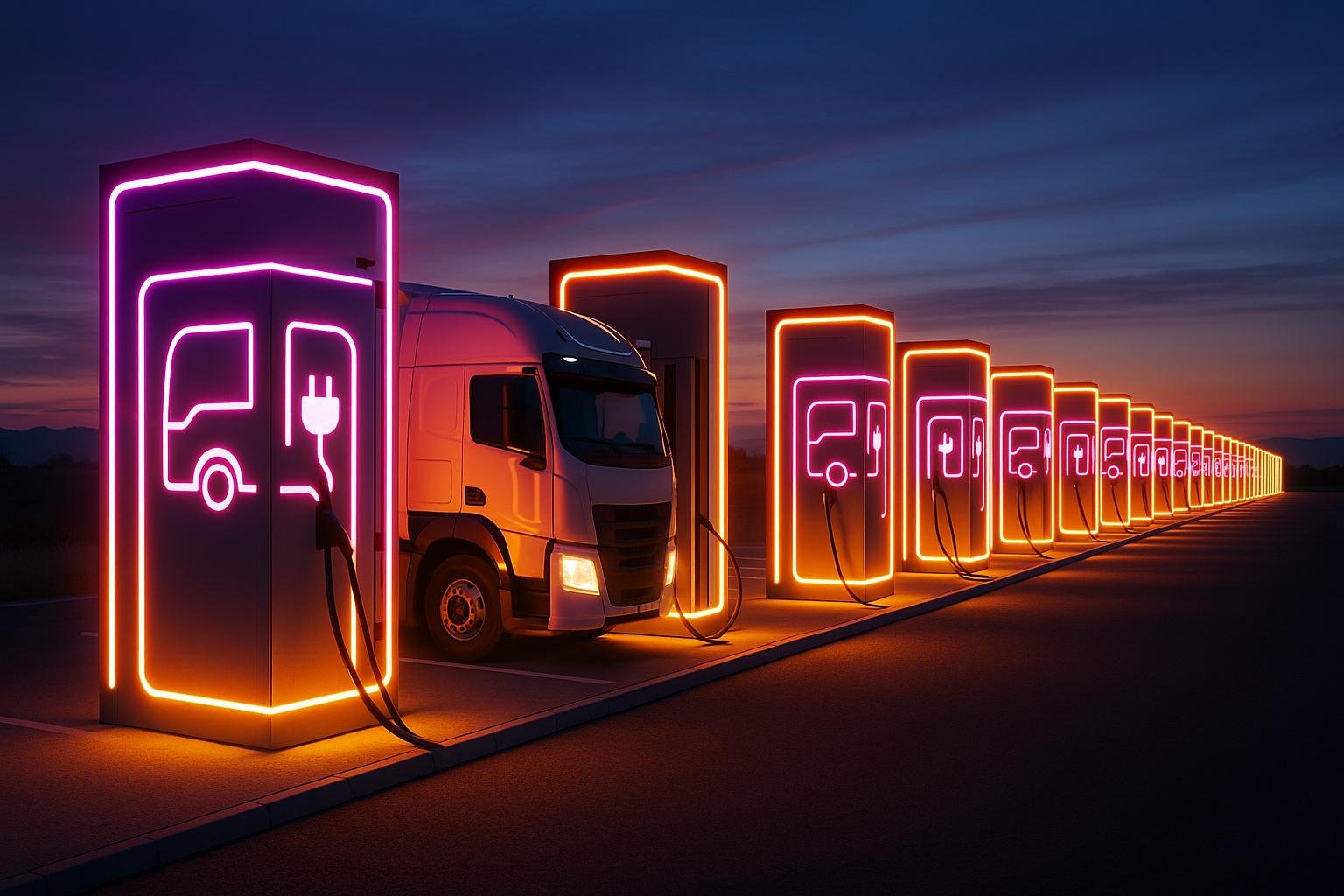
A major infrastructure project led by E.ON and partners aims to deploy 330 Megawatt Charging System points across nine European countries by 2028, marking a significant step towards decarbonising freight transport and replacing diesel trucks.

By autumn 2028, a significant milestone in the electrification of Europe’s heavy-duty road transport is expected to take shape through a major infrastructure initiative led by German energy supplier E.ON, in partnership with ...
Continue Reading This Article
Enjoy this article as well as all of our content, including reports, news, tips and more.
By registering or signing into your SRM Today account, you agree to SRM Today's Terms of Use and consent to the processing of your personal information as described in our Privacy Policy.
The project, known as HDV-E, has attracted substantial support from the European Union, securing €70.3 million in funding under the Alternative Fuels Infrastructure Facility (AFIF). This notable grant represents the largest award in the EU’s recent €600 million funding round aimed at accelerating alternative fuel infrastructure across the continent. According to official documents, E.ON will receive around €8.8 million of this funding, while Voltix, an infrastructure subsidiary of the French conglomerate VINCI Concessions, will benefit from €61.5 million. GreenWay, recognized for managing nearly 4,800 charging points across Central and Eastern Europe, particularly in Poland, Slovakia, and Croatia, provides specialist expertise in customer support and open roaming services though does not appear as a direct recipient of EU funds.
E.ON’s role includes deploying 46 charging units at 10 sites across Poland and Hungary, with an estimated investment of €17.6 million. Voltix is tasked with the installation of the remaining 288 chargers at 45 locations spread through Western and Northern Europe, backed by a significant investment exceeding €205 million. The network will be publicly accessible 24/7, offering open roaming capabilities and simplified payment solutions to cater to the operational needs of logistics companies and truck drivers.
Timo Sillober, CEO of E.ON Drive Infrastructure, articulated the transformative potential of the project, saying, “Only with charging power in the megawatt range can e-trucks deliver what diesel trucks do today. With HDV-E, we are building the infrastructure that makes this possible. This is how climate goals become reality on Europe’s roads.” This statement highlights the critical role that megawatt charging technology plays in providing electric trucks with competitive range, faster charging times, and the operational efficiencies required to replace diesel-heavy vehicles effectively.
This ambitious effort complements other significant undertakings in the sector. For instance, E.ON is also collaborating with MAN Truck & Bus on another pan-European charging network, aiming to establish roughly 170 truck charging sites with approximately 400 CCS chargers by the end of 2025, including 125 in Germany. These chargers typically have a power output of 400 kW, allowing electric trucks to gain up to 300 km of range within about 45 minutes. MAN’s parallel plans to launch an electric truck with an 800 km daily range further signal the growing viability of electric heavy-duty vehicles.
The HDV-E project stands out as one of the largest private-sector MCS truck charging initiatives independent of vehicle manufacturers. This is noteworthy given that other major players in the field, such as Milence, a joint venture of Daimler Truck, Traton, and Volvo Group, are also racing to expand truck charging infrastructure with a target of 1,700 chargers by 2027, including 284 MCS units.
Voltix’s managing director, Louis Du Pasquier, emphasised the urgency and inevitability of the shift towards electrified trucking, stating, “The question is no longer if decarbonised trucks will be electric in Europe, but when. The deployment of a reliable network of high-power charging stations dedicated to trucks on main European roads is one of the necessary keys to accelerate the transition to electric trucks.”
GreenWay’s chairman, Peter Badik, underscored the environmental significance, remarking, “Bringing megawatt and ultra-fast charging to electric heavy-duty vehicles is a major step toward a cleaner transport system,” reflecting the consortium’s broader commitment to European freight’s decarbonization goals.
The HDV-E initiative forms part of a larger continental push toward zero-emission freight, aligned with the EU’s ambition to reduce heavy vehicle emissions by 90% by 2040 compared to 2019 levels. Infrastructure development remains a critical bottleneck in the adoption of electric trucks, with current efforts by private companies and industry consortia playing an essential role in bridging this gap.
As Europe’s transport sector gradually transitions from diesel to electric propulsion, the successful deployment of ultra-fast, megawatt-class charging infrastructure will be crucial in overcoming the range, speed, and operational cost challenges faced by electric heavy-duty vehicles. The HDV-E network, supported by extensive EU funding and major investments from the involved companies, represents a decisive step toward making electric trucks a common sight on Europe’s major freight routes within the next few years.
Source: Noah Wire Services
Subscribe to Industry Updates

