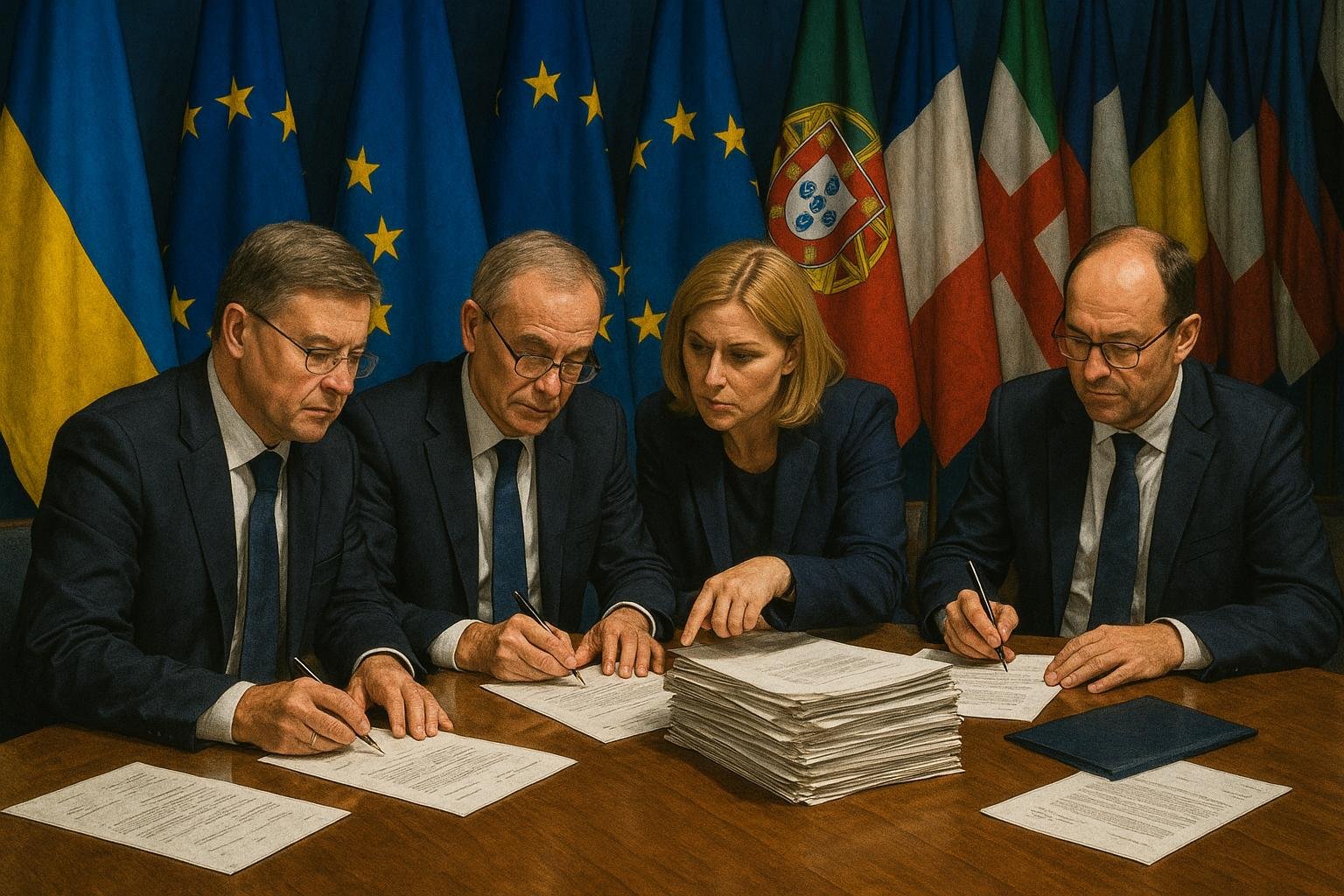
EU leaders have approved a €90 billion interest-free loan to Ukraine, secured against the EU budget, as they navigate legal challenges and internal divisions over frozen Russian assets.
European Union leaders have agreed to provide Ukraine with a €90 billion interest-free loan to support its military and economic needs over 2026–27, EU Council President António Costa announced early on Friday. “We have a deal. Decision to provide 90 billion euros of support...
Continue Reading This Article
Enjoy this article as well as all of our content, including reports, news, tips and more.
By registering or signing into your SRM Today account, you agree to SRM Today's Terms of Use and consent to the processing of your personal information as described in our Privacy Policy.
to Ukraine for 2026-27 approved. We committed, we delivered,” Costa said in a post on social media. According to the announcement, the loan will be raised by borrowing on capital markets and secured against the EU budget, rather than by immediately using frozen Russian assets.
The decision follows prolonged overnight talks in Brussels and reflects a compromise designed to overcome legal and political divisions within the bloc. EU institutions will continue discussions on a separate loan mechanism backed by frozen Russian central bank assets, but under the current agreement those assets , estimated at about €210 billion across jurisdictions , will remain frozen. The summit draft seen by Reuters says the EU has reserved the right to use those assets to repay the loan if necessary. Ukraine will be required to repay the jointly borrowed funds only once it receives war reparations from Russia, the draft text added.
Belgium’s reluctance was decisive in steering EU leaders away from directly tapping frozen Russian funds. Industry and diplomatic sources cited by Reuters and the Associated Press say Belgium holds the bulk of those assets via Euroclear and raised legal concerns and fears of Russian retaliation after Russia filed a lawsuit against Euroclear. Those concerns blocked consensus for the more contentious proposal to convert frozen Russian central bank assets into financing.
The package includes exemptions for Hungary, Slovakia and the Czech Republic, which had opposed contributing to Ukraine’s financing; their financial obligations under the agreement will not be affected, according to the summit text. The arrangement is intended to preserve unity while ensuring predictable support for Kyiv as it continues to defend itself against Russia’s invasion.
The International Monetary Fund welcomed the EU’s move, saying the €90 billion loan is a critical step toward closing Ukraine’s funding gaps and restoring debt sustainability amid the war. IMF officials, while expressing support, said more work remains to secure Ukraine’s medium‑term financing needs and to coordinate broader international assistance.
Analysts say the EU‑backed borrowing route spreads risk across member states and seeks to reassure investors by anchoring the loan to the EU budget, but it leaves unresolved legal and moral questions about the ultimate fate of frozen Russian assets. The decision underlines the EU’s willingness to provide large‑scale, coordinated support for Ukraine while navigating internal divisions and complex legal obstacles to seizing foreign sovereign assets.
Source: Noah Wire Services