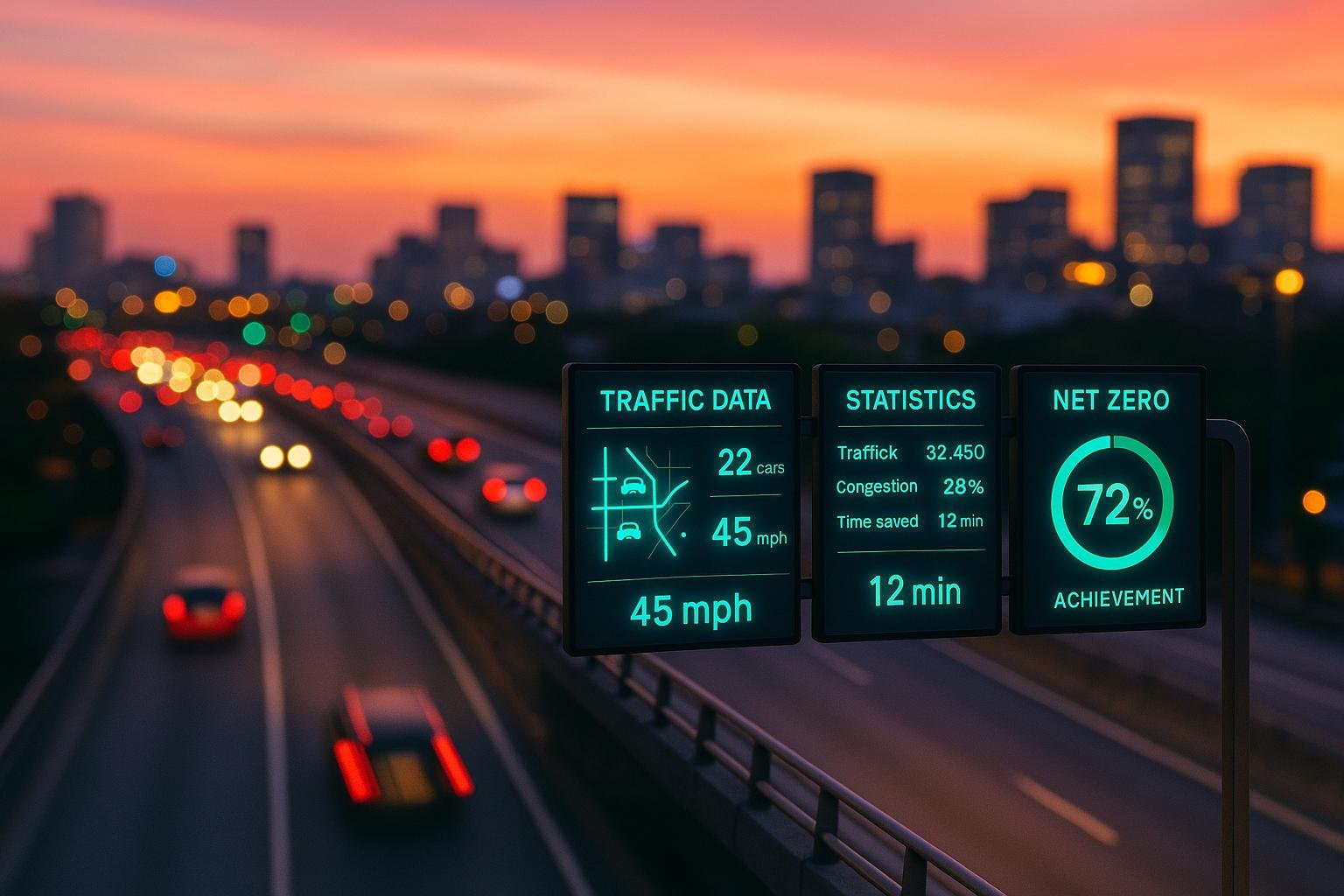
Transport, utilities and communications sectors are shifting from wholesale system replacements to targeted digital upgrades, enhancing resilience, reducing costs and supporting net zero goals through real-time monitoring, analytics and digital twins.

Across transport, utilities and communications, digital change has graduated from episodic projects to an enduring engineering practice embedded in day-to-day operations. Infrastructure owners now treat software, sensors a...
Continue Reading This Article
Enjoy this article as well as all of our content, including reports, news, tips and more.
By registering or signing into your SRM Today account, you agree to SRM Today's Terms of Use and consent to the processing of your personal information as described in our Privacy Policy.
That transition matters because budgets are tight, many assets are long-lived and services cannot be interrupted. Mick Mohan, Group Engineering Director at Telent, captures the new mindset: “Digital transformation doesn’t have to mean ripping out and replacing infrastructure. Organisations are realising they can extend the life and capability of what they already have.” His view reflects a broader move away from capital-intensive rebuilds towards incremental upgrades that preserve continuity and extract greater lifecycle value.
Practical experience and research back that approach. Engineering institutions and transport authorities report that well-sequenced asset enhancement frequently outperforms full replacement on cost, reliability and operational impact. Rather than uprooting interdependent systems, where signalling, telecoms and control infrastructures are tightly coupled, operators are adding intelligence on top of existing installations: software layers, retrofitted sensors and improved connectivity that allow assets to be observed and managed in real time.
Improved communications underpin much of this change. The expansion of full-fibre backbones, private 5G and low-earth-orbit satellite links has reduced historical monitoring blind spots. With continuous connectivity, teams can move from routine, time-driven checks to condition-based approaches that rely on live telemetry. Mohan notes the operational shift this enables: “With reliable connectivity, systems can be monitored in real time. Teams can act before disruption occurs rather than after.” In transport, remote condition monitoring is already helping rail operators detect bearing degradation, track defects and electrical anomalies earlier; on highways, roadside sensors and cameras flag incidents and congestion much sooner than traditional patrols.
Turning streams of telemetry into foresight depends on analytics and machine learning. Academic reviews of railway maintenance show that combining Big Data, Internet of Things devices and AI supports both operational interventions and strategic asset decisions, improving failure prediction and lengthening component life. According to the World Economic Forum, intelligent infrastructure combines sensing, connectivity, data platforms and cognitive software so systems can learn, decide and adapt, making infrastructure more than passive hardware and closer to a responsive, self-reporting ecosystem.
That evolution changes institutional culture. Control rooms are migrating from reactive fault-centres to predictive operations hubs; engineers increasingly plan maintenance from performance signals rather than waiting for breakdowns. Cyber security follows the same pattern: continuous internal monitoring and anomaly detection are now essential to limit cascading failures, because network outages or intrusions in communications layers can propagate across transport and utility systems.
Environmental benefits are integral to the argument for retrofitting intelligence. Remote diagnostics reduce unnecessary site visits, cutting vehicle mileage and associated emissions. Extending the service life of components lowers embodied carbon from manufacturing replacements, while optimised control and signalling reduce energy consumption in operation. European projects and academic studies identify measurable emissions savings where digital asset management minimises interventions and improves energy use. For policymakers pursuing net zero goals, such operational gains are complementary to greener construction practices.
Digital twins and virtual replicas are becoming a standard tool for planning and decision-making. The Institution of Civil Engineers highlights initiatives such as Digital Built Britain and the Digital Twin Hub, which aim to federate models across sectors to support asset-level simulation and cross-domain decision-making. In practice, dynamic digital representations, continuously fed by inspections and sensor data, help stakeholders visualise asset health, test scenarios and prioritise interventions with greater confidence. Mass Transit magazine and other industry coverage show digital twins being applied to optimise performance and forecast failures in transport networks.
Sectors show varied but converging patterns. Railways are embracing continuous monitoring to reduce unplanned delays and schedule targeted, smaller maintenance windows that lessen passenger disruption. Highways are deploying connected roadside systems to improve incident detection and traffic management without major civil works. Communications networks themselves are being strengthened as foundational systems: their availability and cyber resilience directly affect the dependability of transport and utility operations.
Industry examples illustrate the benefits and the business case for digital retrofits. According to Amey’s 2024 annual report, its partnership with National Highways’ Digital Lab has accelerated data-driven decision tools and delivered substantial cost savings through predictive maintenance and smarter operational practices, reinforcing how public–private collaboration can scale these approaches.
The practical implication for procurement and finance is profound. Funding models that prioritise upfront construction must adapt to continuous-improvement cycles that spread cost and value across an asset’s life. Lifecycle-based evaluation, rather than single-shot capital accounting, better captures the returns from embedding sensing, analytics and connectivity into aging systems.
This is not a tale of technology alone. Successful adoption requires organisational change, cross-disciplinary governance and clear standards to ensure data flows between legacy systems and new platforms. Academic reviews emphasise that cultural and institutional shifts are as important as technical choices when embedding Industry 4.0 tools into maintenance regimes.
The emerging picture is one of steady, cumulative capability increases rather than dramatic reconstruction. Infrastructure will become more observant, more predictive and more efficient through disciplined, iterative upgrades. As Mohan puts it, “Measured improvements grounded in real conditions are shaping the next era of infrastructure.” For owners and policymakers facing ageing networks, rising demand and climate commitments, that pragmatic route, making assets smarter while they continue to serve, offers a credible path to greater resilience and sustainability.
Source: Noah Wire Services
Subscribe to Industry Updates