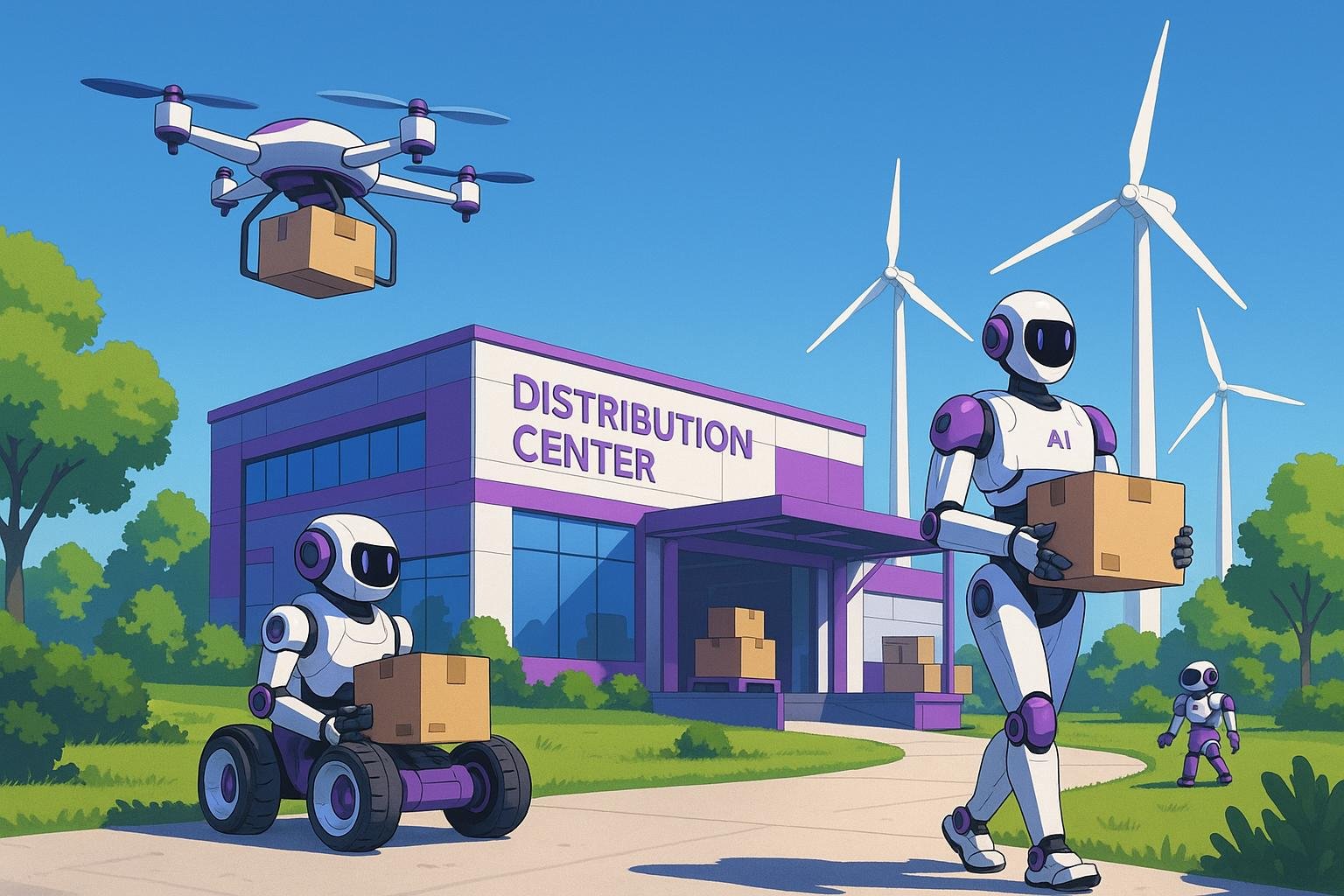
Cloud-native platforms and AI are revolutionising supply chains, transforming them from passive support functions into proactive, strategic operations that bolster resilience, sustainability, and competitiveness across industries.

Supply chains have moved from back-office support functions to strategic hubs that shape competitiveness, resilience and sustainability across industries. What were once discrete activities, planning, procurement, manufacturing, transport and ...
Continue Reading This Article
Enjoy this article as well as all of our content, including reports, news, tips and more.
By registering or signing into your SRM Today account, you agree to SRM Today's Terms of Use and consent to the processing of your personal information as described in our Privacy Policy.
Cloud-native platforms are at the centre of this shift. By consolidating supplier, warehouse, transport and distributor data into a single environment, these systems deliver near real-time visibility and enable faster, data-driven choices. According to SAP, control-tower solutions built on cloud architectures harness AI, machine learning and Internet of Things inputs to surface risks, optimise inventory and coordinate activity among manufacturers, suppliers and logistics partners. Vendors such as o9 Solutions emphasise similar capabilities in their Digital Brain, which merges order, inventory and shipment information with external signals to provide a unified operational picture and support joint decision-making across the enterprise.
Artificial intelligence and advanced analytics are changing how organisations forecast demand and allocate resources. Machine-learning models that draw on historical trends and live data allow planners to test scenarios, detect anomalies and prioritise interventions before disruptions cascade. Solvoyo highlights how AI-driven control towers automate diagnostics and predictive workflows so planners can concentrate on the most consequential issues rather than routine data reconciliation. IBM also describes control towers as personalised, connected dashboards that break down data silos, reduce manual work and produce actionable insights for exception management and resilience-building.
End-to-end visibility is no longer a nice-to-have; it is a determinant of service continuity. Companies that can trace materials from origin to delivery and monitor supplier performance in real time reduce blind spots and shorten response times when constraints emerge. The market’s response reflects that strategic value: industry projections anticipate the global supply chain management sector expanding substantially, with overall value expected to reach USD 48.59 billion by 2030, growing at a compound annual growth rate of 11.4 percent from 2025 to 2030. That expansion signals that digital supply-chain capabilities are being woven into long-range corporate plans as tools for scaling complex operations.
Sustainability and ethical sourcing are being baked into these platforms as well. Pressure from regulators, customers and investors to account for emissions, labour practices and waste has pushed supply-chain software providers to integrate traceability and sustainability metrics directly into operational workflows. Reporting and analytics now play a dual role, informing both efficiency-driven decisions and environmental, social and governance compliance. Coverage of emerging practices points to circular-economy approaches, tighter waste management and technology-enabled transparency as central themes for the coming decade.
Collaboration across the ecosystem remains critical. Shared data environments and orchestration layers help align manufacturers, retailers, suppliers and logistics providers, reducing friction and enabling coordinated responses to demand swings or geopolitical shocks. Thought leadership in the field stresses that moving from isolated systems to interconnected ecosystems improves trust, accelerates decision-making and reduces latency in execution.
Looking ahead, the dominant trajectories are clear: greater intelligence, higher degrees of automation and deeper connectivity. Organisations that pair modern supply-chain technology with governance, cross‑partner collaboration and sustainability commitments will be better placed to navigate uncertainty and extract long-term value. As vendors and corporate users alike invest in control towers, predictive analytics and integrated platforms, the supply chain will continue to evolve from a reactive network into a proactive, strategic capability.
Source: Noah Wire Services
Subscribe to Industry Updates