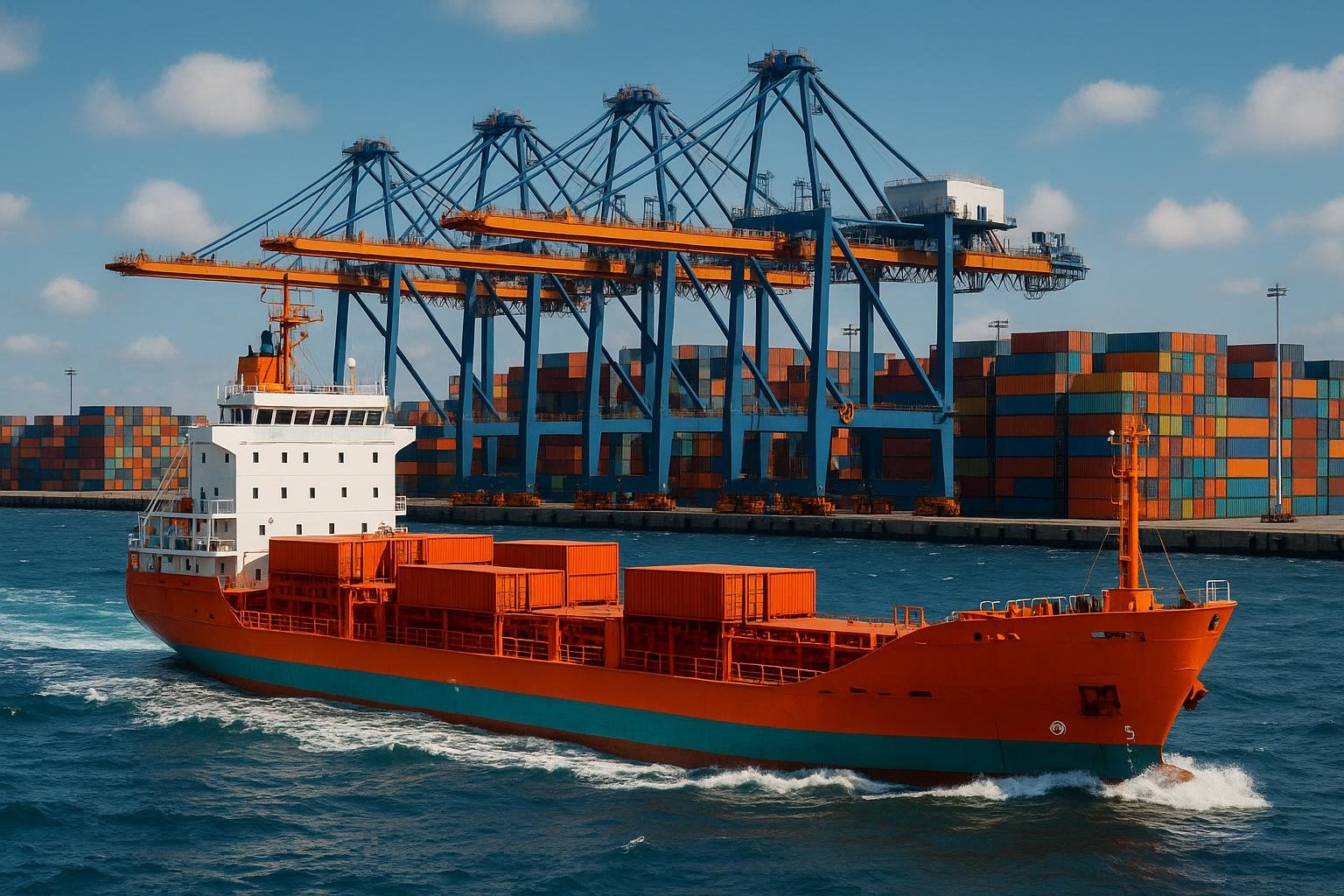
As global trade faces mounting challenges, digital freight forwarding is rapidly reshaping logistics, offering faster pricing, enhanced visibility, and sustainability benefits for businesses aiming to stay resilient and competitive.

Global trade has become more intricate and less forgiving, pushing logistics out of the background and into the centre of commercial outcomes. Firms now contend with congested ports, volatile fuel prices, shifting regulations and geopolitica...
Continue Reading This Article
Enjoy this article as well as all of our content, including reports, news, tips and more.
By registering or signing into your SRM Today account, you agree to SRM Today's Terms of Use and consent to the processing of your personal information as described in our Privacy Policy.
The industry response has been a rapid embrace of digital freight forwarding, which relocates booking, tracking and paperwork onto unified platforms. According to Maersk, the digital freight forwarding market is expanding at roughly a 23% compound annual growth rate, far outpacing the broader freight forwarding sector which the company estimates grows at about 4.2% annually. The shift is driven by the need for speed, clearer cost signals and operational resilience.
One immediate advantage is faster access to pricing and capacity. Digital platforms aggregate carrier options and present real‑time rates and transit times, shortening the decision cycle and reducing the delays that come with manual quote requests. Industry reporting shows this capability improves planning and supports more reliable budgeting, particularly for businesses that ship frequently or at scale.
Visibility is another major gain. Cloud platforms and Internet of Things tracking deliver continuous location and status updates, giving shippers a single view of goods in transit. Field Technologies Online notes that this transparency helps teams react quicker to disruptions and keeps customers informed, reducing the uncertainty that can ripple across supply chains.
Automation also tackles the paperwork burden that surrounds cross‑border trade. Digital systems can generate, store and push compliance documents automatically, lowering error rates and the risk of fines or stalled consignments. Providers point to standardised digital workflows as a way to streamline customs declarations and bills of lading while easing admin workloads.
Cost predictability improves when platforms harness historical and live data to compare routes, carriers and transit performance. Analyses from several logistics commentators show that data‑driven routing and consolidation can reduce freight spend and limit surprise charges. Over time, better forecasting of logistics costs supports margin protection and clearer commercial decisions.
Scalability is a further attraction. As companies expand into new markets or increase volumes, digital forwarders can absorb higher throughput without the proportional rise in manual processing or staffing. Commentators including Bertling and Cello Square say this elasticity makes digital solutions especially appealing to fast‑growing enterprises and those seeking to standardise global operations.
Beyond efficiency, sustainability is emerging as an important driver. Several industry pieces highlight how optimised routing, better load consolidation and cleaner carrier choices available through digital platforms can reduce emissions. Maersk and others frame digitalisation as a tool for decarbonisation by enabling more informed, lower‑carbon carrier selection.
Not all gains are automatic. Legacy carriers and smaller forwarders face integration challenges, and some shippers must adapt internal systems and processes to capture full benefit. Moreover, while vendors tout improved outcomes, editorial distance is warranted; the operational advantages often depend on the quality of data feeds, the degree of automation and the maturity of a customer’s digital adoption. Services such as eShipPro say they reduce manual dependency and improve oversight, but results will vary across implementations.
Taken together, the evidence from providers and industry analysts suggests digital freight forwarding is less a niche innovation and more a structural change in how logistics is managed. For companies that prioritise responsiveness, transparency and tighter cost control, moving core freight management onto digital platforms has become a strategic decision rather than a mere technological upgrade.
Source: Noah Wire Services
Subscribe to Industry Updates