


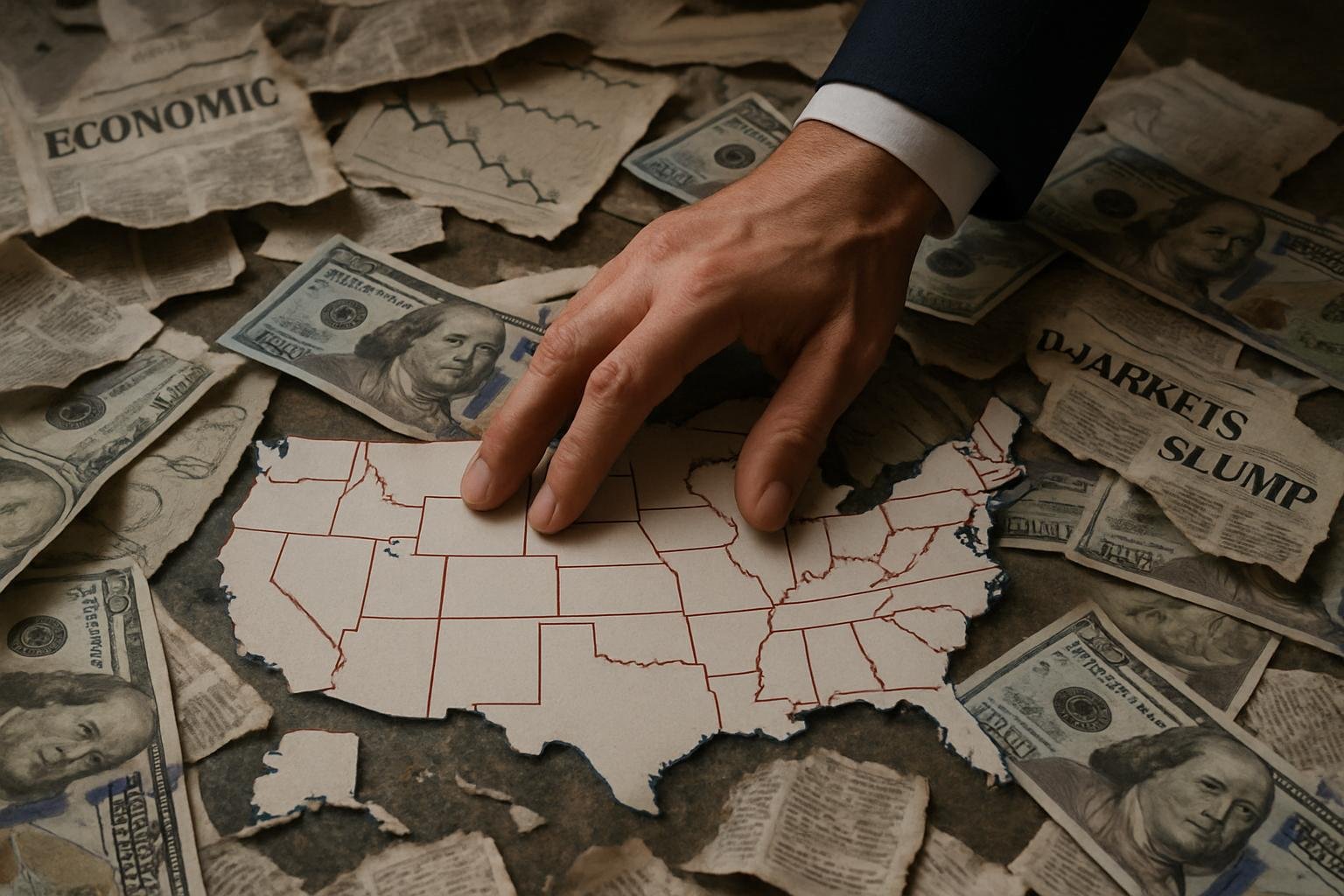
Companies are recalibrating their strategies amid a wave of presidential interventions, trade tensions, and legal uncertainties, signalling a disruptive shift in U.S. corporate policymaking under President Trump.

At a Ford plant in Dearborn this week, President Donald Trump’s visit underscored a familiar pattern: abrupt interventions that roil markets and unsettle corporate America. According to the Financial Times, the president mouthed “Fuck you,” at a heckler a...
Continue Reading This Article
Enjoy this article as well as all of our content, including reports, news, tips and more.
By registering or signing into your SRM Today account, you agree to SRM Today's Terms of Use and consent to the processing of your personal information as described in our Privacy Policy.
Business leaders describe an era of intensifying presidential activism. The FT says Trump’s announcement in early January that the United States would take control of Venezuela’s oil industry sent American refiners’ shares higher while aggravating producers in the domestic shale patch. Social‑media posts and policy teasers have moved markets as well: a Truth Social threat to ban large investors from buying single‑family homes dented homebuilder shares, a proposed cap on credit card rates knocked payments companies and major bank stocks, and a post outlining a $200bn mortgage bond purchase programme pressured borrowing margins.
The administration’s wider trade posture is compounding corporate anxiety. According to the Associated Press, in January 2026 Mr Trump imposed a 25% tariff on imports from countries that trade with Iran, a measure intended to pressure Tehran amid unrest but one that risks raising U.S. import prices from partners such as Turkey, India and potentially China. The AP notes legal questions about the tariffs’ authority and warns of potential diplomatic blowback from Beijing and New Delhi. Michigan’s governor, Gretchen Whitmer, told the Detroit Auto Show she believes the president’s tariff strategy is harming U.S. manufacturing and warned that undermining close cross‑border supply chains with Canada benefits foreign competitors, including China, the AP reported.
Financial services have emerged as a prominent target. The FT chronicles Mr Trump’s campaign to cap credit card interest rates and his public attacks on Federal Reserve chair Jerome Powell; the Associated Press reports that a one‑year 10% cap proposal alarmed Wall Street, with banks warning of multibillion‑dollar industry losses and potential knock‑on harm to consumers. Executives at JPMorgan and other large banks have publicly criticised moves they say would undermine the Fed’s independence and destabilise markets, drawing swift rebukes from the White House.
Independent forecasts and policy analyses suggest these interventions are already slowing growth. The OECD revised its outlook sharply, projecting U.S. growth to drop to 1.6% in 2025 and to 1.5% in 2026, attributing much of the slowdown to higher trade barriers and policy uncertainty, according to the OECD chief economist as reported by the AP and Time. The OECD highlighted a rapid rise in average U.S. tariff rates, from roughly 2.5% to about 15.4%, the highest since 1938, and warned of weaker business investment and global spillovers. A study by the Washington Center for Equitable Growth cited by AP‑wired coverage estimates factory operating costs could rise 2–4.5% because of new tariffs, pressuring wages and risking layoffs in manufacturing hubs including swing states such as Michigan and Wisconsin.
Corporate responses have ranged from cautious compliance to thinly veiled pushback. The FT recounts how CEOs have learned to flatter and placate the president with headline investment pledges, Mark Zuckerberg’s widely reported “something like, at least $600bn” pledge to Mr Trump at a White House dinner is one example, while preserving flexibility on delivery. Yet such gestures do not always shield companies: the FT notes that Hyundai’s March White House pledge to increase U.S. investment did not prevent the administration from imposing 25% auto tariffs on South Korea days later or from immigration‑enforcement action at a Georgia battery plant.
Some executives have chosen a different tack. The FT reports that ExxonMobil chief Darren Woods told a White House meeting that Venezuela is “uninvestable,” resisting calls to boost drilling there. JPMorgan’s Jamie Dimon has warned publicly that attacks on the Fed could raise inflation and rates. Still, many corporate leaders prefer to avoid confrontation: advisers quoted by the FT say a pragmatic playbook has emerged, attend, pledge big, then hope attention moves on.
Policy incoherence and legal uncertainty are recurring themes. The AP notes that a federal court briefly blocked several of the administration’s tariffs before an appeals court allowed collections to continue while litigation proceeds. Industry groups and legal scholars warn that courts and Congress may ultimately constrain or reverse parts of the president’s agenda, but businesses must plan amid ongoing volatility.
The practical implications are broad. Retailers and manufacturers already report rising input costs and higher consumer prices, which the OECD and independent analysts say could lift inflationary pressures despite recent easing. The Washington Center’s analysis, cited by AP, estimates the average U.S. household could lose substantially in real income terms from higher tariffs and import prices. For financial markets, the president’s interventions on mortgage‑backed securities, credit cards and his public campaign against the Fed create an unstable investment environment, prompting short‑term volatility even as equities have generally rallied since the early shocks of his trade actions.
Looking ahead, executives expect the pattern to continue. The FT quotes a Wall Street bank chief executive predicting an “activist year” ahead of the November midterms, while advisers point to new potential flashpoints such as Greenland’s mineral resources. Corporate playbooks will vary by sector and by the strength of firms’ relationships with the administration, but the underlying choice for many boards is stark: accommodate and seek to influence from within, or confront and risk regulatory and reputational costs.
For now, the message from business corridors is one of guarded adaptation. Company leaders are recalibrating supply chains, revising capital plans and weighing legal remedies, even as they try to preserve access to White House ears. As the FT observed, under this presidency optics and public deference often matter more than binding precision, a dynamic that has already reshaped strategic decision‑making across U.S. industry and looks set to continue shaping corporate America for the foreseeable future.
Source: Noah Wire Services
Subscribe to Industry Updates

