


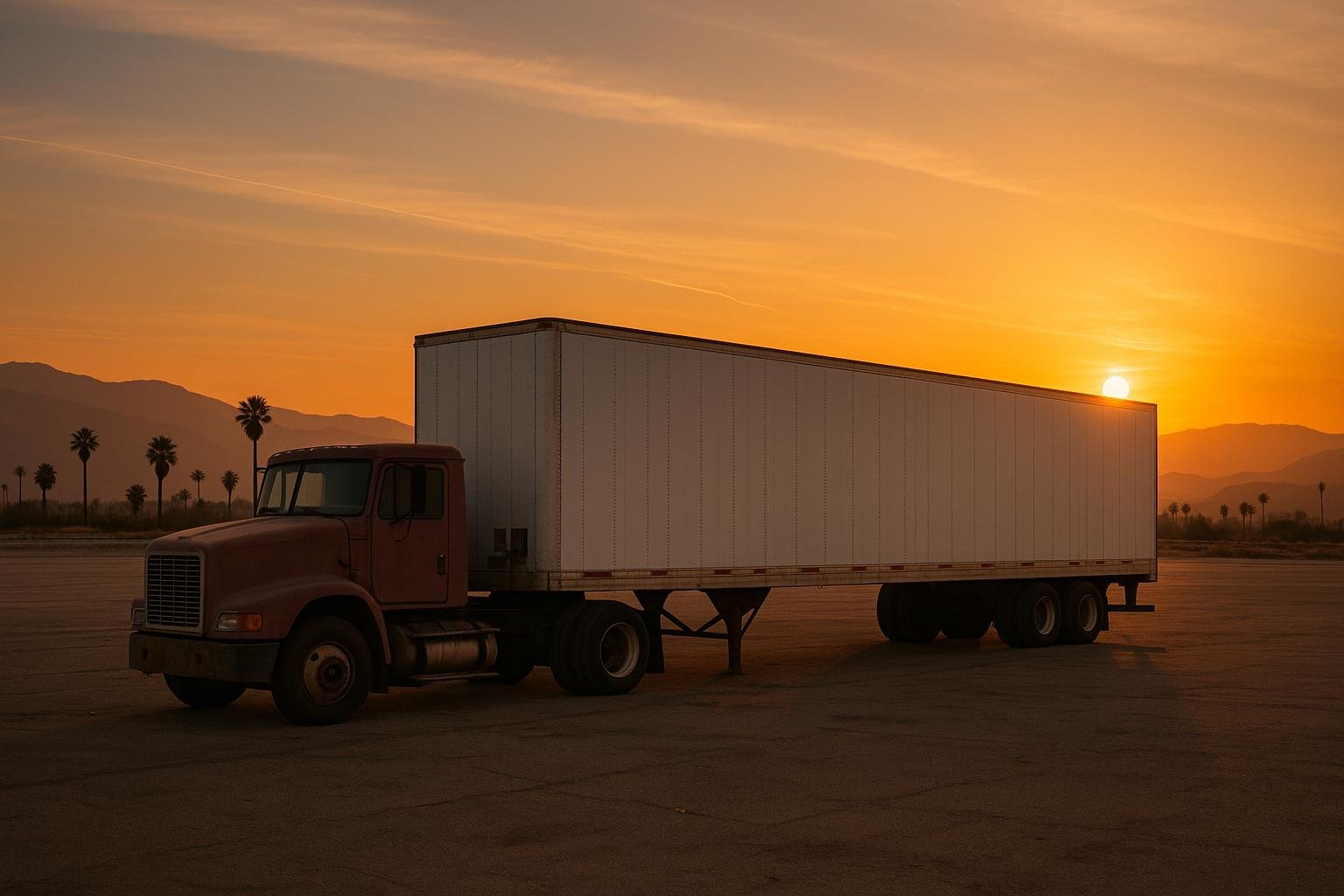
An atypical scarcity of trucks disrupting California’s winter produce season is linked to increased federal immigration enforcement and policy disputes, raising concerns over supply chain stability as spring approaches.

California’s winter produce season has been hit by an atypical scarcity of trucks, a development industry analysts link to stepped-up federal immigration enforcement that has made carriers reluctant to serve the state’s agricultural corridors.
...Continue Reading This Article
Enjoy this article as well as all of our content, including reports, news, tips and more.
By registering or signing into your SRM Today account, you agree to SRM Today's Terms of Use and consent to the processing of your personal information as described in our Privacy Policy.
Data from the U.S. Department of Agriculture’s Fruit and Vegetable Truck Rate Report for the week of 13 January showed shortages recorded across all five California produce regions, a contrast to the normal seasonal pattern where only the Imperial Valley typically tightens. Dean Croke of DAT told CCJ that the sweep of shortages this year is linked to actions by the Department of Homeland Security and Immigration and Customs Enforcement, which he said have prompted many carriers to avoid the California winter vegetable market. “This year, there’s a shortage of trucks being reported in all regions, so a lot of carriers are avoiding the California winter vegetable market,” Croke said.
The heightened enforcement reflects several federal actions and state responses. Border Patrol’s Operation Highway Sentinel arrested 87 people in November and December 2025 who held commercial driver’s licences, according to reporting by VisaVerge and other outlets. Overdrive and CCJ coverage says ICE has been targeting drivers it identifies as undocumented, including arrests at drivers’ homes and in interstate enforcement sweeps that turned up drivers licensed in California.
Policy moves at the federal level have also added pressure. The Department of Transportation and Federal Motor Carrier Safety Administration have pursued rules and enforcement aimed at restricting CDL eligibility for non-domiciled applicants and cracking down on CDL mills and electronic logging device circumvention. U.S. Transport News reported estimates that up to a quarter of drayage drivers at Southern California ports could be affected by heightened enforcement, while FMCSA has suggested a smaller but still material share of CDLs nationally could be at risk.
California’s resistance to some federal demands has escalated the conflict. The state delayed revoking roughly 17,000 licences tied to non‑domiciled applicants, prompting the federal government to warn it could withhold about $160 million in transportation funding, as reported by the Associated Press. The state later announced a 60‑day extension for those licences, according to Planetizen, an action that preserves drivers’ ability to operate for the near term but leaves a larger showdown unresolved.
The practical effect on capacity has been mixed. Industry trackers showed spot load postings were modestly lower since mid‑January, even as flatbed, refrigerated and dry van rates rose through the autumn and holiday period in line with typical seasonality. Overdrive noted the mid‑January shortages had eased somewhat in subsequent USDA updates, suggesting some temporary dislocation rather than a permanent collapse, though other analysts warn bottlenecks could emerge as spring harvests and peak port volumes approach.
Broader structural changes complicate the picture. California’s reclassification of many owner‑operators under Assembly Bill 5 has already reduced available capacity, and commentators have tied that shift together with federal interventions to warn of growing strain on the state’s supply chain, as reported by Shasta Unfiltered and U.S. Transport News.
Officials and industry participants offer differing assessments of the likely scale and duration of disruption. Some carriers appear to be temporarily steering clear of California loads until enforcement clarity improves; others argue that existing capacity and seasonal rate adjustments will absorb the shock. The USDA’s most recent weekly report shows shortages in certain agricultural regions have diminished to slight levels, but the convergence of federal enforcement, state policy disputes and structural labour changes means the market remains vulnerable as spring demand rises.
The dispute also raises political and regulatory questions. California has pushed back against federal demands that it revoke licences and enforce English‑language proficiency as an out‑of‑service violation, a stance the Trump administration pressed through executive action and DOT rulemaking. The differing priorities of state and federal authorities, combined with legal challenges and court pauses to some rules, leave both carriers and shippers navigating policy uncertainty while perishable cargoes move through the system.
For now, shippers and growers are watching capacity reports and rate movements closely. Industry data and reporting suggest the immediate January disruption has not produced sweeping, sustained rate inflation, but the patchwork of enforcement actions and licensing decisions could yet produce bottlenecks during the spring harvest and peak container flows unless regulators and industry stakeholders reach clearer alignment.
Source: Noah Wire Services
Subscribe to Industry Updates

